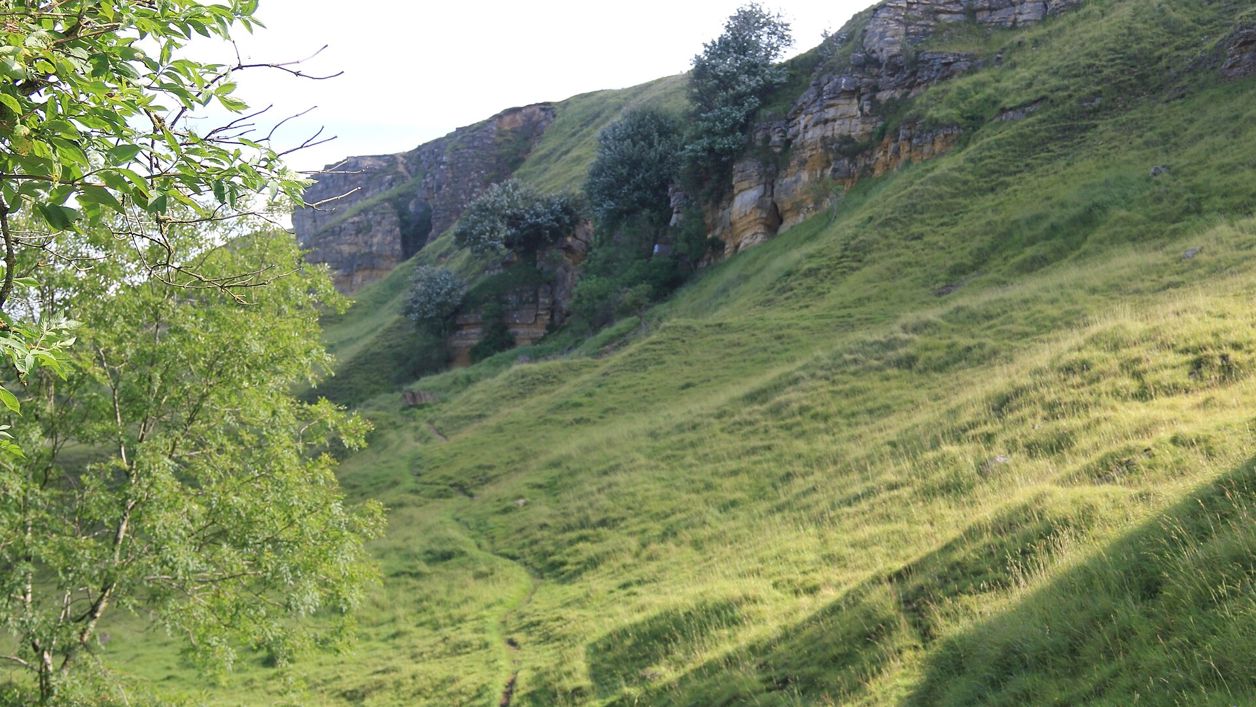
Terry Jacombs, CC BY-SA 2.0, via Wikimedia Commons
Cleeve Hill camp
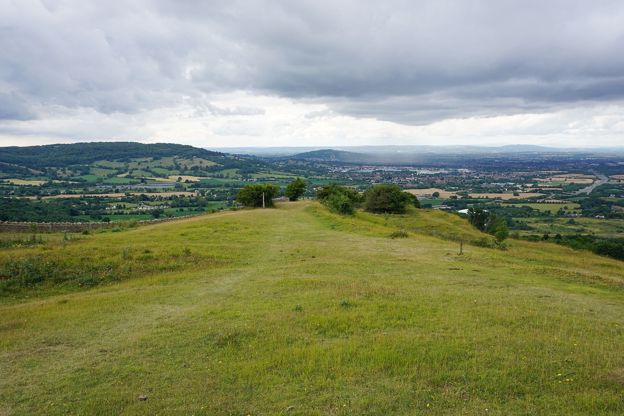
Cleeve Hill camp is a small Iron Age hillfort of about 500 BC on the cliff top at Cleeve Cloud, above Cheltenham, with two rings of rampart up to 2.5m high and the scarp as its western wall. Cut by quarries and a golf course, it is a scheduled monument on Cleeve Common.
Hill fort or barrow
The Cotswold EdgeCleeve Hill camp is an Iron Age hillfort on the cliff top at Cleeve Cloud, on the western edge of Cleeve Common above Cheltenham, on the Cotswold Edge. Two curving ramparts close off a promontory of the scarp, with the cliff itself as the western side. Built around 500 BC and badly cut about since, it is a scheduled monument.
History
Cleeve Hill camp was built in the Iron Age, about 500 BC according to the Cleeve Common Trust, one of around 35 hillforts along the Cotswold escarpment. Historic England classes it as a small multivallate hillfort, a fort with more than one line of defence enclosing a small area, a rare type with only around 100 recorded nationally, and schedules it as nationally important. Locally it has been called Cleve Cloud Camp.
A fort or a statement
The fort enclosed a little under 3 hectares. No entrance can now be traced, because of later quarrying and landscaping. The Trust suggests a fort like this was probably as much a symbol of power and wealth as a defence, perhaps the seat of a local chieftain. Historic England expects the ground inside still to hold evidence of how it was built, how long it was used and how its people lived, which is part of why it is protected. Between 2018 and 2022 volunteers from Gloucestershire Archaeology, working with the Cleeve Common Trust, surveyed the inside of the fort with geophysics and found signs of extensive settlement: possible roundhouses and many pits. Their report found no sign of a chieftain's house, though, and says that without excavation what the fort was for is still open.
Quarries and golf
Much of the fort has gone. Quarrying along the scarp ate into the western side, and when a golf course was laid out over the common in 1891 the earthworks were landscaped. The Trust says the ramparts now enclose about a third of a circle, and no one knows whether the circle was ever complete. Comparing old maps with lidar, Gloucestershire Archaeology reckons at least a third of the fort, including its original entrance on the north side, was quarried away between the 1870s and the 1920s. Three small round banks in and around the fort, once taken for watch towers, are now known to be post-medieval enclosures planted with trees.
What to see
The two ramparts are the thing to look for: concentric banks up to about 9m wide and 2.5m high, each with a ditch in front of it and a level strip about 9m wide between them, curving round from the cliff edge and back again. They are clearest in low sun, or after a dusting of snow, when the shadows pick out the line.
- The cliff of Cleeve Cloud itself, the old quarry faces that form the fort's western side, and the view straight down to Southam and Cheltenham.
- The three post-medieval tree-ring enclosures inside and beside the fort.
- Views west over the Severn Vale to the Malverns and the Black Mountains, and south along the scarp towards Leckhampton Hill.
Visiting
Cleeve Hill camp is on open access land and is free and open at all times. The common is grazed by cattle all year and by sheep from April to November, so keep dogs on a short lead near stock and, by law, from 1 March to 31 July. The ramparts are on the edge of a steep, quarried cliff: keep children and dogs close and stay on the paths near the edge. There is no shelter; the nearest toilets and café, Flynn's on the Hill, are at Cleeve Hill Golf Club, about 1km north, and both are reached by steps.
Getting there
Park at the Quarry car park (GL52 3PW) or the golf club car park on the B4632 between Cheltenham and Winchcombe, both £2 for 24 hours, and walk south along the escarpment for about 1km. Stagecoach bus W between Cheltenham and Winchcombe, about hourly from Monday to Saturday, stops on Cleeve Hill by the Rising Sun Hotel. On foot, the Cotswold Way runs along the cliff top past the fort, and our circuit of Cleeve Common and Cleeve Cloud passes it. The fort is on the Cotswold Way's stage from Cleeve Hill to Dowdeswell.
Nearby
The rest of Cleeve Common has the cross dyke, the Ring and the 330m top of the Cotswolds. Along the scarp to the south-west are the hillforts of Leckhampton Camp and Crickley Hill, and to the north-east Beckbury Camp above Hailes. Below the common's north edge stands the tithe barn at Postlip. The Cleeve Hill Hotel is on the main road below.
Walks past Cleeve Hill camp
-
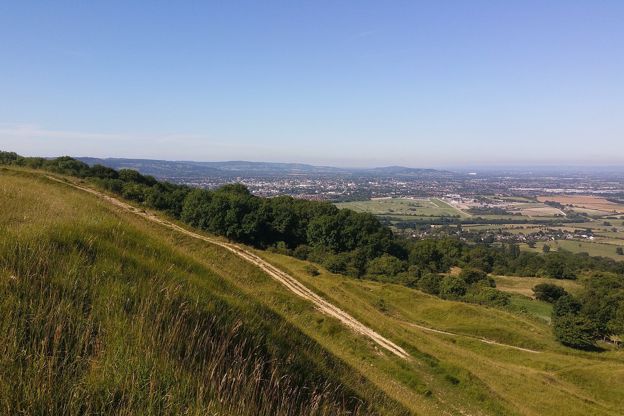
Cleeve Common and Cleeve Cloud
Walk · Starts in the Cotswold Edge · 1 hr, 45 mins · Circular · Dog-friendly
A 4-mile (6.4km) moderate loop of about an hour and three quarters on the highest ground in the Cotswolds: from the main road at Cleeve Hill past the golf club, across Cleeve Common, back along the scarp by the hill fort and Cleeve Cloud, and down through Thrift Wood.
-
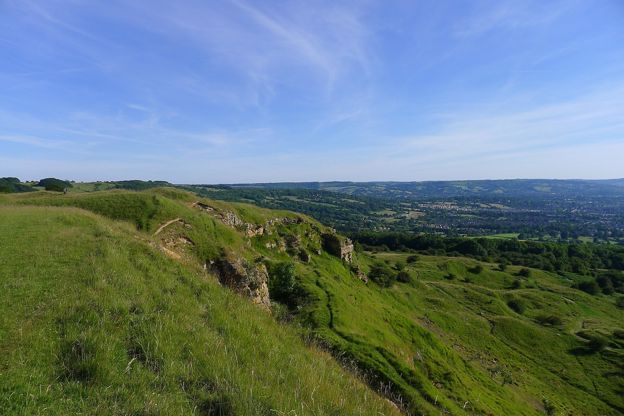
Cotswold Way: Cleeve Hill to Dowdeswell
Walk · Starts in the Cotswold Edge · 3 hrs, 15 mins · Dog-friendly
A 5.5-mile (8.8km) one-way walk on the fifth section of the Cotswold Way, from the golf club on Cleeve Hill to Dowdeswell reservoir, moderate and about three and a quarter hours: along Cleeve Cloud and across the common, then quiet lanes and a wood down to the A40.
Stay and eat near Cleeve Hill camp
-
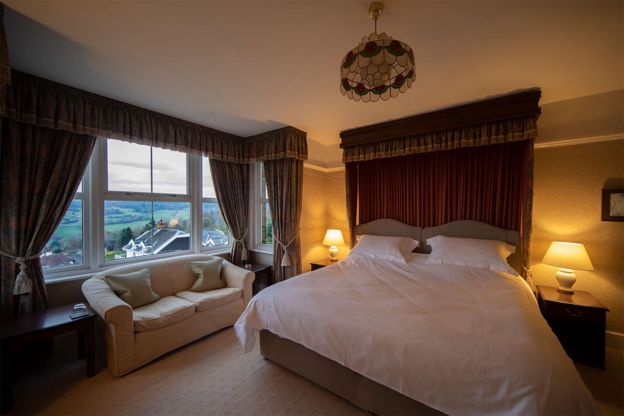
Cleeve Hill Hotel
B&B · Winchcombe
A 12-room bed and breakfast hotel on Cleeve Hill, about three miles south-west of Winchcombe, with views over the Severn Vale and a door onto Cleeve Common and the Cotswold Way.
Walker-friendly · Dog-friendly
Verified Oct 2026
-
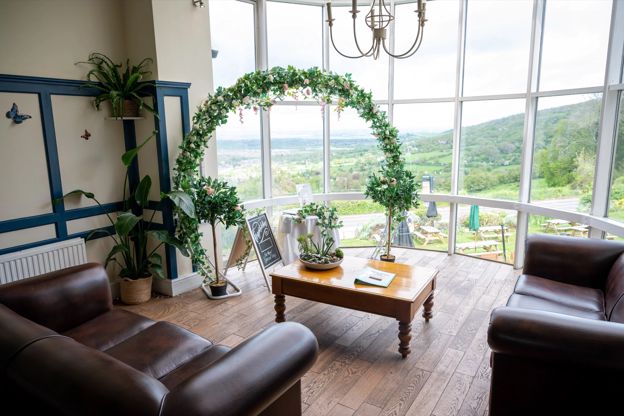
The Rising Sun Hotel
Hotel · Cleeve Hill
A Greene King Inns hotel, pub and restaurant with 23 bedrooms near the top of Cleeve Hill, with views over five counties from its beer garden.
Dog-friendly · Walker-friendly
Verified Nov 2026
-
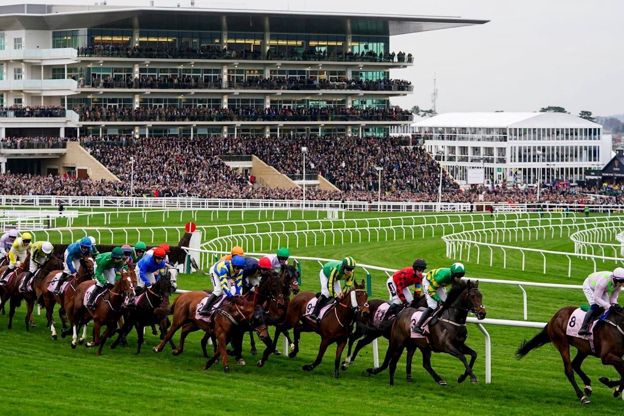
Cheltenham Racecourse
Sport and activity
Prestbury Park, home of jump racing's Cheltenham Festival and the Gold Cup, with meetings from October to April and a race-day bus from the station.
Car-free
Verified Nov 2026
More sights to see
-
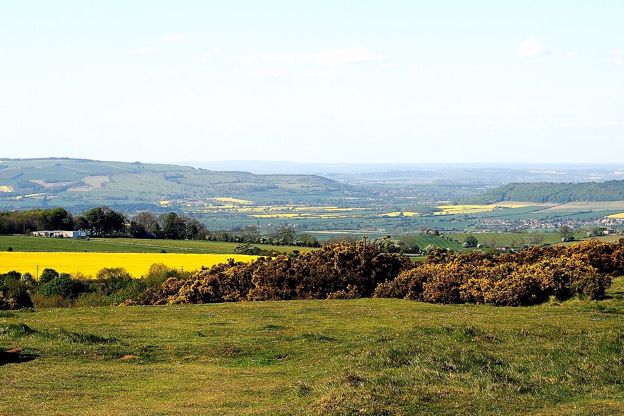
Cleeve Common
Sight · Common or park · The Cotswold Edge
Gloucestershire’s largest common: more than 400 hectares of open limestone grassland on the Cotswold Edge above Cheltenham, with the highest point of the Cotswolds at 330m, an Iron Age hillfort, a Bronze Age cross dyke and views to the Malverns and the Black Mountains.
-
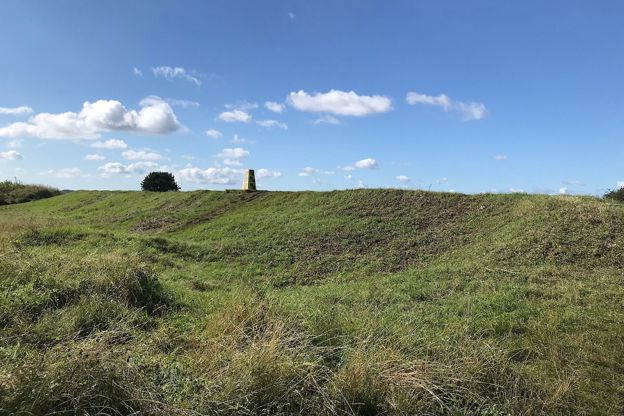
Leckhampton Camp
Sight · Hill fort or barrow · The Cotswold Edge
Leckhampton Camp is the Iron Age hillfort on the summit of Leckhampton Hill above Cheltenham: one rampart and a rock-cut ditch, an inturned entrance with two guard chambers and, to the east, a rare round barrow inside a square enclosure. Scheduled; the trig point is on its bank.
-
Crickley Hill
Sight · Common or park · The Cotswold Edge
Crickley Hill is a Cotswold Edge promontory near Birdlip, cared for by Gloucestershire Wildlife Trust and the National Trust, where 25 years of digging found a Neolithic settlement destroyed in battle and an Iron Age hillfort. Grassland, beech wood, a café and views to Wales.