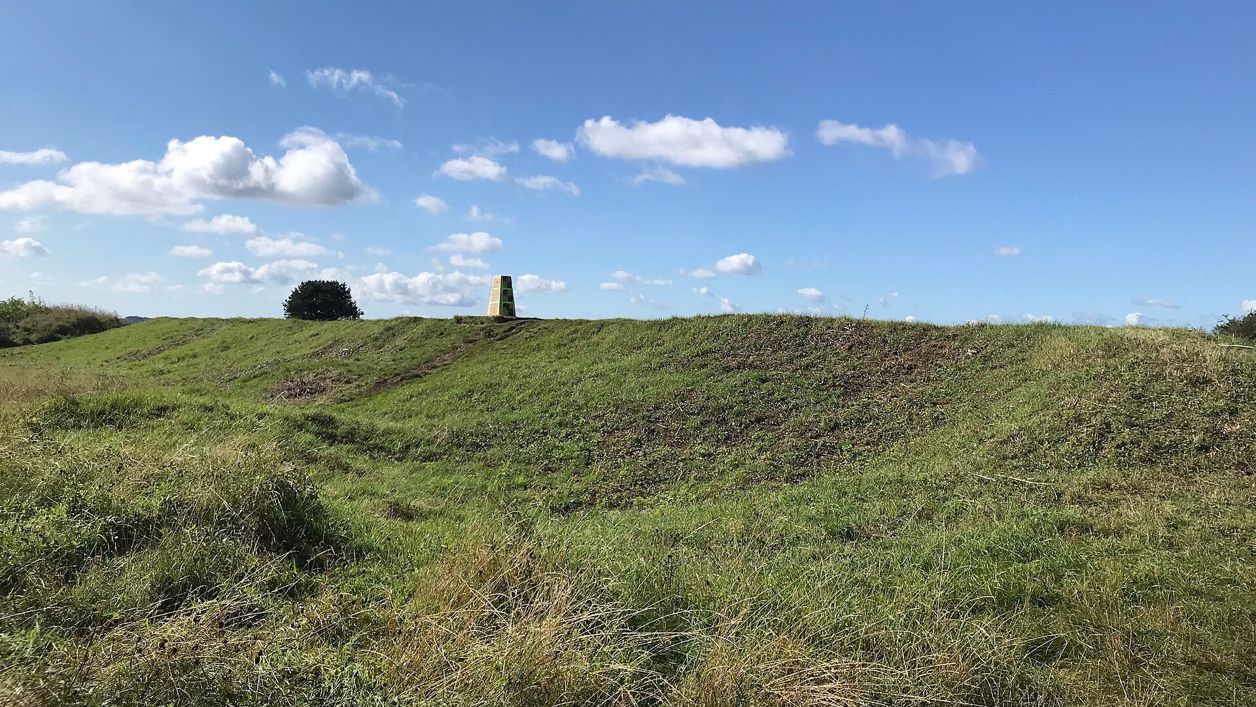
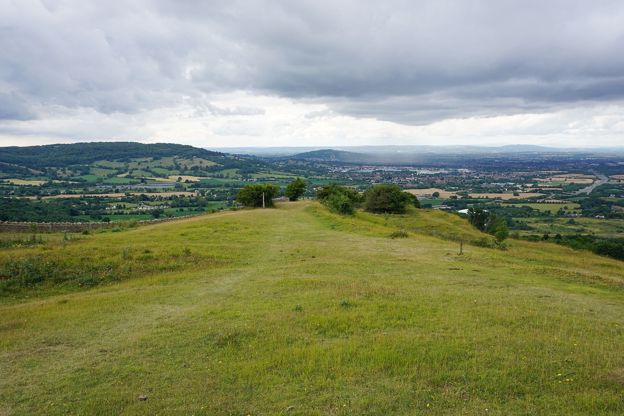
don cload, CC BY-SA 2.0, via Wikimedia Commons
Leckhampton Camp
Leckhampton Camp is the Iron Age hillfort on the summit of Leckhampton Hill above Cheltenham: one rampart and a rock-cut ditch, an inturned entrance with two guard chambers and, to the east, a rare round barrow inside a square enclosure. Scheduled; the trig point is on its bank.
Hill fort or barrow
The Cotswold EdgeLeckhampton Camp is the Iron Age hillfort on the top of Leckhampton Hill, on the Cotswold Edge above Cheltenham. A single bank and a ditch cut into the rock close off the hilltop, the steep scarp guards the rest, and just to the east lies a burial mound inside a square bank, a rare pairing. Both have been scheduled monuments since 1927.
History
Leckhampton Camp is a slight univallate hillfort, a fort with one line of defence, of a type Historic England dates from the late Bronze Age to the early Iron Age, between the eighth and fifth centuries BC. Only about 150 are recorded in England. The Friends of Leckhampton Hill put its use broadly in the Iron Age and link it with the Dobunni, the tribe of this part of England.
What the excavations found
The fort was dug in 1925 and again in 1969 to 1971. The excavators found the rampart had been up to 6m wide and 1.8m high, built, the Friends say, with two stone faces and a core of oak branches, earth and rubble, and fronted by a ditch 4.2m wide and 2.7m deep, much of it cut through solid rock. The entrance was elaborate: the rampart ends turn inwards to form a passage, with a guard chamber on each side. Chance finds show the hilltop in use again in Roman, Anglo-Saxon and medieval times.
The barrow in the square
East of the fort is a round mound up to 10m across and 0.6m high, with a hollow in its middle, ringed by a square bank. Two human skeletons, perhaps of Iron Age date, were found in it. Round barrows of this kind usually belong to the Bronze Age, but whether the mound and the square enclosure are of the same date has never been settled; the Friends describe the combination as extremely rare and probably Iron Age.
What to see
The rampart is clearest on the south and east sides, where the builders had no natural slope to rely on; on the west and north the scarp does the work.
- The trig point, standing on the east rampart, and from it the view over Cheltenham and the Severn Vale to the hills of Wales.
- The inturned entrance, where the bank curves in towards the interior.
- The line of the rock-cut ditch, now silted and easy to miss.
- The barrow in its square bank to the east, easiest to see after the Friends' annual summer grass cut; the best view of it is from the rampart by the trig point.
- A natural ravine inside the camp, and below the western edge the quarry faces and the Devil's Chimney.
Visiting
Leckhampton Camp is on registered common land and is free and open at all times. Belted Galloway cattle graze the hilltop grassland in autumn and winter, so keep dogs on a short lead near them, and everywhere from 1 March to 31 July, as on all open access land. The Friends list no toilets or café on the hill; the nearest are at Crickley Hill. The quarry edges below the fort are steep and loose; keep children and dogs back from them.
Getting there
The easiest approach is from the car parks at Salterley Quarry or Brownstones Quarry at the east end of Hartley Lane, which are near the top. From Cheltenham, the Daisy Bank Road car parks give a steep climb up the old quarry inclines. On foot, the Cotswold Way passes the trig point, and both our Leckhampton Hill and Devil's Chimney walk and the Seven Springs and Leckhampton Hill walk cross the fort.
Nearby
The Devil's Chimney is a few minutes' walk west, below the scarp edge. Along the escarpment are the hillforts of Crickley Hill, about 2.5km south-west, Painswick Beacon and Haresfield Beacon, and to the north-east Cleeve Hill camp on Cleeve Common.
Walks past Leckhampton Camp
-
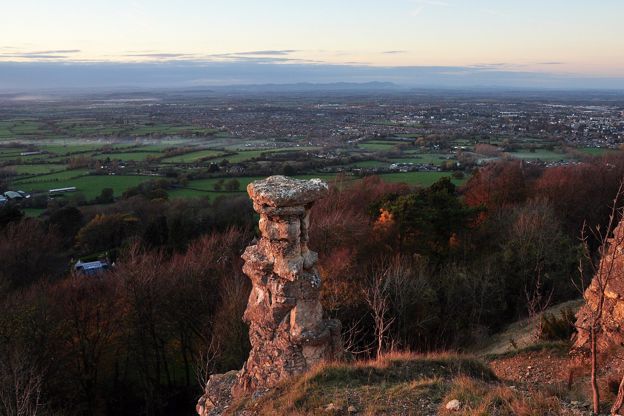
Leckhampton Hill and the Devil's Chimney
Walk · Starts in the Cotswold Edge · 2 hrs · Circular · Dog-friendly
A 4-mile (6.3km) circular walk from the Daisy Bank Road car parks above Cheltenham, about two hours and moderate, with one steep climb: round Charlton Kings Common, up onto the escarpment past the hillfort to the Devil's Chimney, and down the old quarry incline.
-
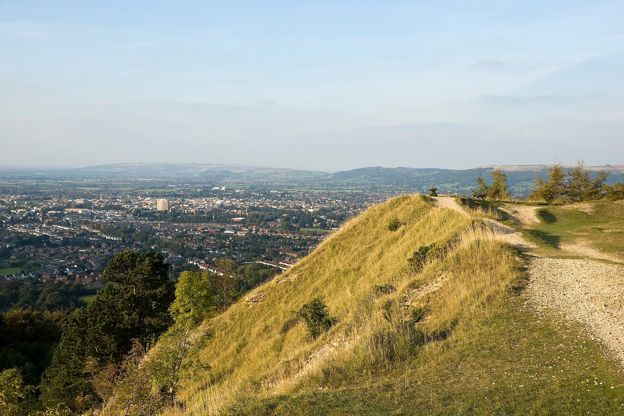
Seven Springs and Leckhampton Hill
Walk · Starts in the Cotswold Edge · 2 hrs, 30 mins · Circular · Dog-friendly
A 5.4-mile (8.7km) circular walk from Seven Springs, about two and a half hours and moderate, with steep slopes: along the Cotswold Way over Charlton Kings Common to the hillfort on Leckhampton Hill and the Devil's Chimney, and back along the foot of the common.
-
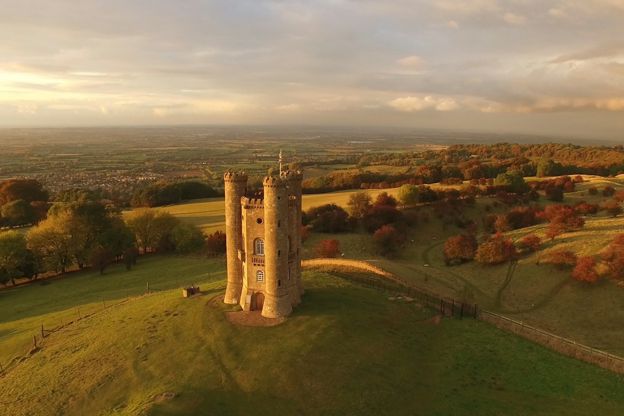
The Cotswold Way
Walk · Dog-friendly
The Cotswold Way is a 102-mile (164km) National Trail walk from Chipping Campden to Bath along the escarpment, in 15 sections; the official guidebook suggests seven to ten days, and its frequent steep climbs make it hard going.
Stay and eat near Leckhampton Camp
-
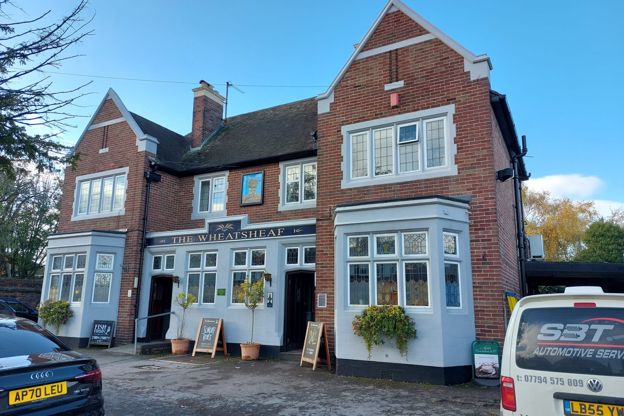
The Wheatsheaf, Leckhampton
Pubs · The Cotswold Edge
A family-run Wadworth pub on Old Bath Road in Leckhampton, below Leckhampton Hill, which Wadworth lists with a large garden, a heated patio, Sunday roasts and jazz and blues nights.
Dog-friendly · Family-friendly
Verified Nov 2026
-

StarBistro
Cafes and tearooms · The Cotswold Edge
The restaurant at National Star college in Ullenwood, above Cheltenham, where students with disabilities serve breakfast, lunch and afternoon tea on weekdays, on the line of the Cotswold Way's 2026 diversion.
Walker-friendly · Family-friendly
Verified Oct 2026
-
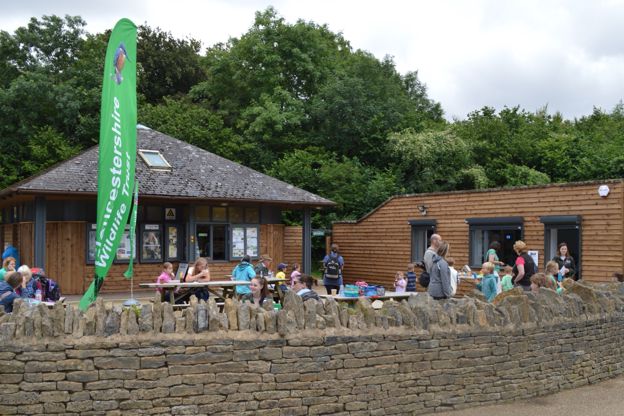
Crickley Hill café
Cafes and tearooms · The Cotswold Edge
Gloucestershire Wildlife Trust's café by the top car park at Crickley Hill Country Park, near Birdlip, on the Cotswold Way: breakfast, lunch and cakes, dogs welcome.
Dog-friendly · Walker-friendly · Family-friendly
Verified Nov 2026
More sights to see
-
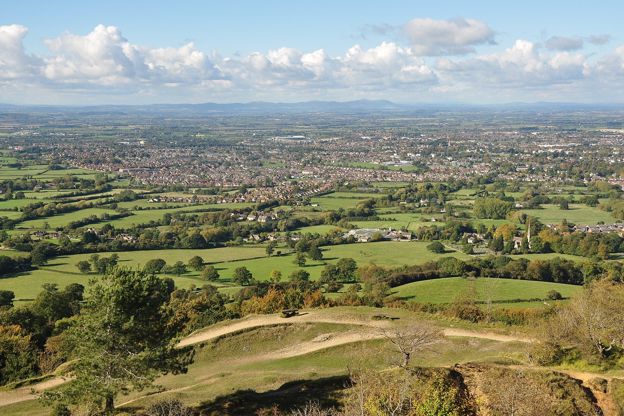
Leckhampton Hill and Charlton Kings Common
Sight · Nature reserve · The Cotswold Edge
Leckhampton Hill and Charlton Kings Common: 60 hectares of old quarries, limestone grassland on the Cotswold Edge above Cheltenham, with an Iron Age hillfort and the Devil's Chimney. Opened to the public in 1929 after the riots of 1902; a National Nature Reserve from 2026.
-
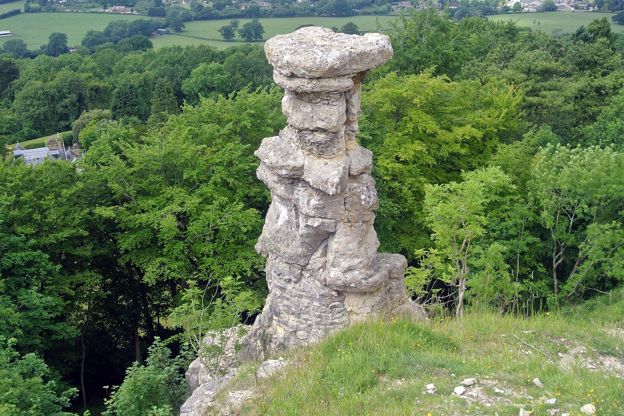
The Devil's Chimney, Leckhampton
Sight · Monument · The Cotswold Edge
The Devil's Chimney is a pillar of limestone standing below the scarp edge of Leckhampton Hill above Cheltenham, most likely left isolated when quarrymen cut an incline to the top and shaped by the weather since. Folklore says the Devil built it. Climbing it is forbidden.
-
Crickley Hill
Sight · Common or park · The Cotswold Edge
Crickley Hill is a Cotswold Edge promontory near Birdlip, cared for by Gloucestershire Wildlife Trust and the National Trust, where 25 years of digging found a Neolithic settlement destroyed in battle and an Iron Age hillfort. Grassland, beech wood, a café and views to Wales.