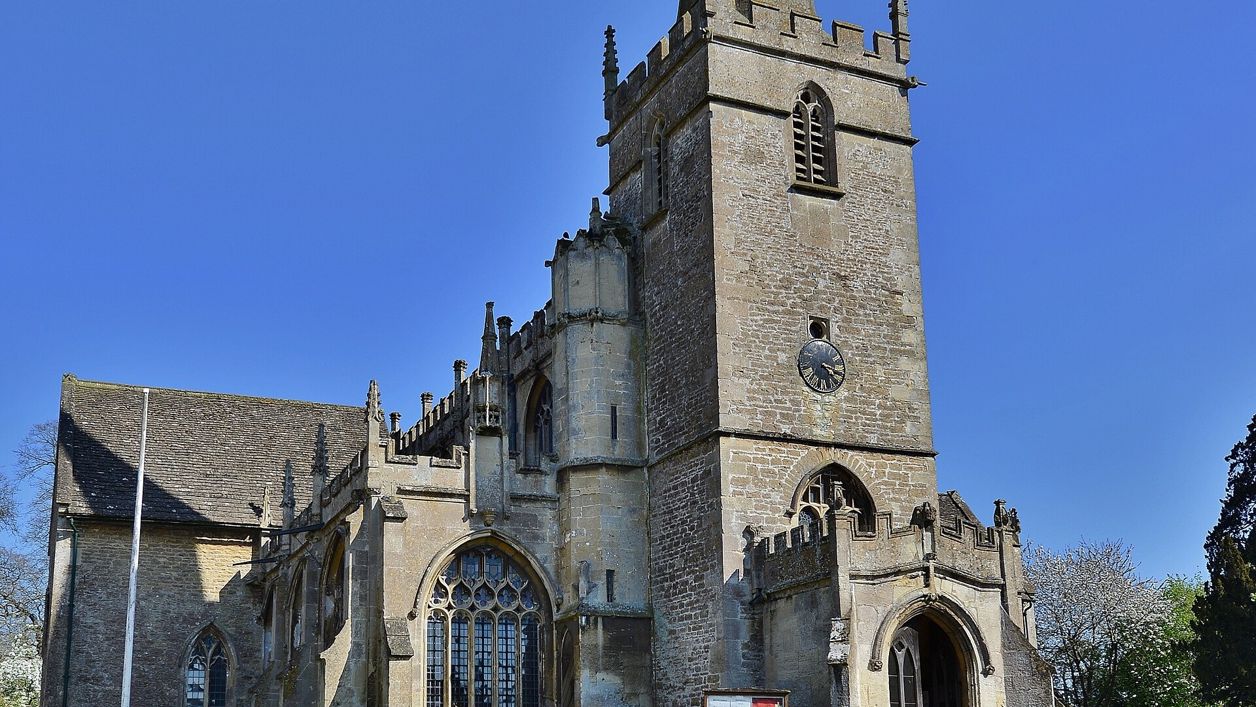
Michael Garlick, CC BY-SA 2.0, via Wikimedia Commons
St Cyriac's Church, Lacock
Lacock's Grade I parish church, mostly fifteenth century, with a spire rebuilt in 1604, a vaulted chapel of about 1430 holding William Sharington's Renaissance tomb, and links to Fox Talbot. Open daily in daylight hours.
Church
LacockSt Cyriac's is the parish church of Lacock, on Church Street at the east end of the National Trust village. It is mostly a fifteenth-century building on older foundations, with a spire rebuilt in 1604, a richly vaulted chapel of about 1430 and the Renaissance tomb of the man who made Lacock Abbey a house. It is listed Grade I and open every day.
History
The story of St Cyriac's runs from the eleventh century, the date the parish gives its earliest surviving features, to a chancel rebuilt in 1902 in memory of the photographer William Henry Fox Talbot. There may have been a Saxon church on the site before that.
A Norman dedication
The dedication to St Cyriac is rare in England and more common in Normandy, which the parish takes as a hint of the church's Norman founders. The parish history names Edward of Salisbury and William of Eu, lords of Lackham, as its builders. The right to appoint its priest was shared in the twelfth century, and after Ela, Countess of Salisbury, founded Lacock Abbey as a house of Augustinian nuns in 1232, she set out in 1236 to bring the church into the abbey's hands. That took a century: the church passed to the nuns only in 1337.
The fifteenth-century church
Almost everything you see outside is later. Historic England's listing calls the church mostly fifteenth century, with some fourteenth-century work, perhaps including the base of the tower. The two-bay chapel at the north-east corner was built in about 1430 for the Bonham and Croke families, and is now called the Lady or Talbot chapel. The battlemented, pinnacled nave and north aisle followed later in the century, the west porch was added around 1500 (the parish dates it to about 1522 and credits Philip Baynard), and the spire was rebuilt in 1604. A south aisle roof carries the date 1617, and a two-storey cottage of the seventeenth century leans against the south transept.
Restorations
Arthur Blomfield restored the church in 1861, with the Baynard family paying, the parish says. He raised the transept roofs to match the tall nave and took out some galleries, the box pews and the organ that stood at the west end; the south transept was also rebuilt in the nineteenth century in matching style. The chancel was rebuilt again in 1902 to 1903 by Harold Brakspear, in memory of Fox Talbot, whose family had owned the abbey and the right to choose the vicar.
Sharington and the Talbots
William Sharington bought the abbey in 1540, the year after it was surrendered, and turned the nuns' buildings into a country house. His monument of 1566, which the listing suggests may be the work of John Chapman, stands in the north-east chapel, the chapel built a century earlier for the Bonhams and Crokes. The abbey later passed to the Talbots, and their memorials run through the eighteenth and nineteenth centuries. The architectural frame of Sir John Talbot's monument (he died in 1714) was taken out and reused as the village war memorial on West Street.
The Lacock Cup
The church's greatest treasure is no longer here. The Lacock Cup, a silver cup of about 1430 to 1450 used as a chalice, went to the British Museum on loan in the early 1960s, when it had become too valuable to insure for use in church, though it still came home for certain festivals until the 1980s. In 2013 the parish sold it, and the British Museum and the Wiltshire Museum in Devizes bought it together for £1.3 million. A replica was made for the church to use.
What to see
Start outside the north-east chapel. Its battlements and gargoyles are the most lavishly carved stonework in the village, and its east window has unusual tracery. Then look up at the octagonal spire of 1604 and walk round to the battlemented west porch.
Inside, the chapel is the thing to see. Its lierne vault has carved bosses and hanging pendants, much of its original colour survives, and the vault springs from above canopied niches in the walls. Sharington's tomb stands here, and some fifteenth-century stained glass survives in the windows.
Across the church, the south transept is the Lackham or Baynard aisle, with memorials to the owners of Lackham House from the fifteenth to the twentieth century: a brass to R. Baynard, who died in 1501, and two brightly painted wall panels of 1623 to members of the family. Elsewhere, look for a marble plaque to Captain J. Montagu, a hero of Earl Howe's naval victory off Ushant in 1794, Greek Revival memorials by Sir Richard Westmacott and T. King, a south window of 1862, an organ case of the early nineteenth century, and a large wooden memorial of 1904 with two windows to the Awdry family, relatives of the Reverend W. Awdry of the railway stories.
The parish says St Cyriac's, photographed by Fox Talbot, was the first church in the world to be photographed. He is not buried here: the churchyard closed for burials in 1860, and he lies in Lacock Cemetery.
Visiting
St Cyriac's is open all year in daylight hours and free to visit, with donations welcome. The parish welcomes well-behaved dogs, even at services. The National Churches Trust lists level access to the main areas. The Sunday service is at 10.30am, so check the parish website before a special trip.
Getting there
The church is on Church Street, Lacock, SN15 2LB. By car, use the National Trust car park on Hither Way, south of the village, which is free to National Trust members; the church is a few minutes' walk up the High Street and across the village. Lacock is about 4 miles (6.5km) by road south of Chippenham station, and Faresaver's X34 bus runs from Chippenham to Lacock in about 15 minutes, half-hourly on weekdays, hourly on Saturdays and less often on Sundays.
On foot, the church is the natural start of a walk round the village: the packhorse bridge over the Bide Brook is just below it, and the tithe barn and lock-up are round the corner on East Street.
Nearby
Lacock Abbey, with the Fox Talbot Museum, is a short walk away; our Lacock guide covers the village. For lunch, The George Inn is a few steps away on West Street and The Red Lion is on the High Street. Further out are Rey Bridge and Lacock Bridge on the Avon, and our story on Cotswold film and TV locations explains why Lacock's streets look familiar.
Stay and eat near St Cyriac's Church, Lacock
-
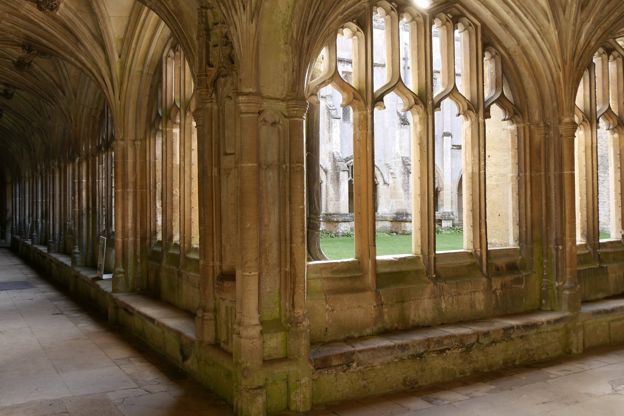
Lacock Abbey, Fox Talbot Museum and Village
Historic houses and heritage · Lacock
The National Trust's abbey made from a medieval nunnery, where Fox Talbot made the earliest surviving photographic negative in 1835, with its museum and village.
Car-free · Dog-friendly · EV charging
Verified Oct 2026
-
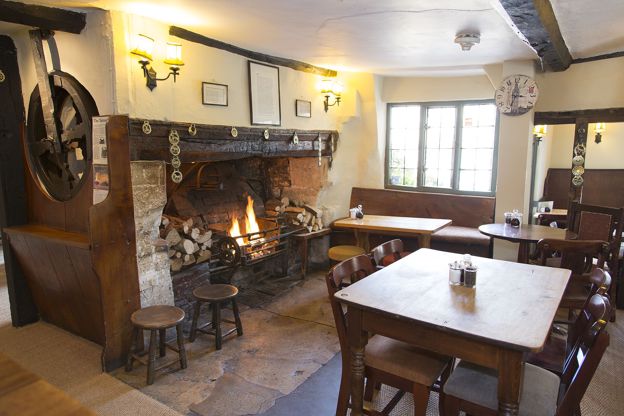
The George Inn
Pubs · Lacock
A Wadworth pub on West Street, Lacock, which says it dates to around 1361, serving food from midday to 8pm, with dogs welcome.
Dog-friendly · Family-friendly
Verified Oct 2026
-
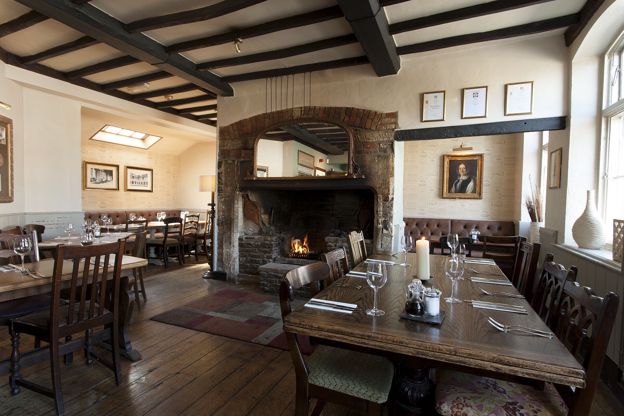
The Red Lion, Lacock
Inn · Lacock
A Wadworth pub in a Georgian building on Lacock's High Street, with five double rooms upstairs and dogs welcome in the bar and the bedrooms.
Dog-friendly
Verified Oct 2026
Stories about St Cyriac's Church, Lacock
-
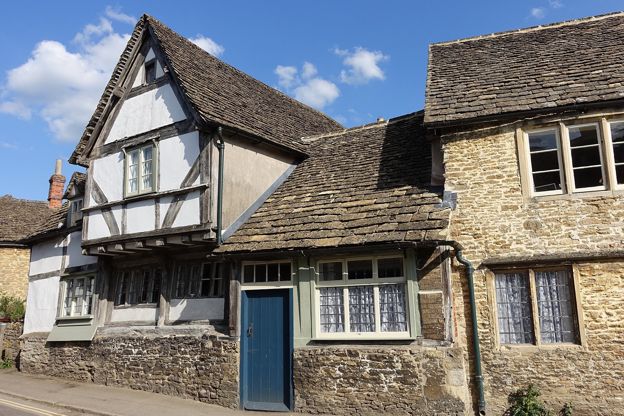
Downton Abbey in the Cotswolds: Bampton, Cogges and Lacock
Story · Guides · 7 minute read
The Downton Abbey locations you can visit around the Cotswolds: Bampton as the village of Downton, Cogges as Yew Tree Farm and Lacock's livestock show and royal parade, with what each custodian confirms.
-
Harry Potter in the Cotswolds: Lacock Abbey and Gloucester Cathedral
Story · Guides · 6 minute read
Where Harry Potter was filmed around the Cotswolds: Lacock Abbey's cloisters and village, which the National Trust ties to four films, and Gloucester Cathedral's fan-vaulted cloister, with tickets, tours and parking.
-
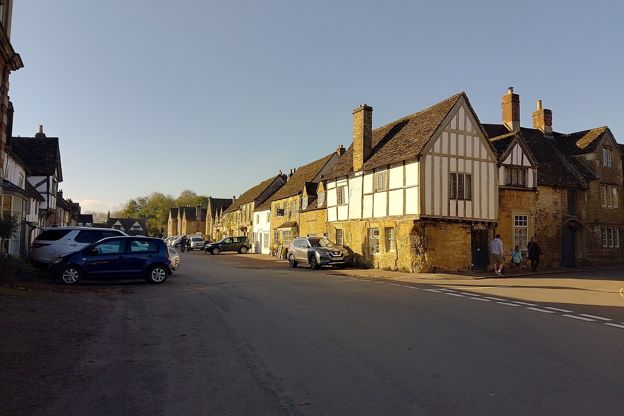
Pride and Prejudice at Lacock: Meryton on the High Street
Story · Guides · 6 minute read
Lacock played Meryton in the BBC's 1995 Pride and Prejudice, with the Red Lion as the assembly rooms: what you can see, the other dramas filmed in the village, and how to visit.
More sights to see
-
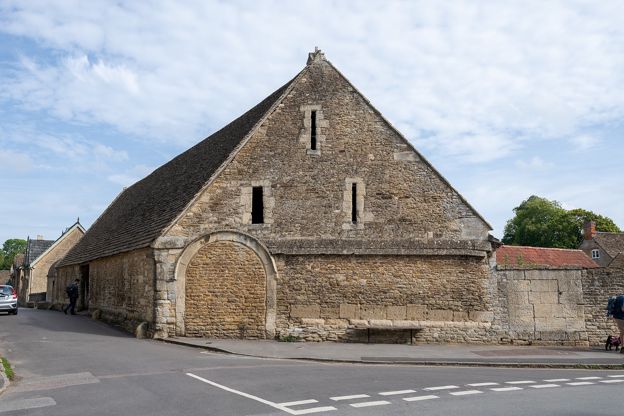
Tithe barn, Lacock
Sight · Historic building · Lacock
Lacock Abbey's fourteenth-century barn on East Street: eight bays of raised cruck trusses on stone blocks, a beaten earth floor and carpenters' protective marks. Grade I, owned by the National Trust, with the village lock-up at its north end.
-
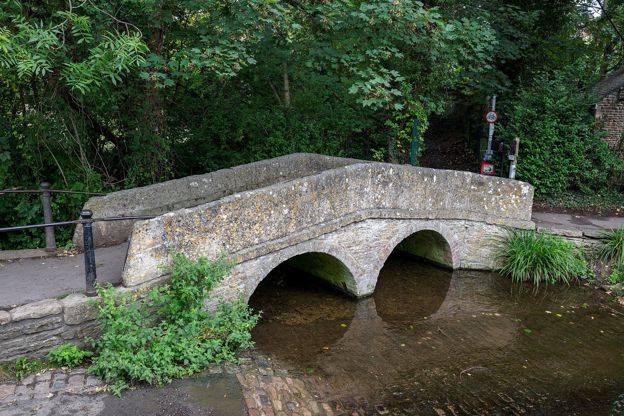
Packhorse bridge, Lacock
Sight · Bridge · Lacock
A small humpbacked eighteenth-century bridge of two arches over the Bide Brook below St Cyriac's Church in Lacock, by the lane called Nethercote Hill, marked on the tithe map as Dummer's Bridge. Grade II; free on a footpath.
-
Lock-up, Lacock
Sight · Historic building · Lacock
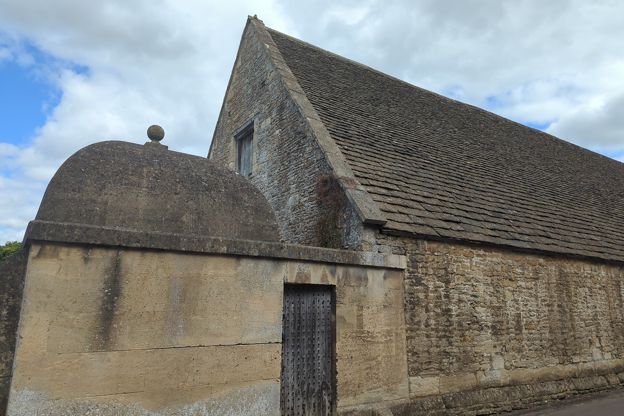
Lacock's village lock-up on East Street: a late eighteenth-century stone cell with a domed roof and ball finial, no windows and a studded door, where drunks and offenders were held overnight. Joined to the tithe barn. Grade II.