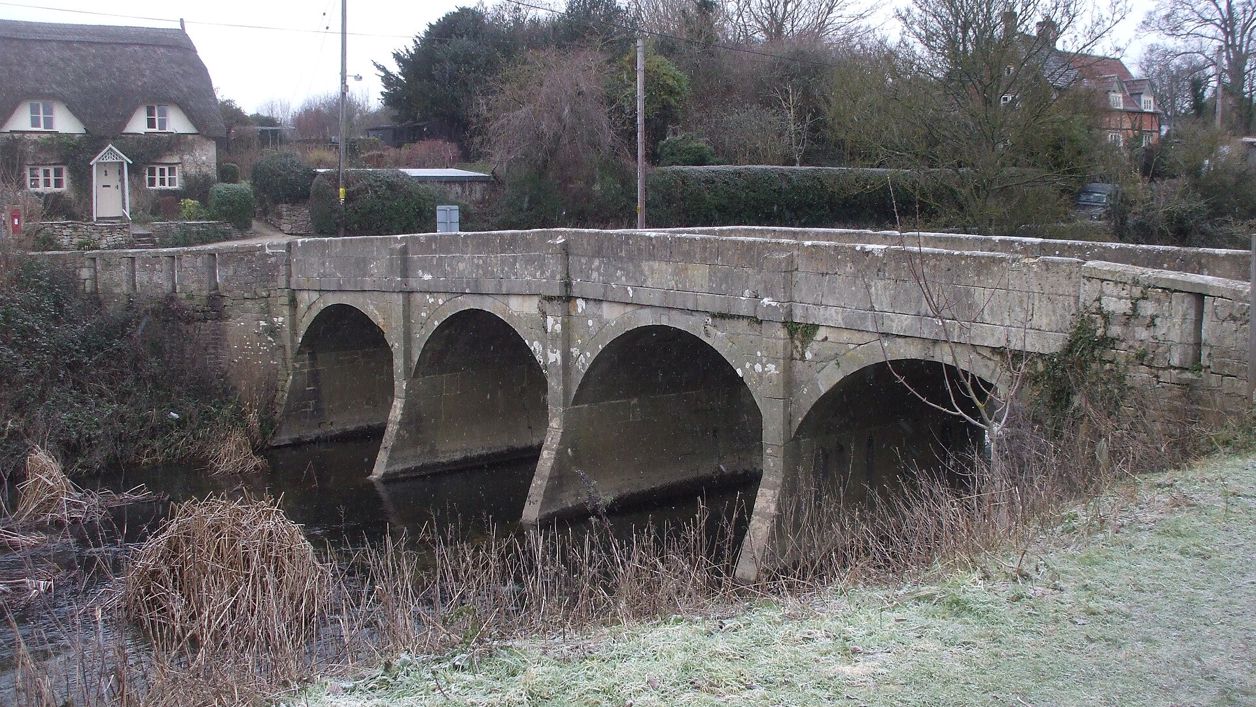
John Lord, CC BY-SA 2.0, via Wikimedia Commons
Rey Bridge, Lacock
The four-arched stone bridge that carries the lane through Reybridge over the River Avon, just north of Lacock: early to mid eighteenth century, with WW 1745 cut on one pier and 1691 apparently carved under an arch. Grade II.
Bridge
LacockRey Bridge carries the lane through Reybridge, a hamlet just north of Lacock, over the River Avon on four stone arches. Historic England dates it to the early to mid eighteenth century and lists it Grade II, and two dates cut into its stones, 1691 and 1745, hint at an older crossing rebuilt.
History
The Avon divides Lacock from Reybridge, and the bridge is the hamlet's link to the village. It was once more than that: Wiltshire Council's community history says that for several centuries the London to Bath road came over Naish Hill and crossed the river here, and that Reybridge was the only bridge across the Avon in the area until the seventeenth century, when a new bridge near the abbey brought the road off Bowden Hill and into Lacock's High Street instead. The listing places the present bridge in the early to mid eighteenth century, which fits the inscription WW 1745 on one of its upstream piers. The arch next to it appears to have 1691 carved on its underside, so part of the bridge may be older than the rest, or the stone may have been reused; the listing records the date as an apparent reading only. The listing does not say who WW was.
The CPRE Wiltshire walk leaflet says the fields beyond the bridge were Lacock's industrial quarter in the eighteenth century, with spinning, weaving, chair-making, tanning and hurdle-making. East of the hamlet, the line of the Wilts & Berks Canal, opened in 1810, passed close by; Towpath Talk reported in May 2023 that the length towards Reybridge was still unrestored, with the rewatered stretch beginning further north-east at Double Bridge.
What to see
Look at the bridge from the bank on the upstream side. It is built of ashlar on four segmental arches, flatter than a semicircle, standing on thin piers with cutwaters on the upstream face to split the current. A raised band runs under the parapet, and the parapet itself has raised piers above the river piers. The inscription WW 1745 is on one of the upstream piers; the 1691 date is on the soffit of the arch beside it, so you need to look up from the bank to find it.
Visiting
Rey Bridge is a public road bridge, free and open at any time. It carries traffic, and we could not confirm a separate footway, so walkers share the carriageway; take care, and keep dogs close. OpenStreetMap mappers note that the road over the bridge can flood after heavy rain, and that it carries a 7.5-tonne weight limit.
Getting there
From Lacock church, the lane runs north out of the village to Reybridge, about 600m away. Park in the National Trust car park on Hither Way (SN15 2LG), free to members, and walk through the village past St Cyriac's and over the packhorse bridge. The nearest stations are Melksham, about 3.5 miles from Lacock by road, and Chippenham, about 4.5 miles; the Faresaver X34 bus between Chippenham and Melksham stops in Lacock, including at the Reybridge turn.
Nearby
Downstream and east of the village, the road to Bowden Hill crosses the river on the older Lacock Bridge, which has medieval origins. Beyond Reybridge, the field paths lead east towards the Wilts & Berks Canal. Back in the village, St Cyriac's Church, Lacock Abbey and the pubs, The George Inn and The Red Lion, are all within a short walk.
Stay and eat near Rey Bridge, Lacock
-
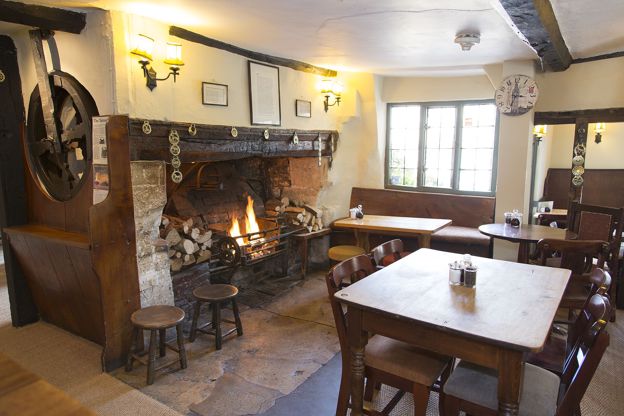
The George Inn
Pubs · Lacock
A Wadworth pub on West Street, Lacock, which says it dates to around 1361, serving food from midday to 8pm, with dogs welcome.
Dog-friendly · Family-friendly
Verified Oct 2026
-
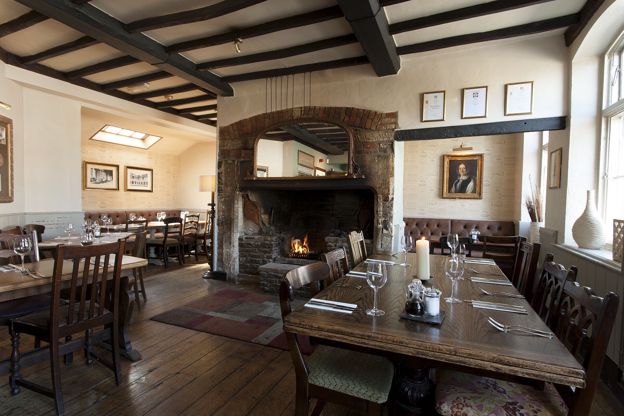
The Red Lion, Lacock
Inn · Lacock
A Wadworth pub in a Georgian building on Lacock's High Street, with five double rooms upstairs and dogs welcome in the bar and the bedrooms.
Dog-friendly
Verified Oct 2026
-
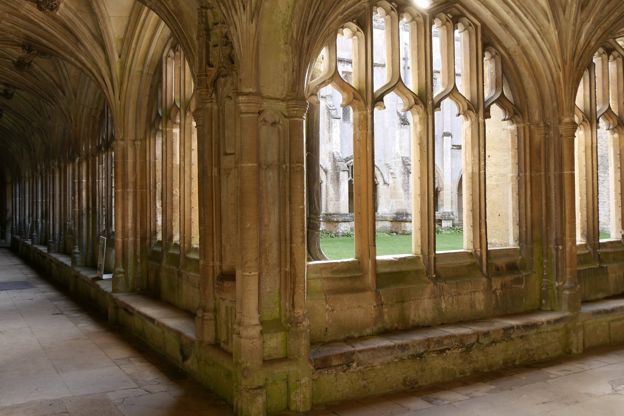
Lacock Abbey, Fox Talbot Museum and Village
Historic houses and heritage · Lacock
The National Trust's abbey made from a medieval nunnery, where Fox Talbot made the earliest surviving photographic negative in 1835, with its museum and village.
Car-free · Dog-friendly · EV charging
Verified Oct 2026
More sights to see
-
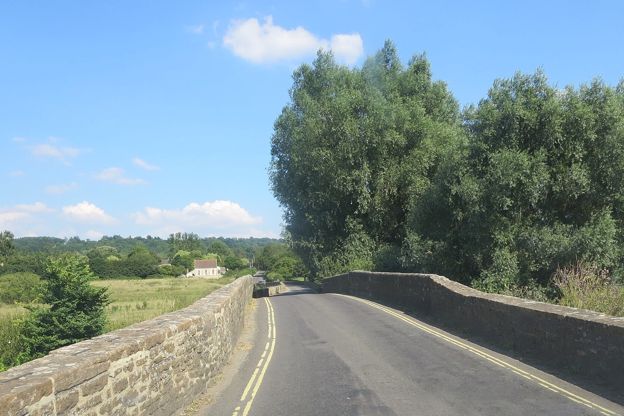
Lacock Bridge
Sight · Bridge · Lacock
Two stone bridges and a causeway carrying the road east out of Lacock over the Avon and its water meadows, medieval to seventeenth century in origin and repaired in 1809, when G. Banks cut his name in the parapet. Grade II*.
-
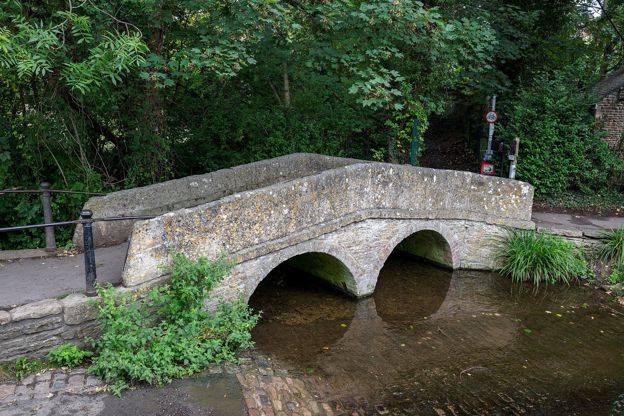
Packhorse bridge, Lacock
Sight · Bridge · Lacock
A small humpbacked eighteenth-century bridge of two arches over the Bide Brook below St Cyriac's Church in Lacock, by the lane called Nethercote Hill, marked on the tithe map as Dummer's Bridge. Grade II; free on a footpath.
-
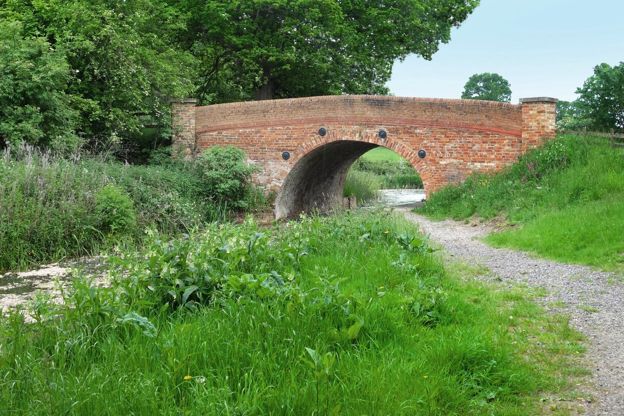
Wilts & Berks Canal at Lacock
Sight · River · Lacock
A restored, watered stretch of the Wilts & Berks Canal north-east of Lacock, from Pewsham Locks to Double Bridge below Naish Hill, on a narrow canal of 1795 to 1810 that carried Somerset coal. Free on the towpath.