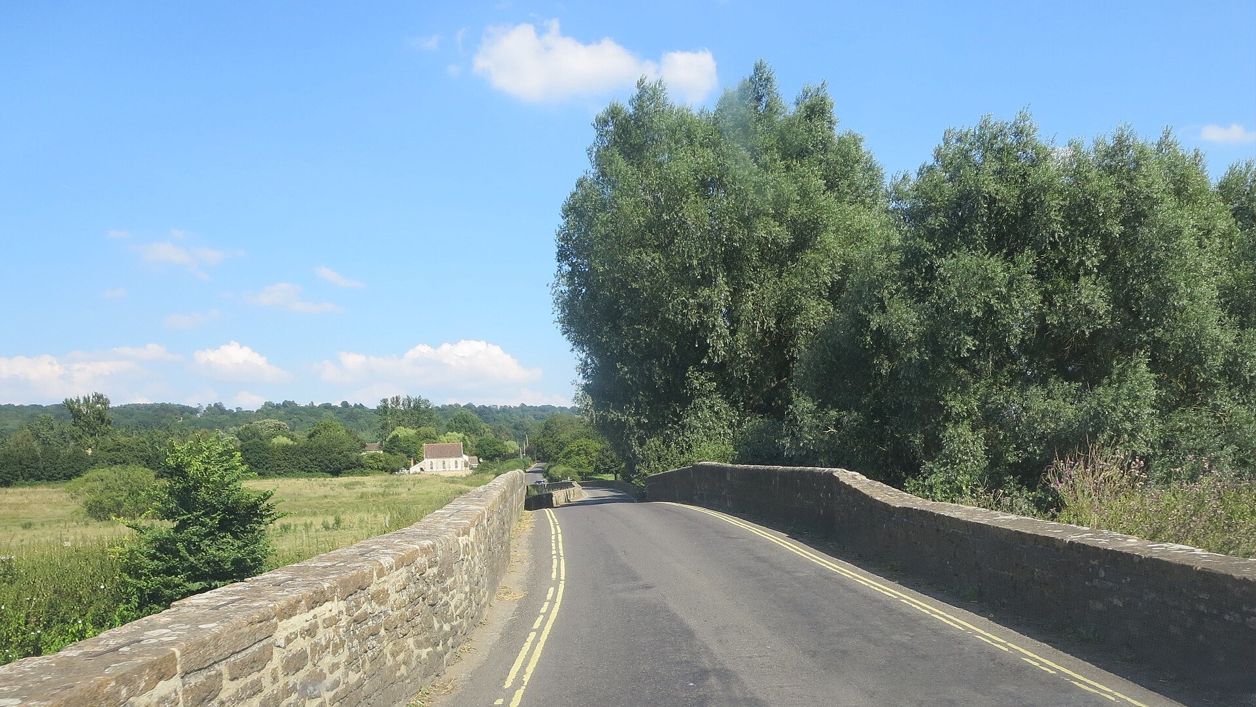
Stuart Logan, CC BY-SA 2.0, via Wikimedia Commons
Lacock Bridge
Two stone bridges and a causeway carrying the road east out of Lacock over the Avon and its water meadows, medieval to seventeenth century in origin and repaired in 1809, when G. Banks cut his name in the parapet. Grade II*.
Bridge
LacockLacock Bridge is in fact two bridges and a long causeway between them, carrying the road east out of Lacock over the River Avon, a smaller channel and the water meadows towards Bowden Hill. Its fabric runs from the Middle Ages to the seventeenth century, with a restoration dated 1809, and it is listed Grade II*, a grade above the village's other bridges.
History
The crossing is old, and the listing says the bridge keeps a significant share of its early fabric for all its later repairs. It was once known as Foot Bridge, because it lay at the foot of the hill rising to the west, on which the village stands.
For much of the seventeenth century, records show, the bridge was too decayed for wheeled traffic, and so a good deal of what you see is later repair. The main campaign came early in the nineteenth century: a date stone with the inscription G. Banks 1809 is set in the parapet of the second bridge, and that bridge's two northern arches, round and lined with brick, belong to the same work.
Since 1964 the Lacock bypass has taken through traffic away from the village, but this road still links Lacock with Bowden Hill.
What to see
Walk out along the road and look over the parapets. The main bridge over the Avon has four pointed arches, rebated (stepped in) round their edges, with cutwaters on the upstream side. On the downstream side a heavy central pier with a stepped top stands out, and the two right-hand arches sit a little forward of the left-hand pair, a sign of rebuilding.
Between the bridges, the causeway is lined with rubble walls, about 19m on the north side and 68m on the south, pierced with square holes to let floodwater pass through rather than pile up against them. The second bridge, over a tributary, has five arches: three pointed and rebated like the main bridge, with stepped piers downstream, and the two round, brick-lined arches of the 1809 repair at the north end. Find the G. Banks inscription on its parapet.
Visiting
The bridge is a public road and free to cross at any time. The road is narrow, with a narrow verge, and carries traffic to and from Bowden Hill, so walk in single file and keep dogs on a lead. The arches are best seen from beside the parapets; the holes in the causeway walls show how often the meadows flood here.
Getting there
The bridge is on the road east from Lacock, under a kilometre from the village centre. Park in the National Trust car park on Hither Way (SN15 2RQ), free to members, and walk east. The nearest stations are Melksham, about 3.5 miles from Lacock by road, and Chippenham, about 4.5 miles; the Faresaver X34 bus runs between Chippenham and Melksham through Lacock.
Nearby
Lacock's other bridges are smaller and later: the eighteenth-century packhorse bridge over the Bide Brook below the church and Rey Bridge over the Avon at Reybridge. Up the hill to the east, Bowden Park is James Wyatt's house of 1796. In the village are St Cyriac's Church, Lacock Abbey and two pubs, The Red Lion and The George Inn.
Stay and eat near Lacock Bridge
-
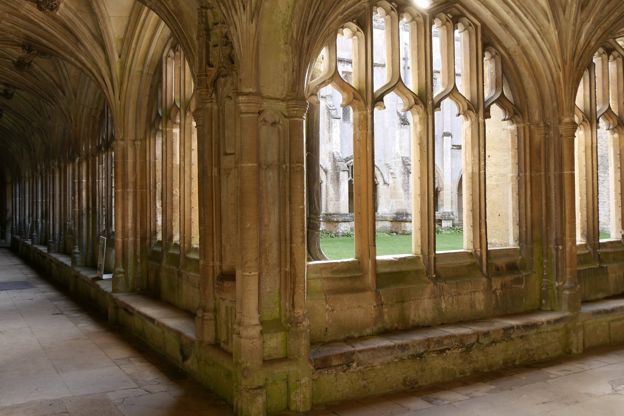
Lacock Abbey, Fox Talbot Museum and Village
Historic houses and heritage · Lacock
The National Trust's abbey made from a medieval nunnery, where Fox Talbot made the earliest surviving photographic negative in 1835, with its museum and village.
Car-free · Dog-friendly · EV charging
Verified Oct 2026
-
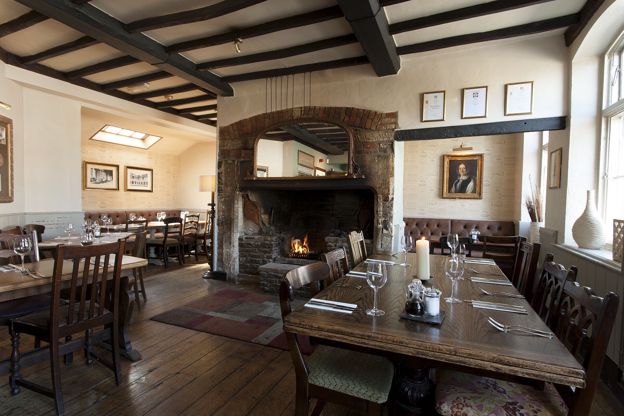
The Red Lion, Lacock
Inn · Lacock
A Wadworth pub in a Georgian building on Lacock's High Street, with five double rooms upstairs and dogs welcome in the bar and the bedrooms.
Dog-friendly
Verified Oct 2026
-
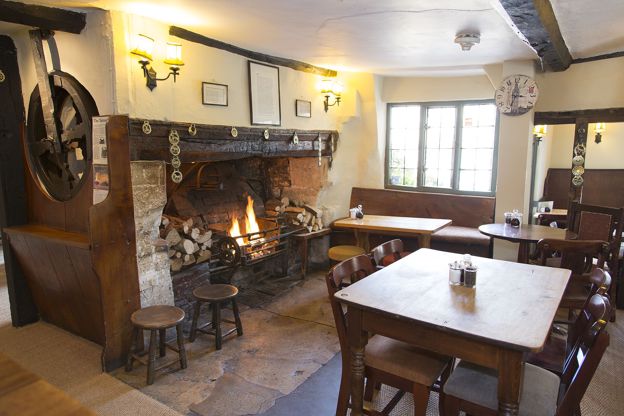
The George Inn
Pubs · Lacock
A Wadworth pub on West Street, Lacock, which says it dates to around 1361, serving food from midday to 8pm, with dogs welcome.
Dog-friendly · Family-friendly
Verified Oct 2026
More sights to see
-
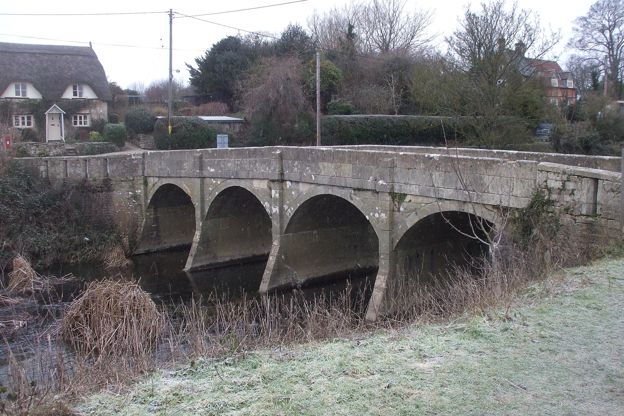
Rey Bridge, Lacock
Sight · Bridge · Lacock
The four-arched stone bridge that carries the lane through Reybridge over the River Avon, just north of Lacock: early to mid eighteenth century, with WW 1745 cut on one pier and 1691 apparently carved under an arch. Grade II.
-
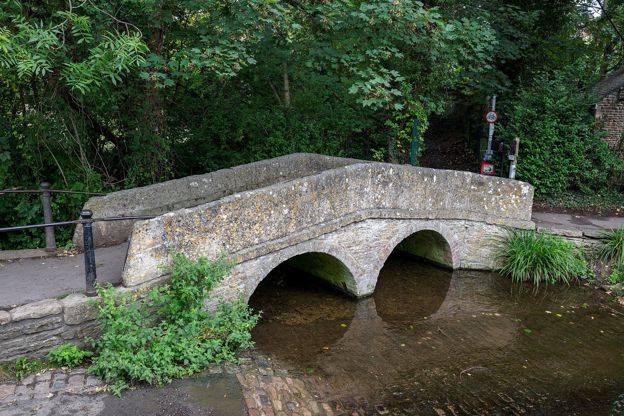
Packhorse bridge, Lacock
Sight · Bridge · Lacock
A small humpbacked eighteenth-century bridge of two arches over the Bide Brook below St Cyriac's Church in Lacock, by the lane called Nethercote Hill, marked on the tithe map as Dummer's Bridge. Grade II; free on a footpath.
-

Bowden Park, Lacock
Sight · Historic building · Lacock
James Wyatt's neoclassical house of 1796 on Bowden Hill above Lacock, with a full-height bow behind massive Ionic columns, later bought by the brother of W. E. Gladstone. Private; Grade I, seen from the public path across the park.