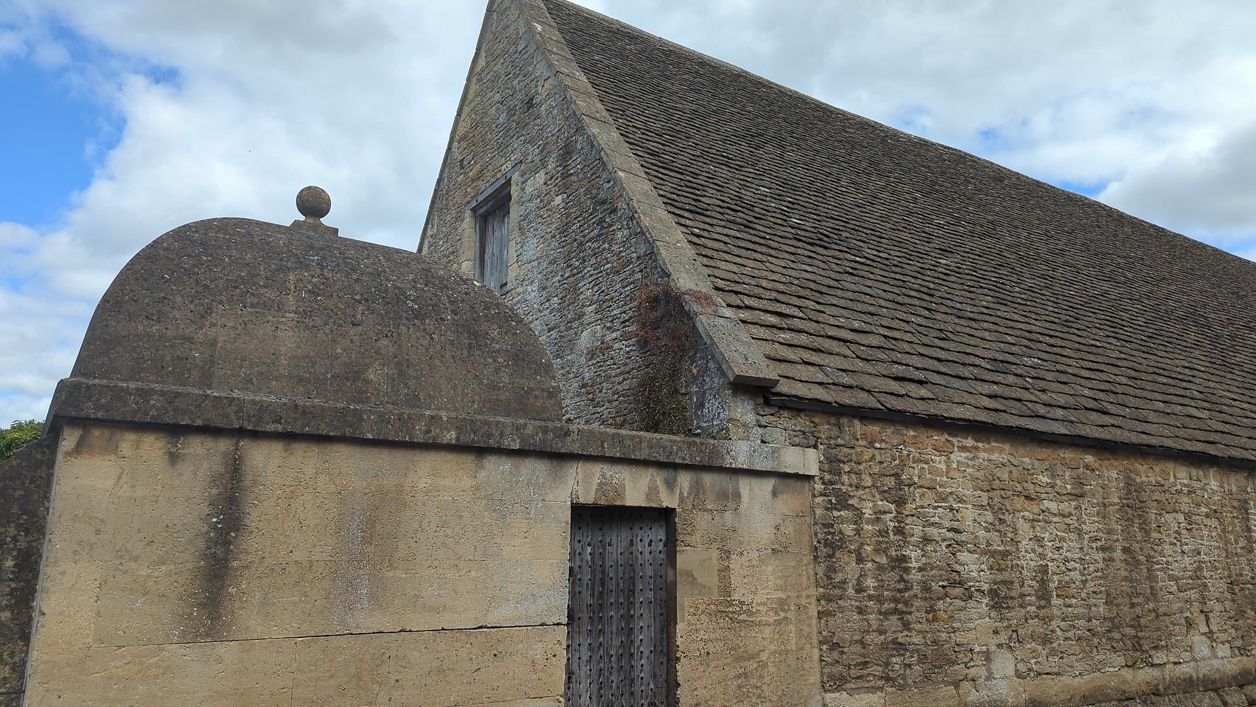
Chris debian, CC BY-SA 4.0, via Wikimedia Commons
Lock-up, Lacock
Lacock's village lock-up on East Street: a late eighteenth-century stone cell with a domed roof and ball finial, no windows and a studded door, where drunks and offenders were held overnight. Joined to the tithe barn. Grade II.
Historic building
LacockThe lock-up is a tiny listed building on East Street in Lacock: a square stone cell under a domed roof, joined by a wall on its west side to the tithe barn. It is thought to date from the late eighteenth century, when it held drunks and offenders overnight, and it is listed Grade II.
History
Lock-ups were the village's answer to keeping the peace before there were police stations. Historic England's listing explains that these small buildings held offenders until they could be taken before the local magistrate, and also drunks, vagrants and anyone causing a disturbance. They were usually built by the parish or a wealthy local resident, the earliest recorded examples go back to the thirteenth century, and most fell out of use in the mid-nineteenth century once regular police forces were set up. Their dim, windowless interiors earned them the name blind houses.
Lacock's is thought to be late eighteenth century. The CPRE Wiltshire walk leaflet sums up its use plainly: the village's drunk and riotous revellers spent the night here.
What to see
The cell is built of coursed ashlar on a low plinth, with a band at the line of the cornice, two buttresses on the north side and a domed ashlar roof topped by a stone ball. There are no windows, only a ventilation hole set high in the wall.
You reach it through the wall on its west side, where a timber door studded with iron and hung on thick straps with decorative ends opens into a tiny flagged yard roofed with an iron grille. A second studded door, in a chamfered stone surround, leads into the cell. The listing records a lavatory and a modern timber bed inside, so it has been fitted out in recent times.
The lock-up is listed partly for its group value: it stands beside the Grade I barn and among the other listed buildings of the village, a reminder of how order was kept in a rural parish.
Visiting
The lock-up can be seen from East Street at any time and costs nothing; we found no regular opening of the cell. The street is level, so it is easy to see from a wheelchair or pushchair. The National Trust lists toilets by its Stables Café and an accessible toilet (RADAR key) in the village.
Getting there
The lock-up is on East Street, Lacock, next to the tithe barn. Park in the National Trust car park on Hither Way (SN15 2LG), south of the village, which is free to members and has Blue Badge bays, and walk up the High Street. Chippenham has the nearest railway station, about 4 miles away by road.
Nearby
The tithe barn it is joined to belonged to the nuns of Lacock Abbey. A minute's walk east is St Cyriac's Church, with the packhorse bridge over the Bide Brook below it. The Red Lion is a few doors away on the High Street and The George Inn is on West Street.
Stay and eat near Lock-up, Lacock
-
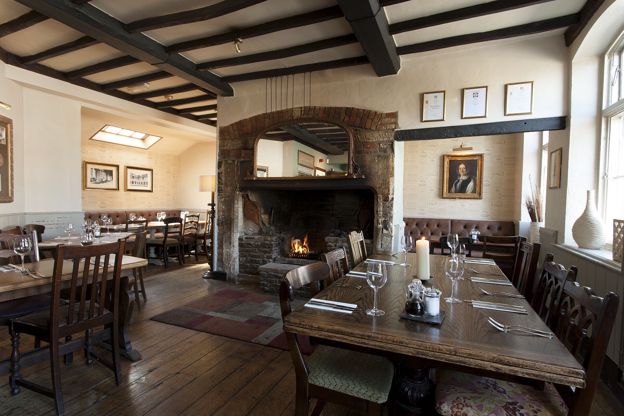
The Red Lion, Lacock
Inn · Lacock
A Wadworth pub in a Georgian building on Lacock's High Street, with five double rooms upstairs and dogs welcome in the bar and the bedrooms.
Dog-friendly
Verified Oct 2026
-
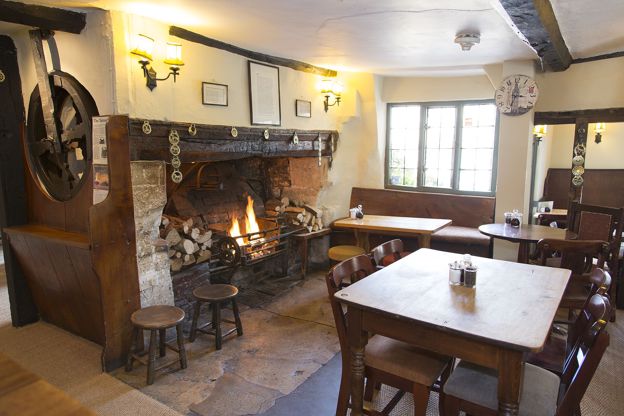
The George Inn
Pubs · Lacock
A Wadworth pub on West Street, Lacock, which says it dates to around 1361, serving food from midday to 8pm, with dogs welcome.
Dog-friendly · Family-friendly
Verified Oct 2026
-
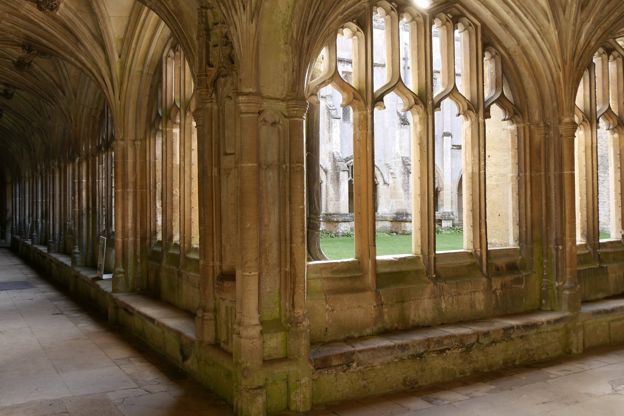
Lacock Abbey, Fox Talbot Museum and Village
Historic houses and heritage · Lacock
The National Trust's abbey made from a medieval nunnery, where Fox Talbot made the earliest surviving photographic negative in 1835, with its museum and village.
Car-free · Dog-friendly · EV charging
Verified Oct 2026
Stories about Lock-up, Lacock
-
Harry Potter in the Cotswolds: Lacock Abbey and Gloucester Cathedral
Story · Guides · 6 minute read
Where Harry Potter was filmed around the Cotswolds: Lacock Abbey's cloisters and village, which the National Trust ties to four films, and Gloucester Cathedral's fan-vaulted cloister, with tickets, tours and parking.
-
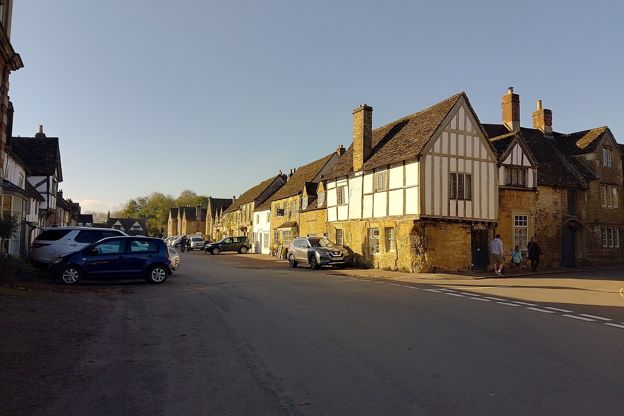
Pride and Prejudice at Lacock: Meryton on the High Street
Story · Guides · 6 minute read
Lacock played Meryton in the BBC's 1995 Pride and Prejudice, with the Red Lion as the assembly rooms: what you can see, the other dramas filmed in the village, and how to visit.
More sights to see
-
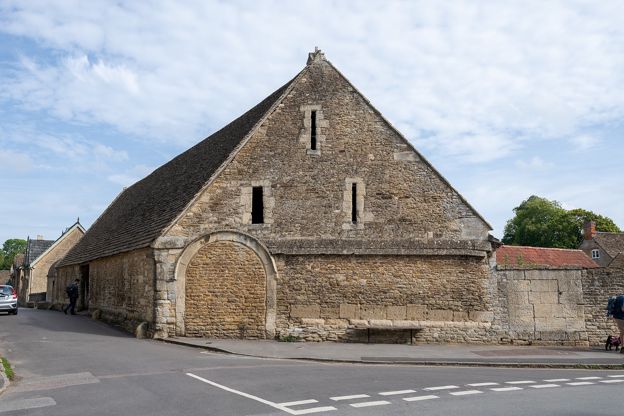
Tithe barn, Lacock
Sight · Historic building · Lacock
Lacock Abbey's fourteenth-century barn on East Street: eight bays of raised cruck trusses on stone blocks, a beaten earth floor and carpenters' protective marks. Grade I, owned by the National Trust, with the village lock-up at its north end.
-
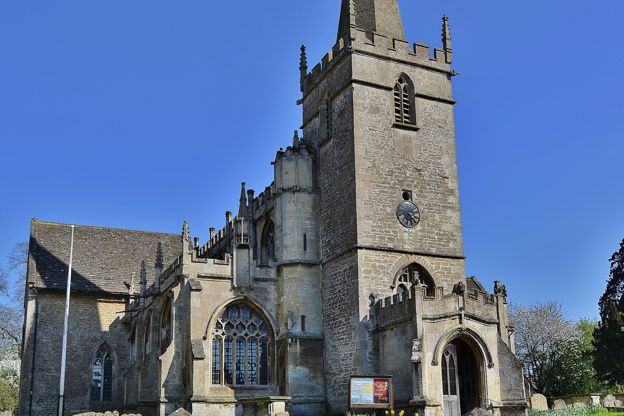
St Cyriac's Church, Lacock
Sight · Church · Lacock
Lacock's Grade I parish church, mostly fifteenth century, with a spire rebuilt in 1604, a vaulted chapel of about 1430 holding William Sharington's Renaissance tomb, and links to Fox Talbot. Open daily in daylight hours.
-
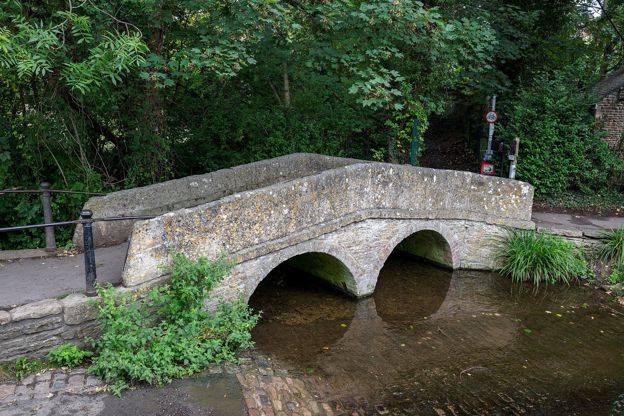
Packhorse bridge, Lacock
Sight · Bridge · Lacock
A small humpbacked eighteenth-century bridge of two arches over the Bide Brook below St Cyriac's Church in Lacock, by the lane called Nethercote Hill, marked on the tithe map as Dummer's Bridge. Grade II; free on a footpath.