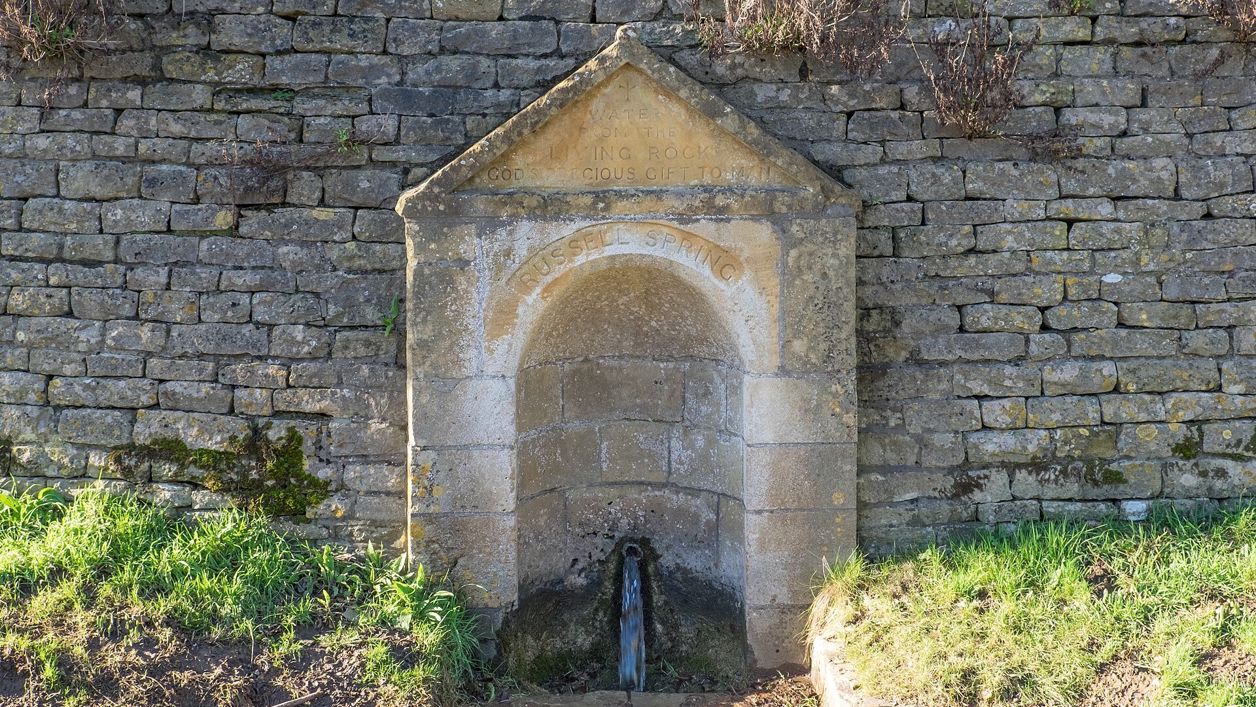
DeFacto, CC BY-SA 4.0, via Wikimedia Commons
Russell Spring, Blockley
The Russell Spring is a small gabled niche on Blockley's High Street, inscribed "Water from the Living Rock God's Precious Gift to Man", built in the middle of the nineteenth century by men out of work in winter, in the wall below a raised walkway. Grade II; seen at any time.
Monument
BlockleyThe Russell Spring is a small stone niche with a water spout in the wall below the raised walkway on the High Street in Blockley, nearly opposite the gate of Malvern House. It carries the inscription "Water from the Living Rock God's Precious Gift to Man", and with the walkway above it dates from the middle of the nineteenth century. It is listed Grade II.
History
The spring and the walkway above it date from the middle of the nineteenth century. The listing records that the spring was built by unemployed men during a winter, under the supervision of Richard Belcher, the parish waywarden, whose job was the upkeep of the roads. The listing for the raised pavement on the other side of the village too, from St George's Terrace to Rodneys, listed separately, names Belcher as its probable mason.
Lucy Russell and the silk mills
The spring takes its name from Lucy Russell, who died in 1858 and worked the nearby mill from about 1800 to 1820. That was Malvern Mill, across the road, then a silk mill known as Russell's Mill. The Gloucestershire Society for Industrial Archaeology counts her as one of only two women among the nine master silk throwsters in Blockley's census of 1827, and Pigot's directory of 1842 still lists her among the village's silk throwsters. Blockley's water was its living: the brook below the High Street drove the village's silk mills. The Victoria County History records the first, built by Henry Whatcot, who died in 1718, and five working by 1780; the trade fell away in the nineteenth century, and the mill buildings are now houses. Blockley itself was a detached part of Worcestershire until 1931.
What to see
Look for the spring first: a simple gabled niche, a little stone aedicule, with the spout set in it, the inscription in the tympanum and the name "Russell Spring" carved above. Then step back to see the wall. It is drystone rubble with a parapet of stones set on end (a soldier course) and a plain string course at the level of the path, and it runs along the north-west side of the road from Arlington Terrace to a little short of Rock Bank. At its highest, above the spring, the walkway is about 3.4m above the road.
Across the road, Malvern Mill is an eighteenth-century mill, disused since 1923 and now a house, its wheel-house altered into an extension. Further along the High Street, Bankside, the Silk Mill and the Granary are seventeenth-century houses remodelled in about 1800.
Visiting
The Russell Spring is on the public High Street, so it can be seen at any time and costs nothing. The road is narrow, so stand on the walkway or the far pavement rather than in the road to look at it. Do not rely on the spout for drinking water; it is not described as a supply.
Getting there
Blockley has no council car park, but walkers report free street parking. Stagecoach buses 1, 1A, 2 and 2A link the village with Moreton-in-Marsh station and Chipping Campden about six times a day each way between them on weekdays (late October 2026), and some on Sundays; check the timetable.
On foot, the Blockley and Norcombe Wood loop comes back up the High Street past the spring and the old mills, and the 9-mile walk from Chipping Campden to Blockley follows the same street through the village.
Nearby
St Peter and St Paul, Blockley's church, is a few minutes away by the square, and Blockley Café on Bell Lane is joined to the village shop. The Great Western Arms on Station Road is the village's Hook Norton pub. Over the hill, St Mary's at Batsford is on the walk to Batsford Park, and Chipping Campden's Woolstaplers' Hall and Market Hall are at the other end of the walk from Campden.
Walks past Russell Spring, Blockley
-
Blockley and Norcombe Wood
Walk · Starts in Blockley · 1 hr, 15 mins · Circular
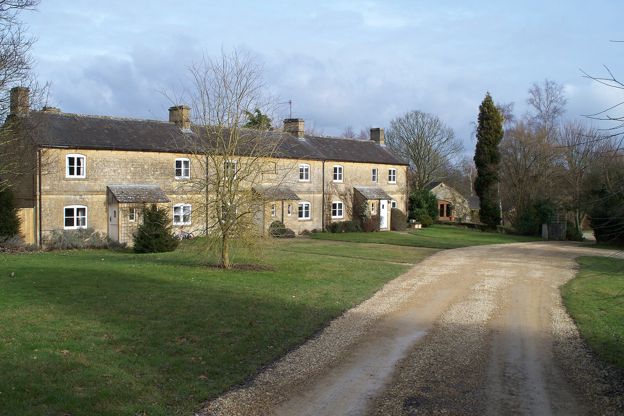
A 3-mile (5km) circular walk from Park Road at the top of Blockley, about an hour and a quarter, moderate with one longer climb and muddy woods. It goes up beside Northwick Park into Norcombe Wood, then down the brook valley and back through the old silk-mill village.
-
Chipping Campden to Blockley
Walk · Starts in Chipping Campden · 3 hrs, 45 mins · Circular
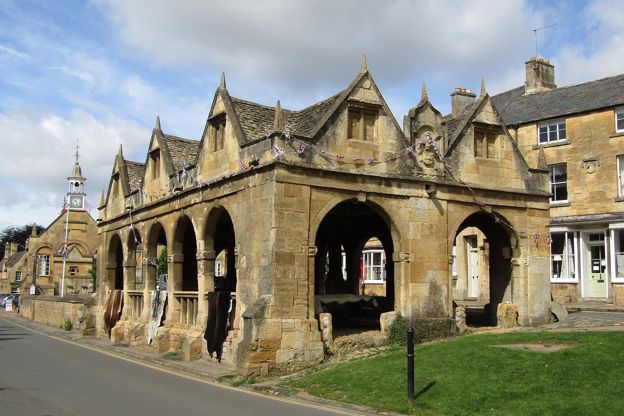
A 9-mile (14.5km) circular walk from the Noel Arms in Chipping Campden to Blockley and back, about three and three quarter hours of moderate walking with 306m of climbing. It goes by Broad Campden, the Monarch's Way and Norcombe Wood, with five stiles and 200m of busy road.
-
Blockley and Batsford Park
Walk · Starts in Blockley · 2 hrs, 15 mins · Circular · Dog-friendly
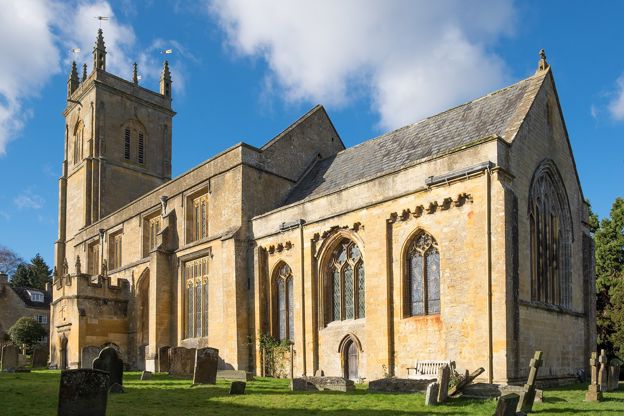
A 4.9-mile (7.9km) circular walk from Bell Lane in Blockley, about two and a quarter hours of moderate walking with two climbs and deep mud in winter. It goes up Pasture Lane, down to Batsford's church, through Batsford Park past the arboretum, and back over the hill.
Stay and eat near Russell Spring, Blockley
-
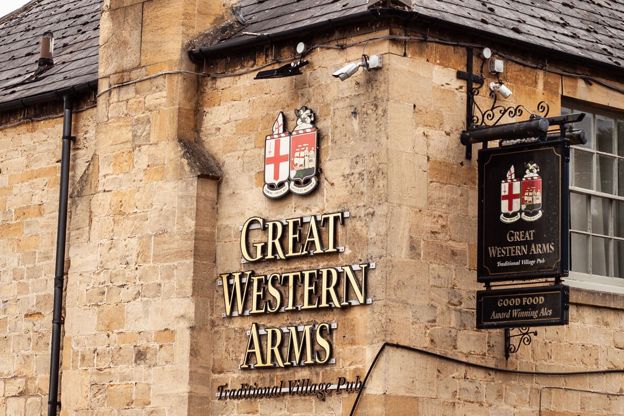
Great Western Arms
Pubs · Blockley
A Hook Norton Brewery pub on Station Road, Blockley, with a large patio, a car park, Hooky ales and dogs welcome.
Dog-friendly · Walker-friendly
Verified Nov 2026
-
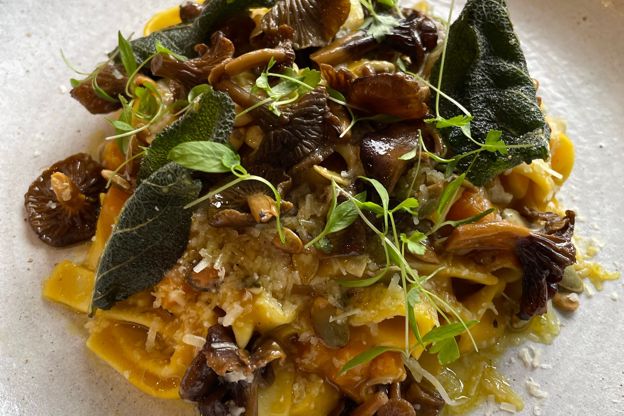
Blockley Café
Cafes and tearooms · Blockley
A licensed, chef-led café on Bell Lane in Blockley, joined to the community-funded village shop, open every day for breakfast, lunch and cream teas, with booked dinners from Wednesday to Saturday and dogs allowed downstairs.
Dog-friendly
Verified Nov 2026
-
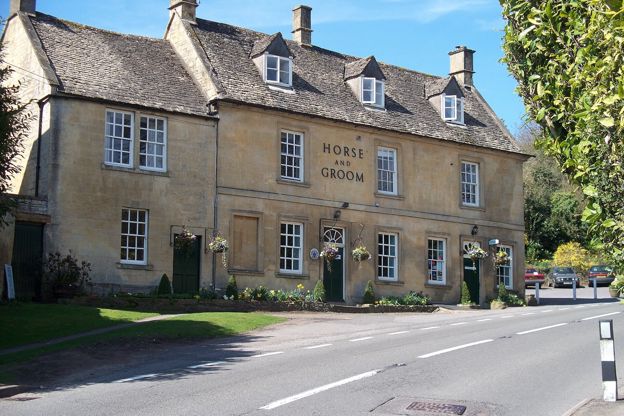
The Horse and Groom
Pubs · Bourton-on-the-Hill
A Grade II listed inn at the top of Bourton-on-the-Hill, owned by Donnington Brewery and run since June 2024 by the chefs Nathan Eades and Liam Goff, with a Michelin Bib Gourmand, a large garden and dog-friendly rooms.
Dog-friendly
Verified Oct 2026
Stories about Russell Spring, Blockley
-
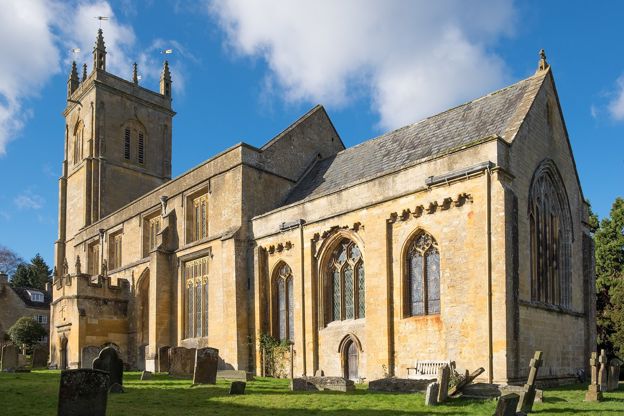
Father Brown in the Cotswolds: Blockley as Kembleford
Story · Guides · 6 minute read
Where the BBC's Father Brown is filmed in the Cotswolds: Blockley as Kembleford, its church as St Mary's, and the railway station, villages and tower that have appeared since 2013, with how to visit each.
More sights to see
-
St Peter and St Paul, Blockley
Sight · Church · Blockley
St Peter and St Paul is Blockley's church by the square, founded about 800 by its own account: a late twelfth-century chancel, medieval brasses, Childe and Rushout monuments and a tower of 1725 to 1727 attributed to the Woodwards. Grade II*, open daily and Father Brown's church.
-
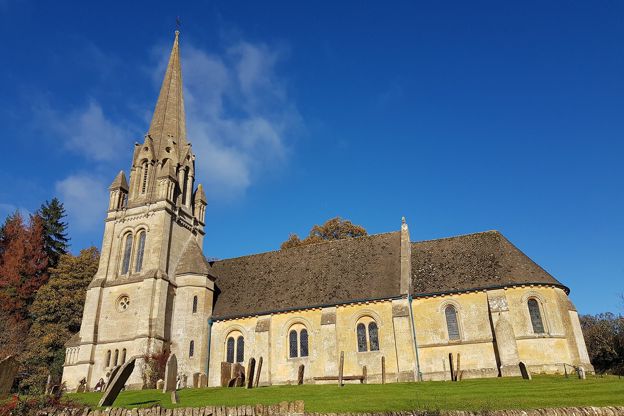
St Mary's Church, Batsford
Sight · Church · Moreton-in-Marsh
St Mary's is the estate church of Batsford, near Moreton-in-Marsh: rebuilt in 1861 and 1862 for the Mitford family in a neo-Norman style, with a spired tower, an apsidal chancel, Kempe glass and monuments to the Freemans and Mitfords. Grade II*.
-
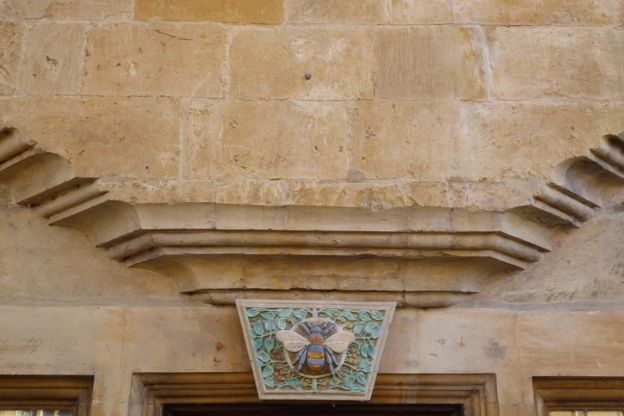
Woolstaplers' Hall, Chipping Campden
Sight · Historic building · Chipping Campden
A fifteenth-century merchants' hall on Chipping Campden's High Street, home of the Calf family of wool merchants and later of C R Ashbee of the Guild of Handicraft, who restored it after 1904. Grade I; seen from the street.