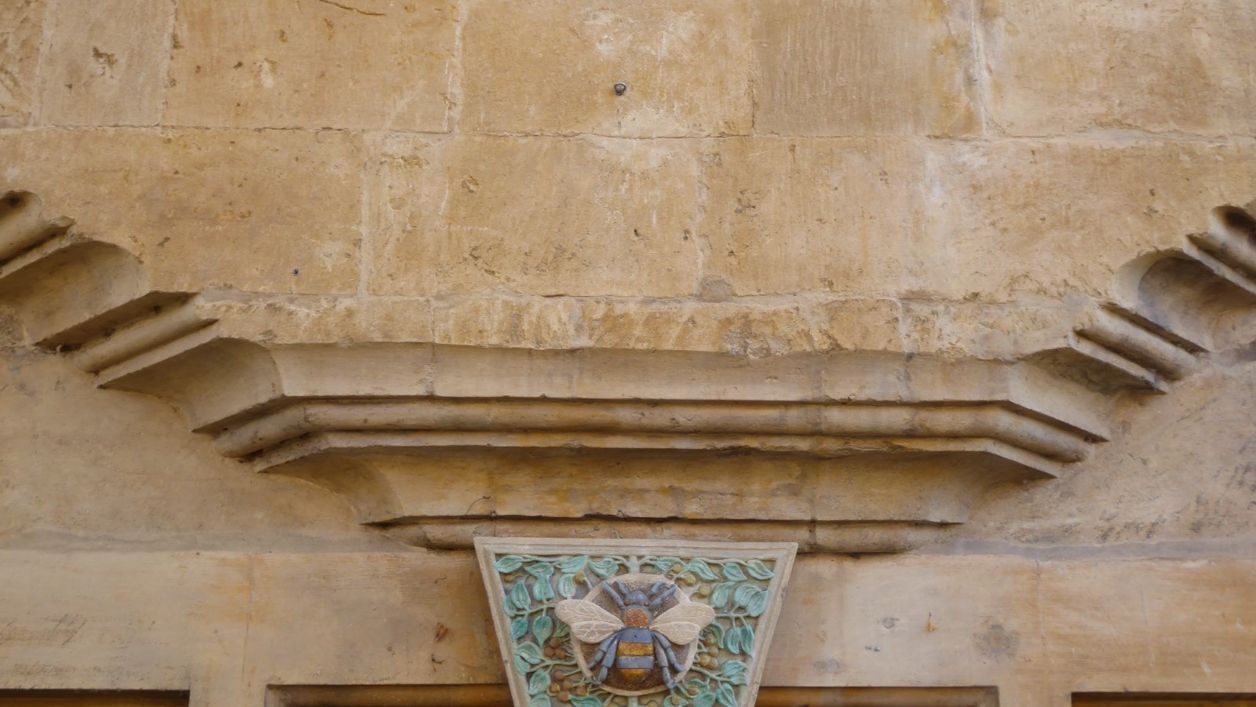
Philip Halling, CC BY-SA 2.0, via Wikimedia Commons
Woolstaplers' Hall, Chipping Campden
A fifteenth-century merchants' hall on Chipping Campden's High Street, home of the Calf family of wool merchants and later of C R Ashbee of the Guild of Handicraft, who restored it after 1904. Grade I; seen from the street.
Historic building
Chipping CampdenWoolstaplers' Hall stands gable end to the High Street in Chipping Campden, on its south-east side, almost opposite Grevel's House. It is a fifteenth-century merchants' hall, home to the Calf family of wool merchants and, five centuries later, to C R Ashbee of the Guild of Handicraft. It is listed Grade I.
History
Woolstaplers' Hall belongs to two great periods in Campden's story, the medieval wool trade and the Arts and Crafts movement. Tradition calls it a wool exchange and merchants' hall, with fourteenth-century origins; what survives is mostly fifteenth century. Historic England's listing suggests that it may have been the private wing, or solar, of a larger house whose hall is now part of Woolstaplers' House next door.
The wool merchants
A woolstapler bought fleeces from the farmers and graded and sold them on, and Campden was one of the great wool markets of the Cotswolds. The Calf family, prominent wool merchants of the later Middle Ages, lived here, and their rebus, a picture-pun on their name, is carved into the spandrels of the big Tudor-arched fireplace on the first floor.
C R Ashbee
In 1902 the designer Charles Robert Ashbee brought his Guild of Handicraft from London's East End to Campden; Court Barn puts the arrivals at 50 Guildsmen and their families. After 1904 he restored this hall as his own home. He took out the attics, added the moulded doorway below the oriel and the three-light window above it, and put his own rebus in glass high in the eastern roof truss; the glass may be by Paul Woodroffe. The listing calls his restoration sensitive by the standards of its day, and it grades the hall I partly because of Ashbee and the Guild, an influential part of the Arts and Crafts movement.
The museum
In the later twentieth century the hall was the Woolstaplers' Hall Museum, a museum of bygones; the history society's archive holds the catalogue of the auction of its contents in 1996, and a Sunday Times article of May 2006 on the hall's restoration and sale.
What to look for
From the street the eye goes to the flat-fronted oriel on the upper floor, of six lights, on moulded corbelling and under a hipped stone roof. Below it is Ashbee's doorway with its heavy keystone. Look up to the coped gable with its decorated saddlestone and the stone chimney, and for the outlines of blocked openings in the gable wall.
Inside, which we have not found open to visitors, the first-floor chamber is the finest room: a vault in the oriel, the Tudor fireplace with the Calf rebus, and an open roof of three bays with two rows of wind-braces.
Visiting
Woolstaplers' Hall is seen from the High Street. Its listing still calls it a museum, but the museum's contents were sold in 1996, and we have found nothing to show that the building opens to visitors today, so treat it as a private building. For Ashbee and the Guild, go to Court Barn on Church Street, the museum of craft and design in Campden.
Getting there
By car, park in Back Ends, where the National Landscape's walk leaflet sends walkers to park free, or in the Market Square car park (GL55 6AW), which charges from 7am to 7pm by card or phone and takes no cash; the hall is about 160m along the High Street from the Market Hall. Stagecoach buses 1, 1A, 2 and 2A stop in the town between Stratford-upon-Avon and Moreton-in-Marsh station.
On foot, Chipping Campden from Broad Campden, a 3.3-mile (5.3km) loop, passes the hall on the High Street.
Nearby
Grevel's House is almost opposite and the Market Hall a short walk west. Court Barn tells the story of the Guild, beside St James's Church and the lodges of Old Campden House. The Bantam Tea Rooms and the Lygon Arms are a few steps away. Our story on the Arts and Crafts movement in the Cotswolds follows Ashbee and the makers who came after him.
Walks past Woolstaplers' Hall, Chipping Campden
-
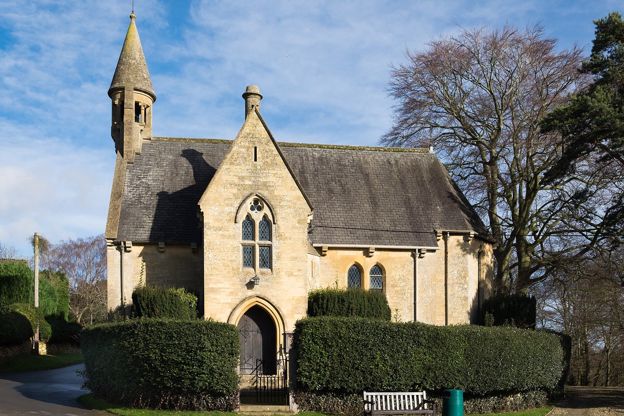
Chipping Campden from Broad Campden
Walk · Starts in Chipping Campden · 1 hr, 15 mins · Circular · Dog-friendly
A 3.3-mile (5.3km) circular walk from St Michael's church in Broad Campden, easy and mostly level, in about an hour and a quarter. It draws a figure of eight over the fields to Lady Juliana's Gateway, along Chipping Campden's High Street, by St James's and back.
-
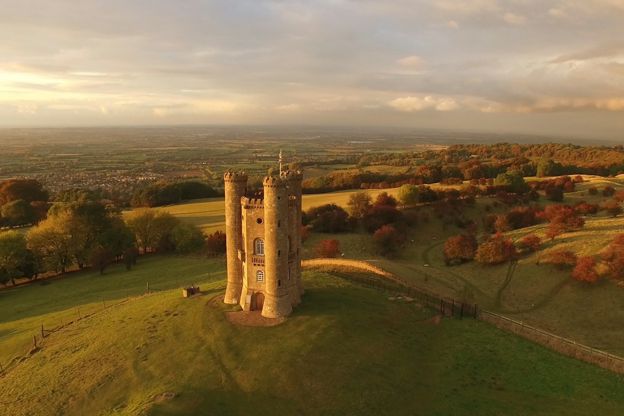
The Cotswold Way
Walk · Dog-friendly
The Cotswold Way is a 102-mile (164km) National Trail walk from Chipping Campden to Bath along the escarpment, in 15 sections; the official guidebook suggests seven to ten days, and its frequent steep climbs make it hard going.
-
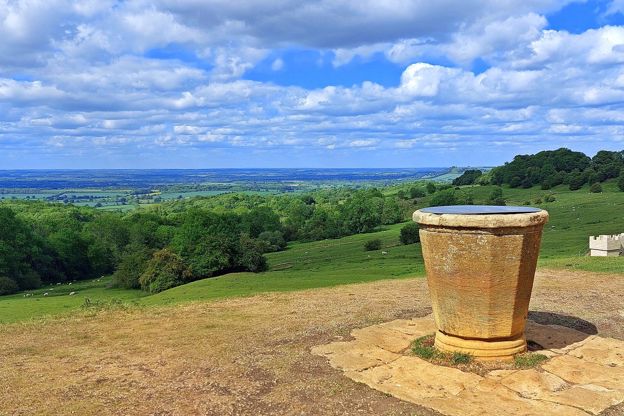
Chipping Campden and Dover's Hill
Walk · Starts in Chipping Campden · 3 hrs, 30 mins · Circular
A 4.5-mile (7.2km) circular walk from the Market Hall in Chipping Campden, two and a half to three and a half hours, moderate with steep sections. It climbs the Cotswold Way to Dover's Hill, home of the Olimpicks, and drops through Lynches Wood; a 3-mile version skips the climbs.
Stay and eat near Woolstaplers' Hall, Chipping Campden
-
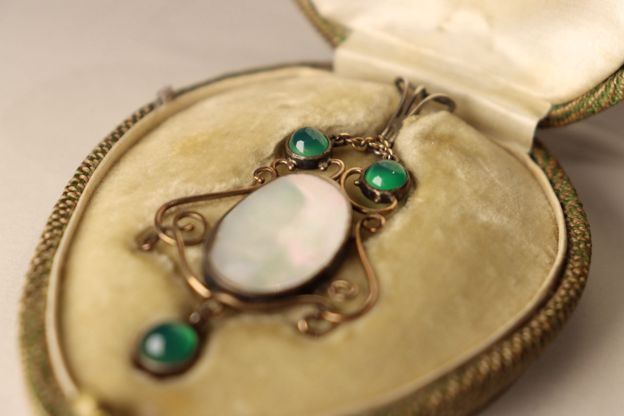
Court Barn Museum
Museums and galleries · Chipping Campden
Chipping Campden's museum of craft and design, telling the story of Ashbee's Guild of Handicraft and the makers who followed, with half price for bus passengers.
Rainy days · Car-free
Verified Oct 2026
-
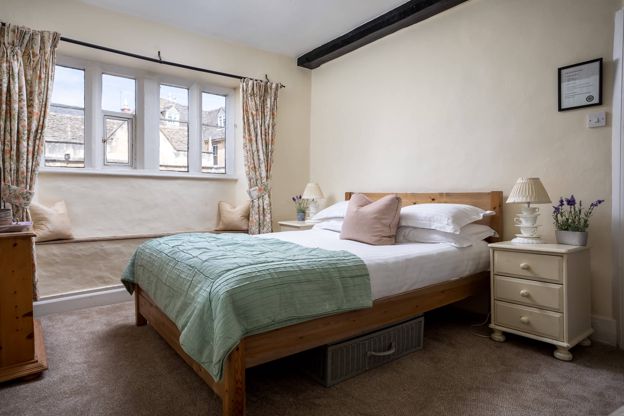
Bantam Tea Rooms
Cafes and tearooms · Chipping Campden
Tea rooms with rooms on the High Street in Chipping Campden, open every day from 9.30am to 5pm.
Verified Oct 2026
-
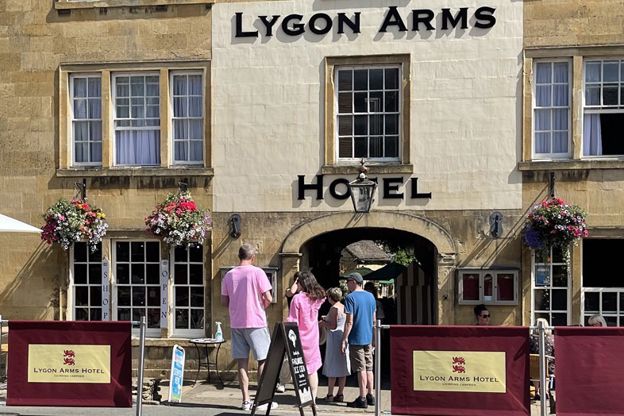
The Lygon Arms, Chipping Campden
Inn · Chipping Campden
A coaching inn with ten rooms on Chipping Campden's High Street, with family rooms, bike storage, free parking at the rear and dogs welcome.
Dog-friendly
Verified Oct 2026
Stories about Woolstaplers' Hall, Chipping Campden
-
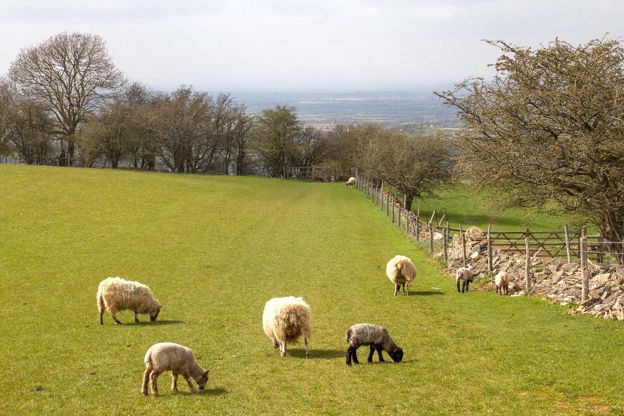
The Cotswold wool trade
Story · History · 9 minute read
How the Cotswold sheep made the hills rich: the medieval export of raw wool through the Staple at Calais, the woolmen of Campden, Northleach and Fairford, the cloth mills of the Stroud valleys, the decline, and where to see it all today.
More sights to see
-
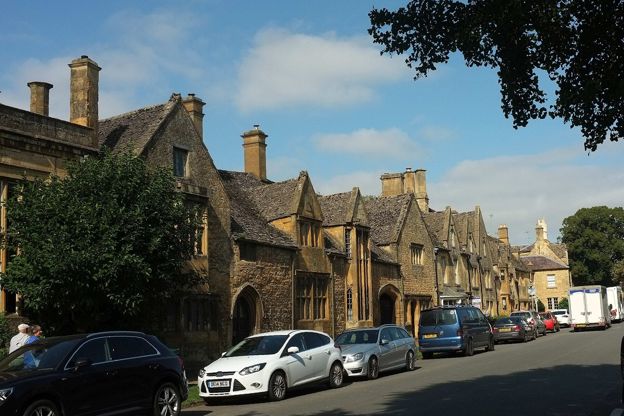
Grevel's House, Chipping Campden
Sight · Historic building · Chipping Campden
A medieval house on Chipping Campden's High Street with a two-storey Perpendicular bay window under gargoyles, named after William Grevel, perhaps the richest Cotswold wool merchant of his day, who died in 1401. Grade I; a private house seen from the street.
-
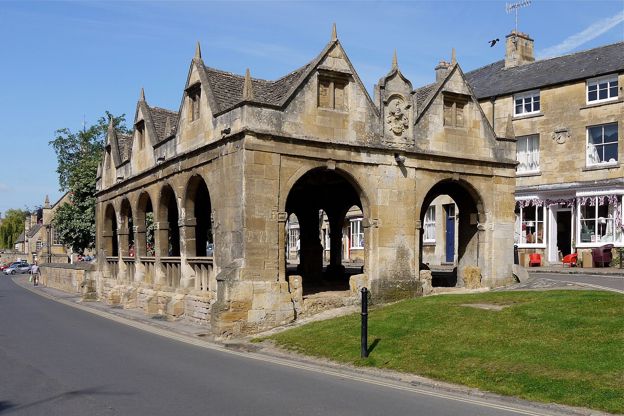
Market Hall, Chipping Campden
Sight · Historic building · Chipping Campden
The open arcade of 1627 in the middle of Chipping Campden's High Street, built by Sir Baptist Hicks as a sheltered market for butter, cheese and poultry, saved from sale to America in the 1940s and now the National Trust's. Grade I; the Cotswold Way starts beside it.
-
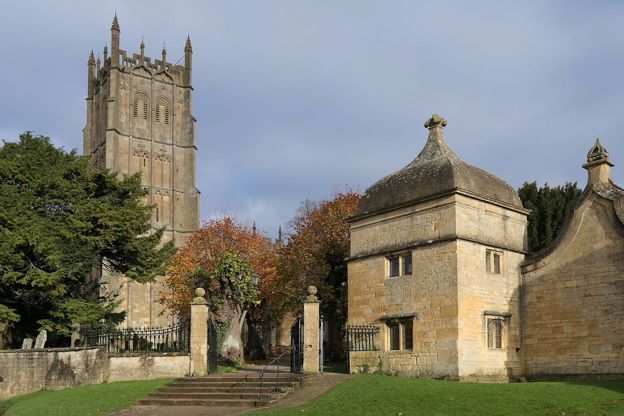
St James's Church, Chipping Campden
Sight · Church · Chipping Campden
Chipping Campden's wool church at the end of Church Street: a soaring fifteenth-century tower, William Grevel's brass of 1401, Sir Baptist Hicks's marble tomb and a medieval cope and altar hangings. Grade I, open to visitors most days.