The best towns in the Cotswolds
The Cotswolds were built on wool, and the wool was sold in market towns. Here is what each of them is like today, and which one suits your trip.
· 12 minute read
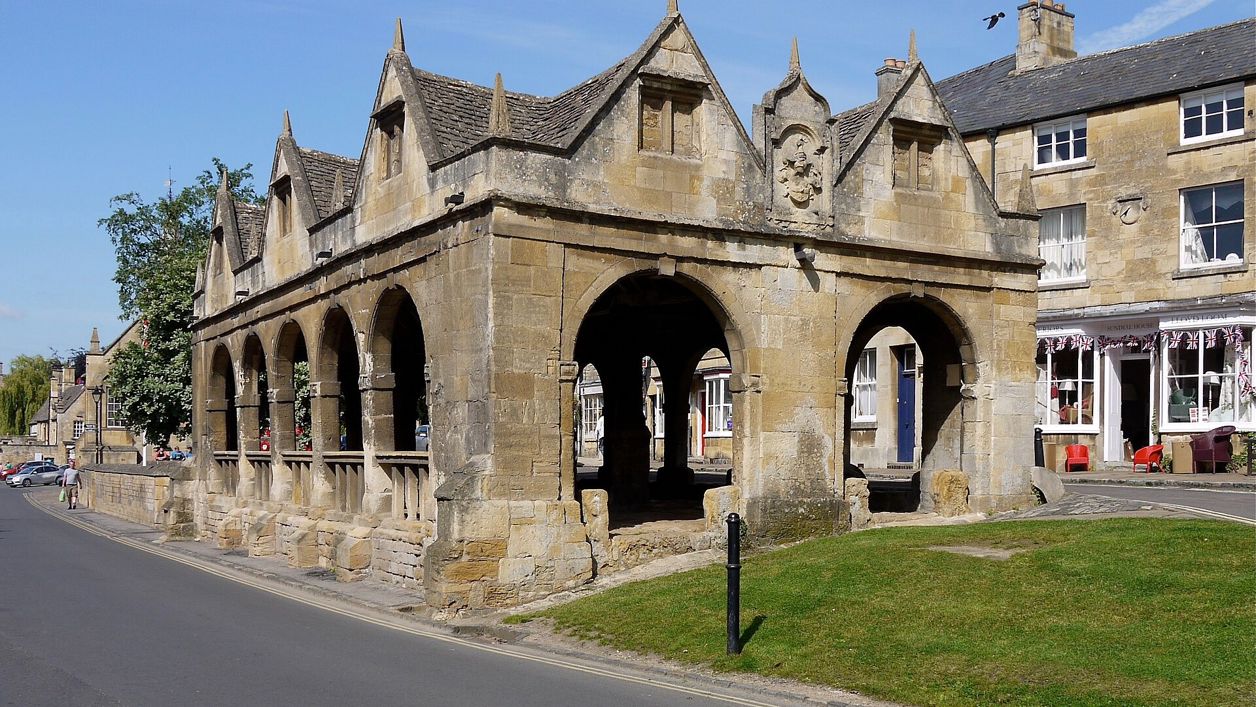
The best towns in the Cotswolds are its old wool and market towns: Chipping Campden, Stow-on-the-Wold, Burford, Cirencester, Tetbury, Winchcombe, Painswick and Northleach, with Moreton-in-Marsh and Stroud for trains, and Woodstock for Blenheim. Each grew round a market place where wool and cloth were sold, and most still have the market hall, the coaching inns and the great church the trade paid for.
They differ more than their honey-coloured stone suggests. Some are walking towns under the escarpment, some are working towns with Saturday markets, and a few are small enough to see in an hour. Below is what each is like and who it suits, from our place guides, which hold the parking, buses and opening times in full.
How we chose: every town here has a place guide of ours behind it, built from Historic England's listings, the Victoria County History, the councils and the businesses' own information rather than from visits of our own, and nothing on this page was paid for. We have described them rather than ranked them, because the right town depends on the trip: a station for a weekend without a car, the Cotswold Way for walkers, a market for a Saturday.
Which is the best Cotswold town to stay in?
For a first visit without a car, stay in Moreton-in-Marsh, which has a station on the line from London Paddington and buses to Stow, Bourton and Chipping Campden. With a car, Stow-on-the-Wold is the most central base for the north Cotswolds, Chipping Campden the best for walkers, and Burford or Cirencester for the south and east. Our guide to where to stay in the Cotswolds has the inns and hotels town by town. To see several in one trip, three days in the Cotswolds runs from Chipping Campden to Tetbury from a base in Northleach.
Chipping Campden: the wool town for walkers
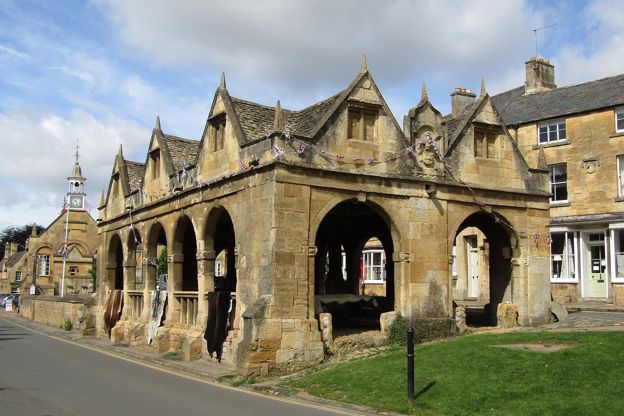
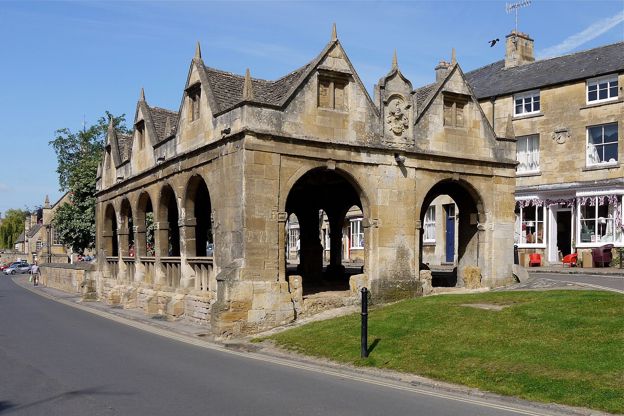
Chipping Campden is the finest of the wool towns, a curving High Street of stone houses at the northern edge of the hills, and the start of the Cotswold Way. At its centre is the Market Hall that Sir Baptist Hicks built in 1627, and along the street are Grevel's House, named after William Grevel, “the flower of the wool merchants of all England” on his brass, and the Woolstaplers' Hall. At the end of Church Street, past the 1612 almshouses, is St James's, one of the great wool churches.
It suits walkers and anyone who likes old buildings. The circuit to Dover's Hill, 7.2km with steep sections, climbs the Cotswold Way to the view over the Vale of Evesham. Court Barn tells the story of Ashbee's Guild of Handicraft (opens in a new tab), which moved here in 1902, and Hidcote and Kiftsgate are a short drive away. About 2,400 people live here; the Market Square car park is small, so arrive early. After the late May bank holiday the town holds Robert Dover's Olimpick Games on Dover's Hill on the Friday evening and Scuttlebrook Wake, its street fair, the next day, and for a fortnight in May the Chipping Campden Music Festival fills St James's with classical concerts.
Stow-on-the-Wold: the hilltop base
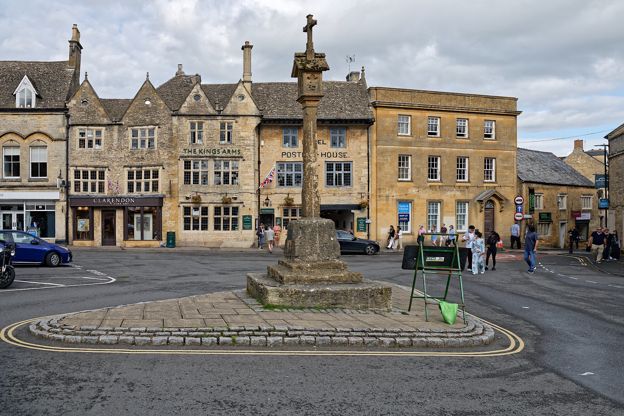
Stow stands about 240m up where the Fosse Way and several other roads meet, round a broad Square with its medieval market cross. St Edward's, by the Square, held more than 1,600 Royalist prisoners (opens in a new tab) after the battle of Stow in 1646, and its north door is framed by two yews. The horse fair is still held in May and October.
It suits people who want one base for Bourton, the Slaughters and the wolds: Bourton is about 7km away, and the 801 bus links it with Moreton station. Park free at the Fosseway car park and walk up. The stile-free circuit by Maugersbury starts at the cross, and the Old Bakery Tearoom and the Old Butchers are the places to eat. See where to stay in Stow. It is the base for two days in the North Cotswolds, with the Slaughters on foot on the first day.
Moreton-in-Marsh: the town with the train
Moreton is a market town of about 5,000 people on the Fosse Way, and its station, about 90 minutes from London Paddington, makes it the easiest way into the north Cotswolds without a car. The Redesdale Hall of 1887 stands in the middle of the High Street and the sixteenth-century Curfew Tower on the corner of Oxford Street. The market is on Tuesdays.
It suits car-free visitors. The stile-free walk to Batsford leaves from the war memorial, past Batsford Arboretum, and buses go from outside the station to Stow, Bourton, Chipping Campden and Cheltenham. On a Saturday in early September the Moreton Show, an agricultural show, is held on the Batsford Estate, and our three days without a car is based here, with walks to Batsford and Stow and buses to Bourton and Bibury.
Burford: inns on a hill
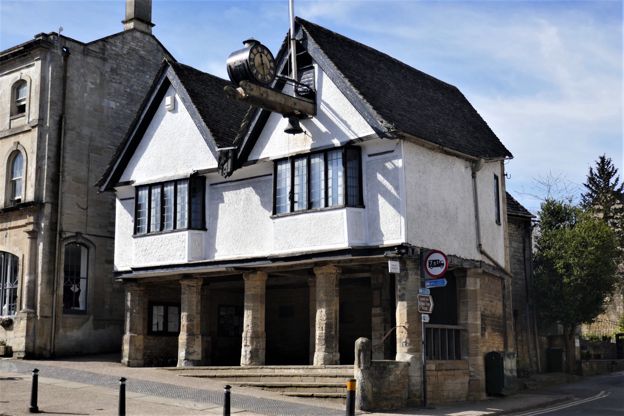
Burford's High Street runs downhill from the A40 past stone houses and coaching inns to a medieval bridge over the Windrush. Near the bottom is St John the Baptist, a great wool church, free and open most days, where a Leveller carved his name into the font before three were shot in 1649. The Tolsey Museum, in the sixteenth-century market house, is free and opens on summer afternoons.
It suits people who like an old inn and an easy town walk. Guildenford car park is free. The Lamb Inn and the Bull, opened in 1536, are on its streets; the walk round its lanes takes about an hour, and the Cotswold Wildlife Park is just outside the town.
Cirencester: the Roman capital
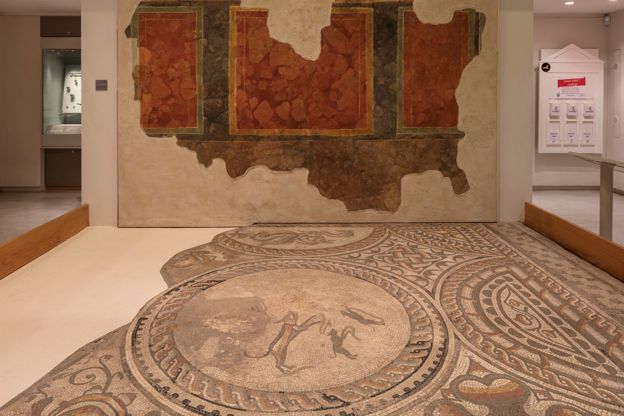
Cirencester was Corinium, one of the great towns of Roman Britain, and is now a market town of about 20,000 people, the biggest in the Cotswolds. The Corinium Museum shows Roman mosaics from a town and countryside where more than 90 are known, the grassy banks of the amphitheatre once held about 8,000 people, and St John the Baptist, free to visit, has a three-storey porch of about 1490 that served as the town hall.
It suits history, shopping and a market day: the Charter Market is on Mondays and Fridays. Cirencester Park, Earl Bathurst's landscape laid out with Alexander Pope, needs a day pass; the walk to Pope's Seat starts at the church.
Tetbury: a market house and two great gardens
Tetbury's Market House of 1655 (opens in a new tab) stands on three rows of stone columns in the middle of the town, with markets underneath every week. St Mary the Virgin is a tall Georgian Gothic hall of 1777 to 1781, and the old police station and court holds a free police museum.
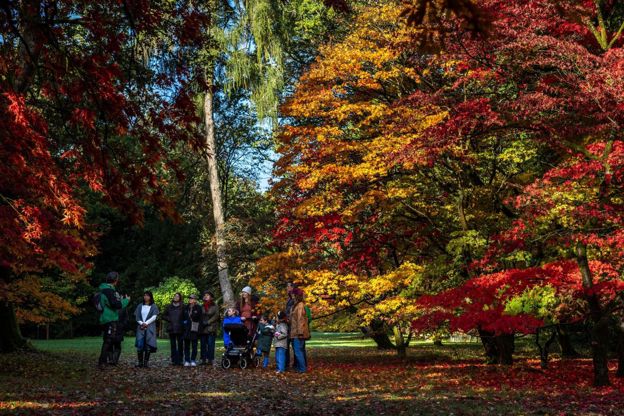
It suits gardeners and people who like antique shops: Highgrove is close by, open by booked tour, and Westonbirt, the National Arboretum, is 5km away, at its best in autumn. The town walk is 2.7km on paved paths. On the late May bank holiday Monday runners carry sacks of wool up Gumstool Hill in the Tetbury Woolsack Races.
Painswick: the churchyard town
Painswick is a former cloth town of about 3,200 people on a hillside above Stroud. Most people come for St Mary's churchyard, with its clipped yews and carved table tombs; the church clipping is held each September. The Rococo Garden, a pleasure garden of the 1740s restored from a painting, is a short walk out.
It suits walkers and garden lovers. The Cotswold Way passes through, and the walk to Painswick Beacon climbs to Iron Age ramparts above the Severn Vale.
Winchcombe: the walkers' town
Winchcombe sits under the escarpment between Cheltenham and Broadway, with Sudeley Castle, where Katherine Parr is buried, on its edge, St Peter's with about 40 carved grotesques round its walls, and the ruins of Hailes Abbey nearby.
It suits walkers above all: the Cotswold Way passes through, and the walk to Belas Knap, 8.8km, climbs to the Neolithic long barrow. The steam railway runs past the town between Cheltenham Race Course and Broadway, and the Lion Inn takes dogs in every room. The line's southern end is at Cheltenham Racecourse, which holds the Cheltenham Festival each March.
Northleach and Fairford: the small wool towns
Two small towns are worth a journey for their churches. Northleach has St Peter and St Paul, with one of England's finest collections of brasses to wool merchants, and the Old Prison of 1791, free to see, with a café. Fairford, on the Coln, has St Mary's, with 28 windows of glass made about 1500 to 1515, which the parish calls the only complete set of late medieval glass in any parish church in the country. Both suit a quiet half day. RAF Fairford, just south of the town, holds the Royal International Air Tattoo over three days each July.
Malmesbury: the abbey on the hill
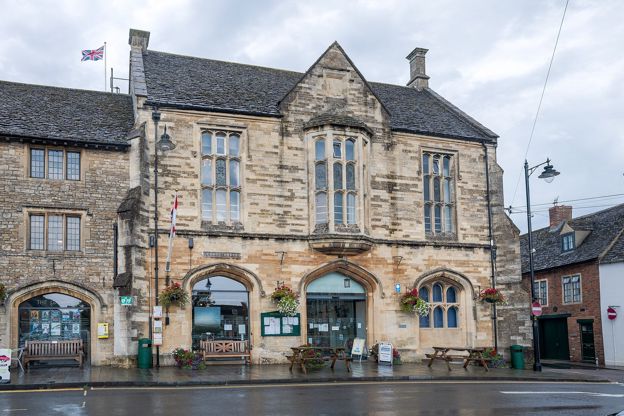
Malmesbury, just outside the National Landscape in Wiltshire, stands on a hill almost ringed by the Avon. The great Norman nave of Malmesbury Abbey is free and open daily, the octagonal Market Cross was built to keep market folk dry, and the free Athelstan Museum tells of King Athelstan and Eilmer, the flying monk. The Old Bell, beside the abbey, serves afternoon tea from midday, best booked ahead. It suits history lovers; avoid Mondays, when the museum is closed. Our South Cotswolds weekend spends a night here, between Tetbury and Lacock.
Stroud, Nailsworth and Minchinhampton: the working towns
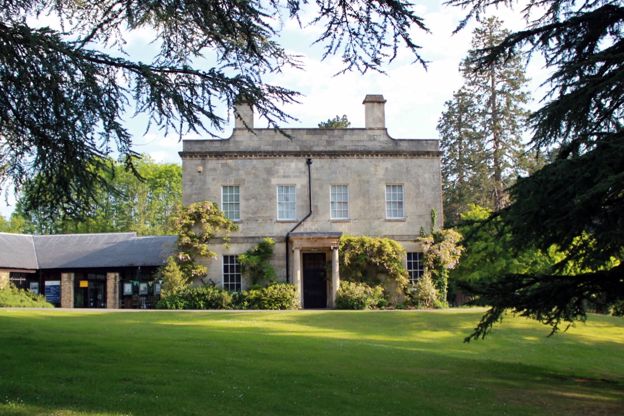
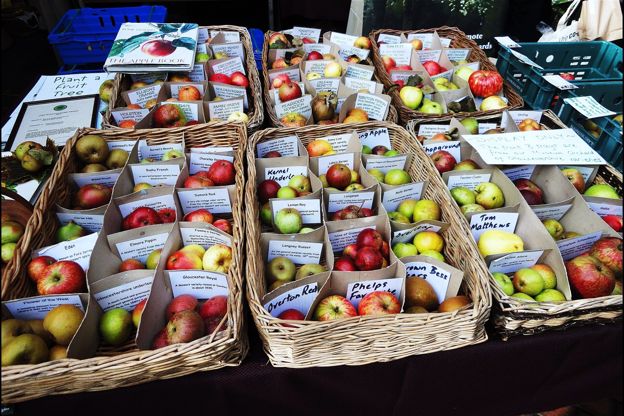
West of the wolds, the Five Valleys towns are steeper, greener and busier with their own lives. Stroud is a town of about 13,500 people with direct trains to London Paddington and a farmers' market every Saturday from 9am to 2pm; the Museum in the Park is free. Nailsworth has independent shops and two of the best places to eat in the region, Williams, the fishmonger and seafood restaurant, and Wilder. Minchinhampton has its Market House of 1698 and the great open common on its doorstep.
They suit food lovers, walkers and anyone who prefers a working town to a showpiece.
Woodstock and Witney: the Oxfordshire towns
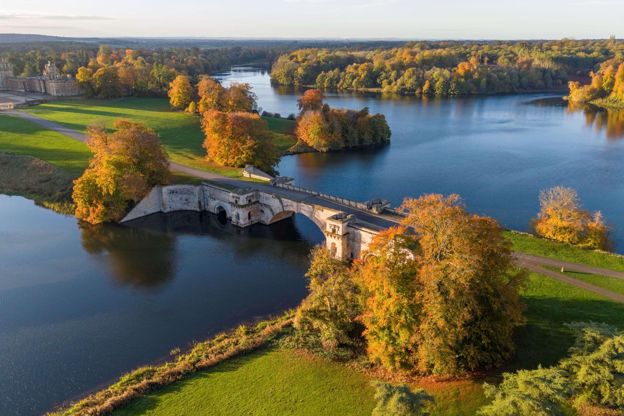
Woodstock is a small town of stone houses at the gates of Blenheim Palace, Churchill's birthplace and a World Heritage Site, with the free Oxfordshire Museum. Witney, the blanket town on the Windrush, has its Butter Cross, a long Church Green and Cogges manor farm, and free parking in every council car park. Both are just outside the National Landscape and both suit families. From mid-November to early January, Christmas at Blenheim Palace lights the gardens and grounds with more than a million lights.
Wotton-under-Edge, Lechlade and Chipping Sodbury
At the edges are three more. Wotton-under-Edge is a cloth town under the escarpment on the Cotswold Way, with free car parks and the Tyndale Monument on the hill above North Nibley, nearby. Lechlade-on-Thames is where narrowboats reach the head of navigation on the Thames, with Halfpenny Bridge and Kelmscott Manor a few kilometres away. Chipping Sodbury is a planned medieval town with a long, wide market street and a Grade I church. Shipston-on-Stour, a former sheep market on the Stour, has free car parks and Georgian inns round its square. Chipping Sodbury is also one of the market towns within reach of the Badminton Horse Trials in early May.
Which Cotswold town suits you?
For walking, choose Chipping Campden, Winchcombe, Painswick or Wotton-under-Edge, all on the Cotswold Way. Without a car, choose Moreton-in-Marsh or Stroud, both with direct trains from London Paddington, or Kingham's station for the villages. For history, Cirencester's Roman museum and Malmesbury's abbey. For food, Stroud's Saturday market and Nailsworth's restaurants. For a central base with a car, Stow-on-the-Wold.
The Cotswolds Info newsletter
Events, new places and the best of the season, about once a month. Unsubscribe at any time.
Market days in the Cotswold towns
The markets are the best time to see a town at work. Cirencester's Charter Market is on Mondays and Fridays, Moreton's on Tuesdays and Tetbury's under the Market House on Wednesdays and Saturdays. Stroud's farmers' market fills Cornhill on Saturday mornings, Minchinhampton holds a country market in its Market House on Wednesday mornings, and Stow's farmers' market is on some Thursday mornings in the Square. Check the town's own pages before a special trip, because dates move. For the villages in between, see our guide to the best villages in the Cotswolds.
Mentioned in this story
The places, sights and walks in this story, each with a page of its own: what it is, when to go and how to get there.
-
Corinium Museum
Museums and galleries · Cirencester
-
Blenheim Palace
Historic houses and heritage · Woodstock
-
Burford Tolsey Museum
Museums and galleries · Burford
-
Museum in the Park
Museums and galleries · Stroud
-
Athelstan Museum
Museums and galleries · Malmesbury
-
Stroud Farmers' Market
Farm shops and delis · Stroud
-
Westonbirt, The National Arboretum
Parks and gardens · Tetbury
-
Market Hall, Chipping Campden
Sight · Historic building · Chipping Campden
-
Market cross, Stow-on-the-Wold
Sight · Monument · Stow-on-the-Wold
-
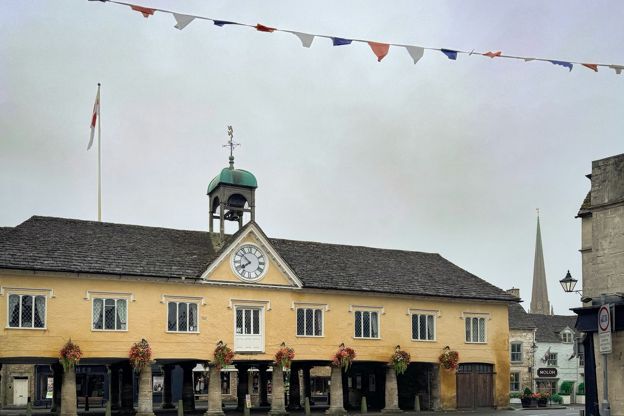
Market House, Tetbury
Sight · Historic building · Tetbury
-
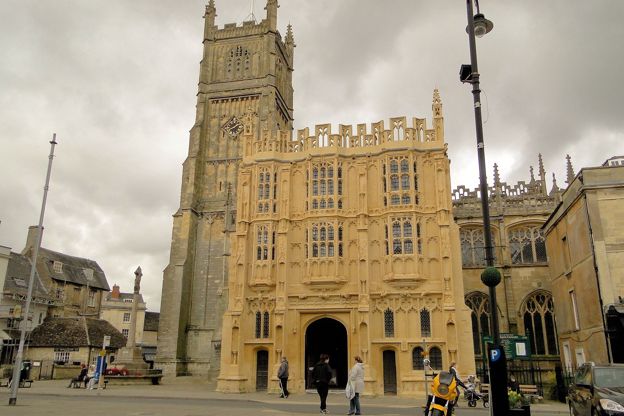
St John the Baptist, Cirencester
Sight · Church · Cirencester
-
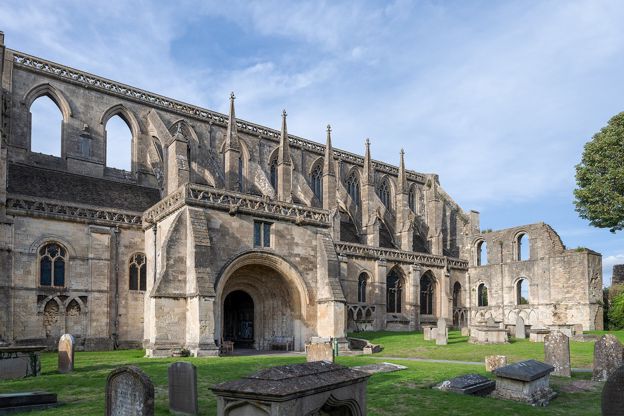
Malmesbury Abbey
Sight · Church · Malmesbury
-
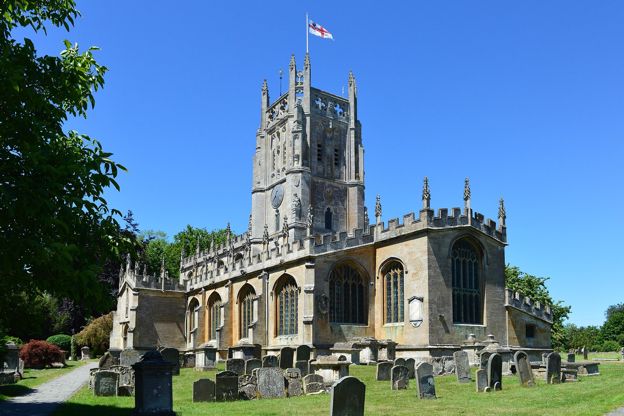
St Mary's Church, Fairford
Sight · Church · Fairford
-
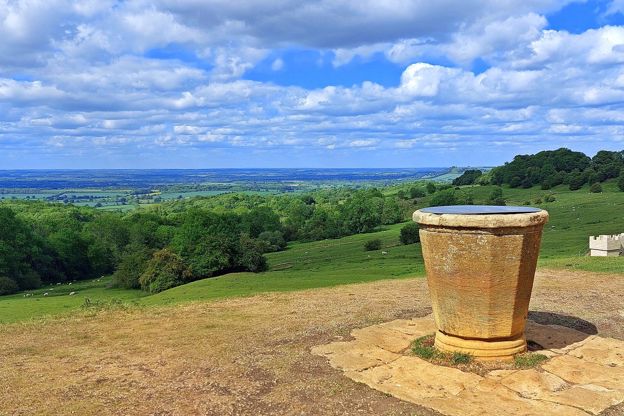
Chipping Campden and Dover's Hill
Walk · Starts in Chipping Campden · 3 hrs, 30 mins · Circular
-
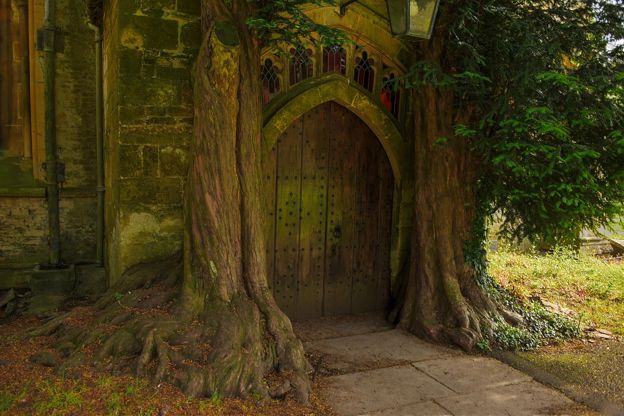
Stow-on-the-Wold and Maugersbury
Walk · Starts in Stow-on-the-Wold · 2 hrs · Circular
Places to stay near Chipping Campden
-
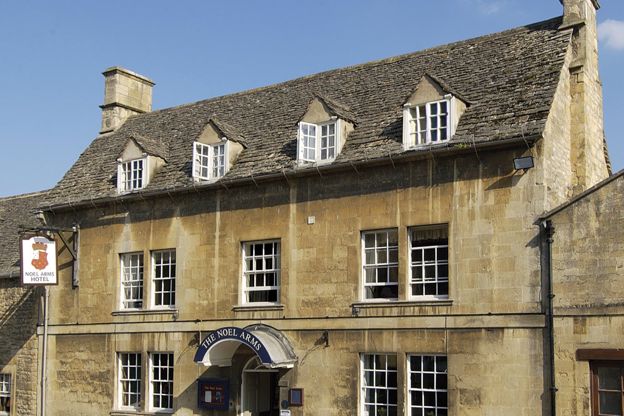
The Noel Arms Hotel
Inn · Chipping Campden
A Grade II listed inn with 27 rooms on Chipping Campden's High Street, with a restaurant, parking, accessible rooms and dogs by arrangement.
Dog-friendly
Verified Oct 2026
-
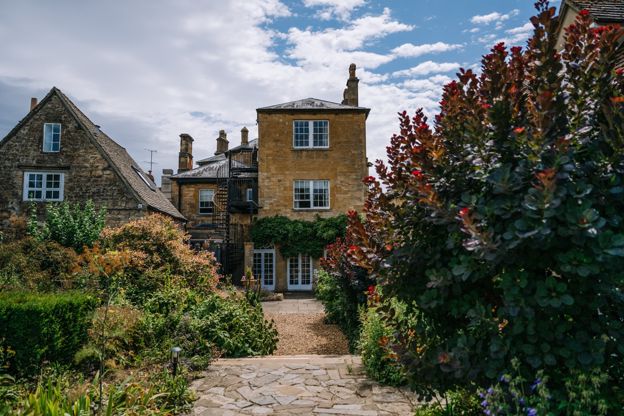
Cotswold House Hotel and Spa
Hotel · Chipping Campden
A Grade II listed Regency town house on Chipping Campden's Upper High Street, now a hotel and spa with the Hidcote restaurant.
Hot tubs · Wedding venues
Verified Nov 2026
-
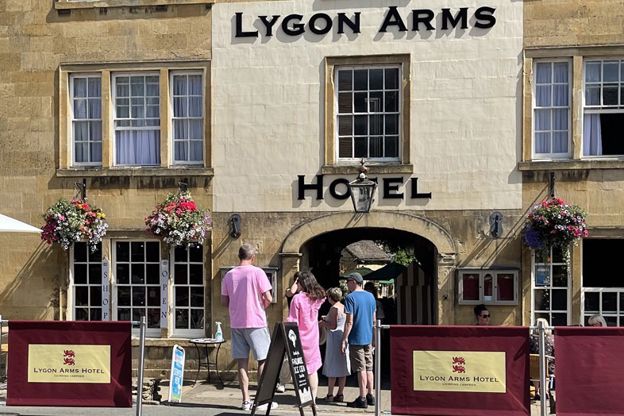
The Lygon Arms, Chipping Campden
Inn · Chipping Campden
A coaching inn with ten rooms on Chipping Campden's High Street, with family rooms, bike storage, free parking at the rear and dogs welcome.
Dog-friendly
Verified Oct 2026
Read next
-
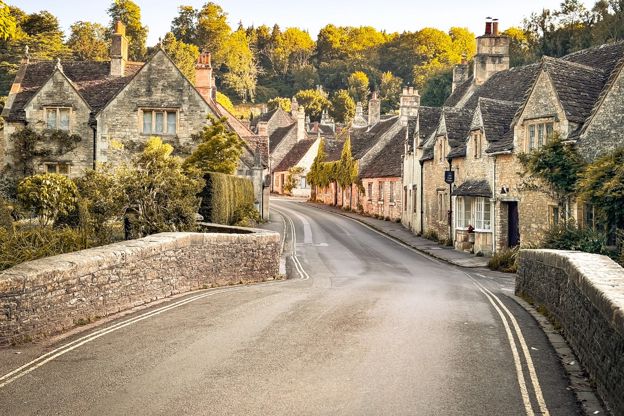
The best villages in the Cotswolds
Story · Guides · 13 minute read
The best villages in the Cotswolds, from Bibury, Castle Combe and the Slaughters to quieter Naunton, Eastleach and Biddestone: what to see in each, a walk from the green and a pub or tearoom.
-
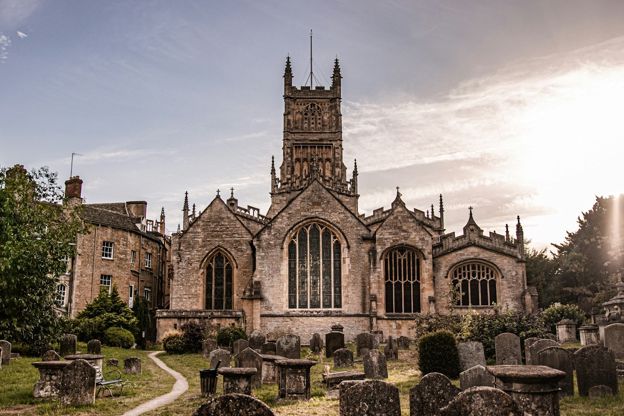
The wool churches of the Cotswolds
Story · Guides · 11 minute read
Northleach, Chipping Campden, Cirencester, Fairford, Burford and the other Cotswold churches rebuilt on medieval wool money: how the trade paid for them, what to look for in each, when they open and a route by car or on foot.
-
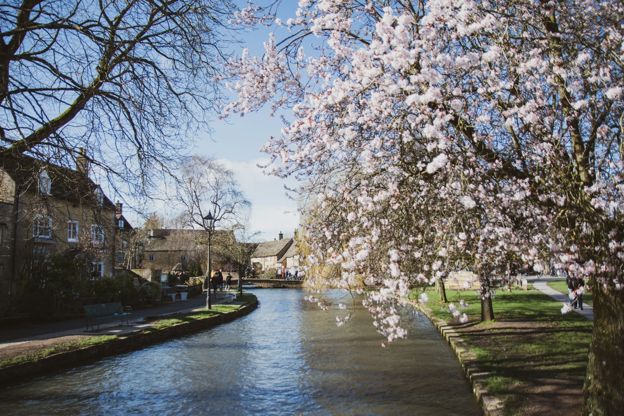
Getting to the Cotswolds without a car
Story · Guides · 12 minute read
You can see the Cotswolds without a car: trains from London Paddington reach Moreton-in-Marsh, Kingham, Charlbury, Kemble and Stroud in 70 to 90 minutes, and buses go on to Stow, Bourton, Bibury and Chipping Campden. Every station, its bus, the fares and the limits.