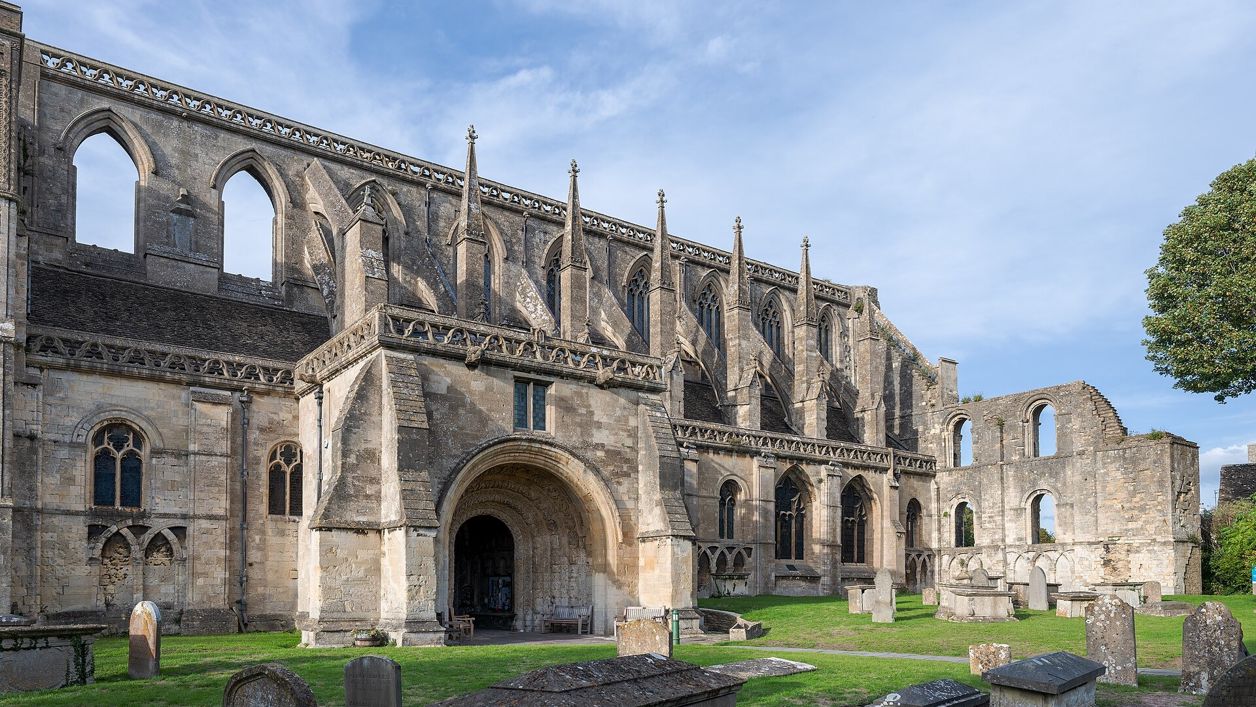
Tilman2007, CC BY-SA 4.0, via Wikimedia Commons
Malmesbury Abbey
The surviving nave of Malmesbury's great Norman abbey church, built mostly about 1160 to 1180 and the parish church since 1541, with a south porch of carved Romanesque Apostles and King Athelstan's empty tomb. Grade I; free, open daily.
Church
MalmesburyMalmesbury Abbey is what survives of one of the great Norman churches of England: six bays of the nave of the abbey church, in the middle of Malmesbury, used as the town's parish church since 1541. Built mostly between about 1160 and 1180, it keeps a south porch of carved Romanesque sculpture, which the National Churches Trust calls the church's great glory, and the tomb of King Athelstan. It is listed Grade I.
History
The abbey's story begins long before any stone you can see. Historic England's listing traces the church to an Irish hermit, Mailduib, who settled here in about 637, and the monastery to Aldhelm, abbot from about 675 until he became Bishop of Sherborne in 705, scholar and saint, after whom the abbey church is named with St Mary. In the twelfth century the historian William of Malmesbury was a monk here.
The Norman church
No work earlier than the twelfth century survives. The present church was probably begun under Roger, Bishop of Salisbury, in about 1118 to 1139, and most of what stands is from about 1160 to 1180. At its height the church had a nave of nine bays and transepts, and the Athelstan Museum adds that in the fourteenth century the presbytery at the east end was lengthened and a Lady Chapel added. In the later Middle Ages the central tower was raised and given a tall spire of timber and lead; the Victoria County History says it probably fell early in the sixteenth century, though Historic England’s listing dates the fall to 1479. The museum notes that John Leland, visiting the town in 1542, recorded that the spire had fallen in living memory.
After the Dissolution
After the Dissolution, in 1541, because the old parish church of St Paul had fallen into ruin, the nave was licensed as the parish church. The building was then in the hands of William Stumpe, a clothier, and Leland reported in 1542 that the townspeople, with Stumpe the chief contributor, had bought it from the Crown. Stumpe was granted the abbey site in 1544, and his son built Abbey House beside it. The Athelstan Museum says a wall was built across the east end of the nave to seal it off from the crossing and the quire, which was taken down.
A west tower, built in about 1400, was still standing in 1660 but fell soon afterwards, destroying the south-west corner of the nave; John Aubrey heard that it came down the night after volleys were fired to celebrate the return of Charles II. A wall was then built across the nave, which is why the church you enter is only six bays long.
Restoration
Repairs came in stages: a stone window designed by H. E. Goodridge replaced a wooden one in 1823; work was done on the south aisle and clerestory in 1900; the porch was vaulted in 1905 and the room above it restored in 1912; and in 1926 to 1928 the plaster vault over the nave was rebuilt in stone and the west gallery taken out. The Church of England's heritage record shows the abbey on Historic England's Heritage at Risk Register in 2025.
What to see
Start at the south porch, which is the abbey's glory. Its outer doorway is a round arch of three orders, carved with Biblical scenes in oval panels. In the early fourteenth century the porch walls were thickened, perhaps to carry a tower that was never built, and a room was built above.
Inside the porch, the tympanum over the inner door shows Christ in Glory held up by two angels. Along each side wall, six Apostles sit in a row under a flying angel.
Inside, look for the tomb of King Athelstan, who could claim to be king of all England and died in 939: the tomb is fifteenth century and empty, and the Athelstan Museum says he was buried at Malmesbury but the exact spot is not known. In the south aisle is the Luce window, designed by Burne-Jones and made by Morris & Co. This is also the abbey of Eilmer, the monk who, as William of Malmesbury told it about a century later, flew about a furlong from a tower early in the eleventh century, broke both legs, and blamed the lack of a tail; Wiltshire Council's community history records a modern stained glass window in St Aldhelm's Chapel that shows his attempt at flight.
Outside, walk round to the west end, where the wall built across the nave after the west tower fell closes off the ruined bays, and look south across the churchyard to the tower of St Paul's, which housed the bells rung for services in the abbey.
Visiting
The abbey is open Monday to Saturday from 9.30am to 4pm and on Sunday from 12.30pm to 3.30pm. There is no charge, and donations are welcome. It closes after Christmas, on New Year's Day and for occasional services, events, filming and maintenance, so check its website on the day. The café inside, the Abbey Café, opens Monday to Saturday from 9.30am to 3.30pm. The National Churches Trust lists level access to the main areas and accessible toilets in the church.
Getting there
The abbey is at the top of the town, behind the Market Cross. Blue Badge parking is beside the abbey and there is short-stay parking at Cross Hayes, by the Town Hall (SN16 9BZ). The long-stay car park at Station Yard is behind the abbey and free for the first two hours, but the way up into the town has steep steps that the town council says are unsuitable for wheelchair users. Bus 99 runs about hourly, Monday to Saturday, between Chippenham, Malmesbury and Swindon.
On foot, the Malmesbury and the River Avon walk starts at Cross Hayes and comes back up past the abbey from the river meadows.
Nearby
The Old Bell stands beside the abbey and the Athelstan Museum in the Town Hall, free to enter, tells the town's story, including Athelstan's and Eilmer's. The Market Cross and St Paul's Bell Tower are a minute's walk, and the River Avon rings the town below. The Three Cups Inn and The Kings Arms are close by, and our guide to the Cotswolds on a rainy day puts the abbey and the museum together.
Walks past Malmesbury Abbey
-
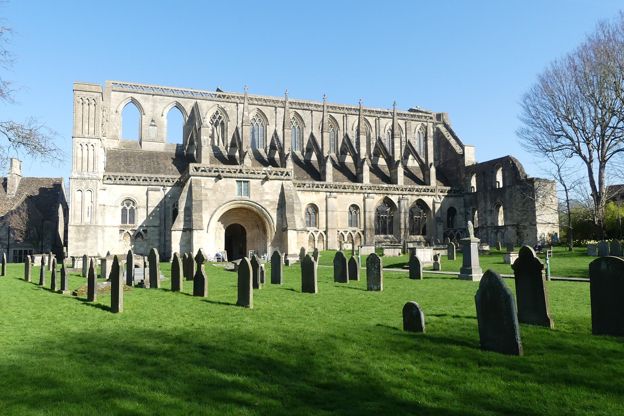
Malmesbury and the River Avon
Walk · Starts in Malmesbury · 1 hr · Circular · Dog-friendly
A 2.5-mile (3.9km) circular walk from Cross Hayes in Malmesbury, easy and about an hour, mostly level with some stiles: down from the Market Cross past Daniel's Well, along the Avon by the meads and the silk mills, and back round under the abbey.
Stay and eat near Malmesbury Abbey
-
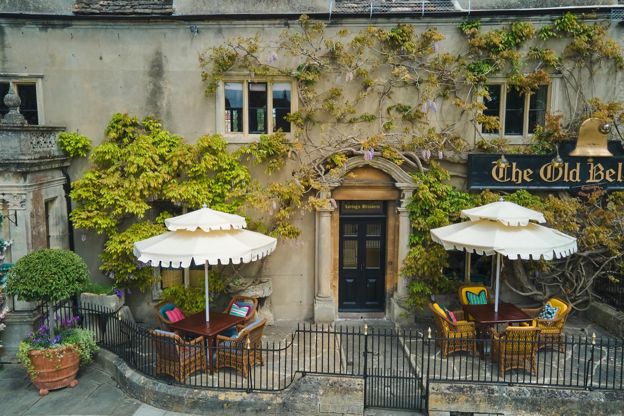
The Old Bell
Hotel · Malmesbury
A Grade I listed hotel beside Malmesbury Abbey, which says it has welcomed guests since 1220, with the Abbey Row restaurant, afternoon tea and dogs welcome.
Dog-friendly
Verified Nov 2026
-
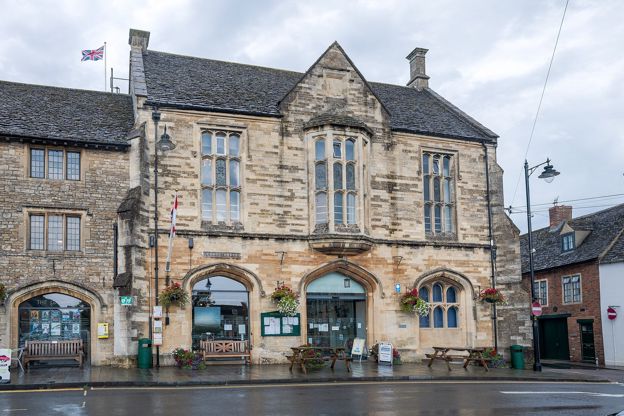
Athelstan Museum
Museums and galleries · Malmesbury
Malmesbury's free museum in the Town Hall, with the stories of King Athelstan and Eilmer the flying monk, a wheelchair lift and dogs welcome.
Dog-friendly · Rainy days · Family-friendly
Verified Oct 2026
-
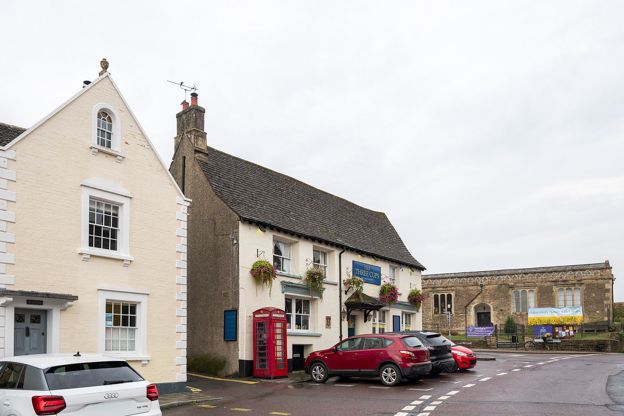
The Three Cups Inn
Pubs · Malmesbury
A dog-friendly pub on the Triangle in Westport, Malmesbury, with a meat-free kitchen named best vegan pub in Wiltshire by Vegan Food and Living, and music and events.
Dog-friendly · Family-friendly
Verified Nov 2026
Stories about Malmesbury Abbey
-
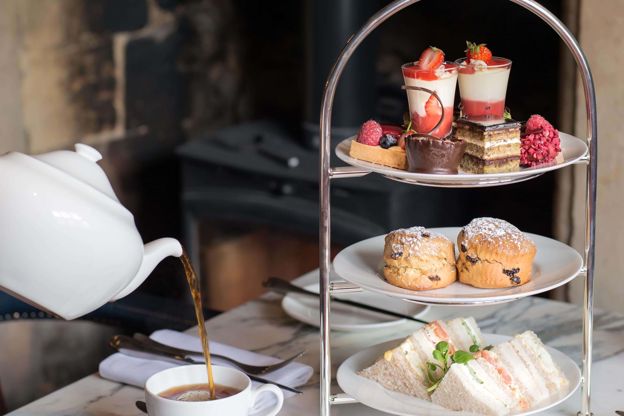
Afternoon tea in the Cotswolds
Story · Guides · 10 minute read
Where to have afternoon tea in the Cotswolds: country house hotels at the Slaughters and Buckland, old inns in Woodstock, Broadway and Malmesbury, and tearooms in Chipping Campden, Stow and Bourton, with times, prices and booking.
-
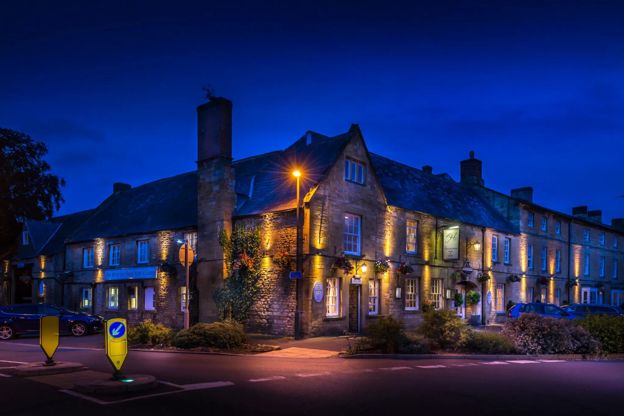
Cotswold pubs and the breweries behind them
Story · Guides · 4 minute read
Donnington, Hook Norton, Arkell's and Wadworth, the newer breweries at Uley and Stroud, the old coaching inns and the village pubs with rooms: a guide to Cotswold pubs.
-
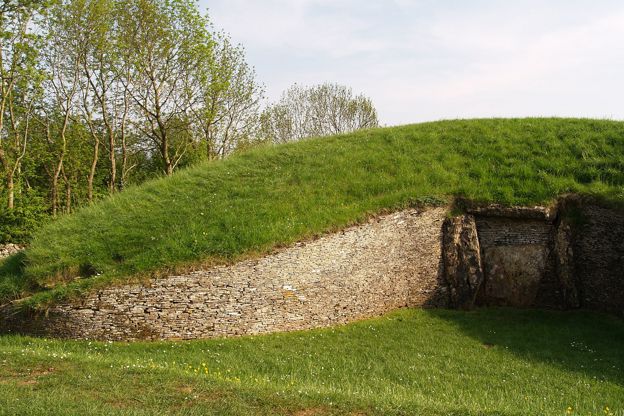
Free things to do in the Cotswolds
Story · Guides · 11 minute read
Free things to do in the Cotswolds: open commons and viewpoints, Neolithic tombs and hill forts, ruins, wool churches, free museums in Malmesbury, Stroud, Woodstock and Burford, the Cotswold Way and Blenheim's public footpaths.
More sights to see
-
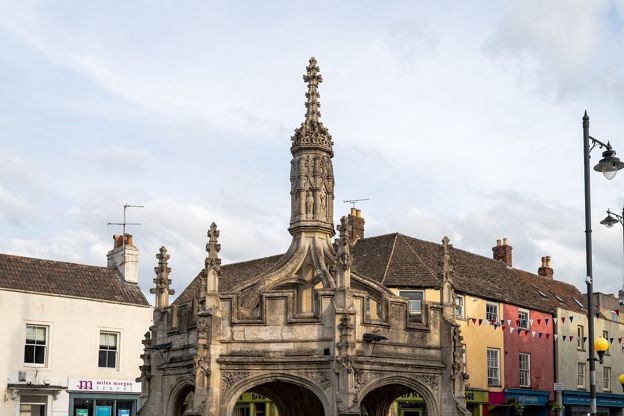
Market Cross, Malmesbury
Sight · Historic building · Malmesbury
Malmesbury's octagonal stone market cross of the late fifteenth or early sixteenth century, a vaulted shelter with pinnacles, flying buttresses and a lantern of saints, built, John Leland wrote, to keep poor market folk dry. Grade I; free.
-
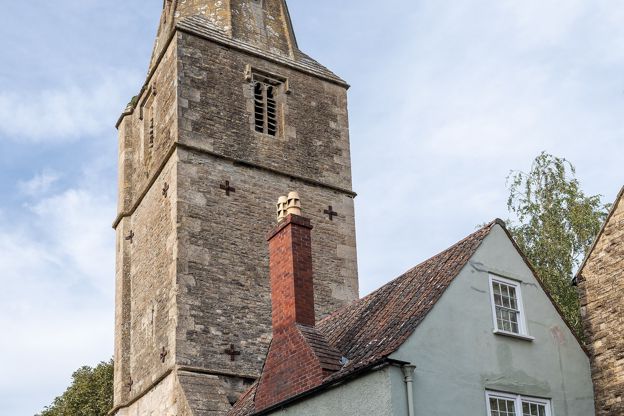
St Paul's Bell Tower, Malmesbury
Sight · Historic building · Malmesbury
The tower and spire of St Paul's, Malmesbury's medieval parish church, left standing alone on the edge of the abbey churchyard after the church fell. It has clocks below its spire and still holds a ring of eight bells, long rung for the abbey. Grade I.
-
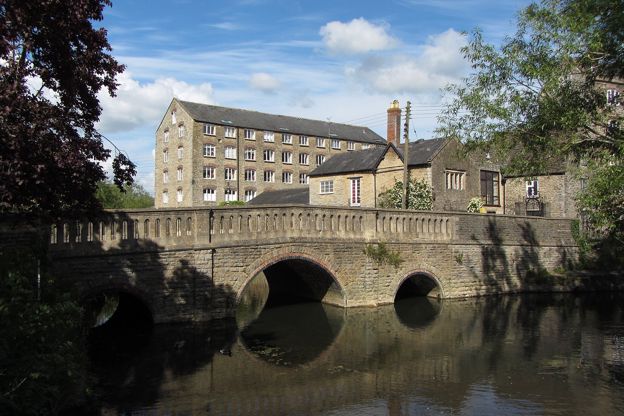
River Avon at Malmesbury
Sight · River · Malmesbury
The two branches of the Bristol Avon that almost ring Malmesbury's hilltop and meet below it, with riverside meads, old mill sites, Daniel's Well and a level path round the town. Free, on public paths and town council parks.