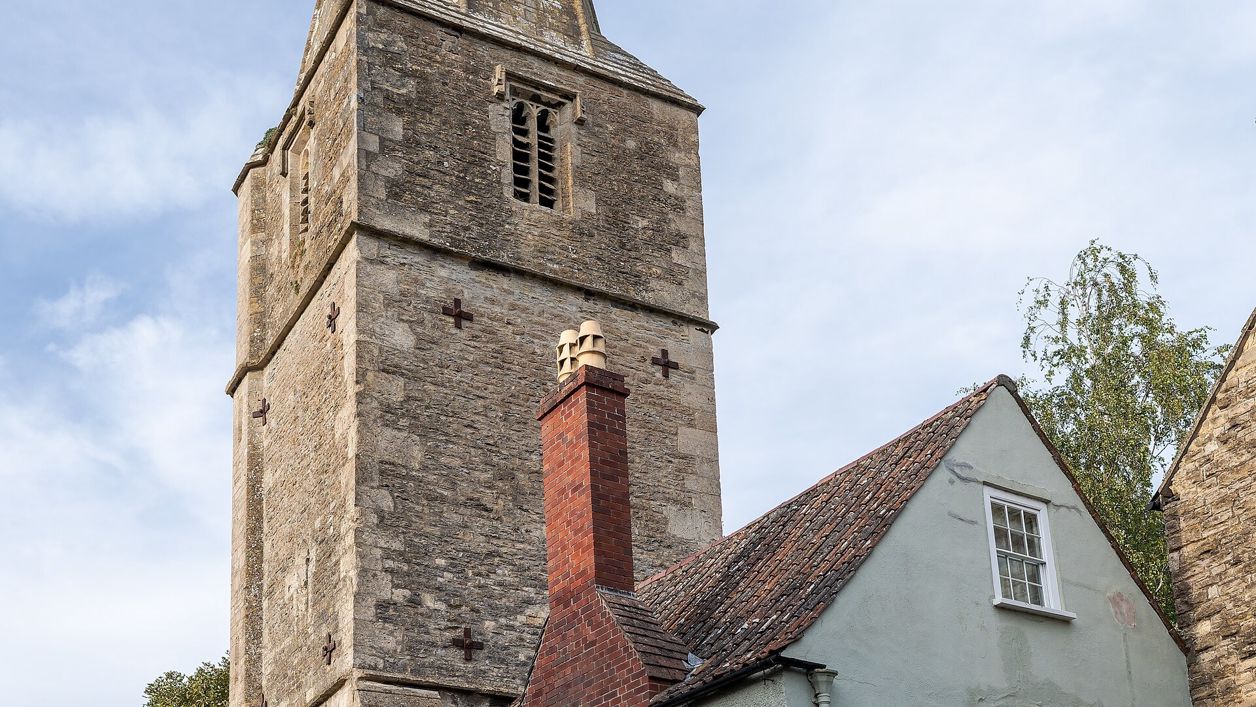
Tilman2007, CC BY-SA 4.0, via Wikimedia Commons
St Paul's Bell Tower, Malmesbury
The tower and spire of St Paul's, Malmesbury's medieval parish church, left standing alone on the edge of the abbey churchyard after the church fell. It has clocks below its spire and still holds a ring of eight bells, long rung for the abbey. Grade I.
Historic building
MalmesburySt Paul's Bell Tower stands on its own at the edge of the abbey churchyard in Malmesbury, a few steps from the Market Cross. It is the tower and spire of St Paul's, the town's parish church in the Middle Ages, and everything else of that church has gone. It has clocks below its spire and still holds a ring of eight bells, and the Victoria County History records that it housed the bells rung for services in the abbey, and it is listed Grade I.
History
St Paul's was the church of the townspeople while the monks had the abbey. Historic England's listing says it was built on the site of St Aldhelm's monastery church and is named in 1191; the Victoria County History says the abbey appropriated Malmesbury's parish church in or after that year.
A church that fell
The listing describes the lost church as a nave of six bays with a north aisle and a chancel, with the tower at its north-west corner. By the early sixteenth century the nave had collapsed. In 1541 the nave of the dissolved abbey was licensed as the parish church instead, because St Paul's had fallen, which is why Malmesbury worships in its abbey today. By 1542, the Victoria County History records, only the west tower, then lived in as a house, and part of the east end, used as a town hall, were still standing.
Town hall, poorhouse and warehouse
The listing says the building served as a house and the town hall until about 1623; the Victoria County History says the borough used the east end until the eighteenth century, after which it seems to have been a poorhouse and later a timber warehouse. The chancel was finally pulled down in 1852, leaving the tower alone.
The bells
The Victoria County History records that the tower housed the bells rung for services in the abbey, and lists eight bells in 1987: the oldest, cast in Bristol in about 1500; one of 1610 by the Purdue family; two of 1640 and 1703 recast by Mears & Stainbank in 1910; one of 1739 recast by Llewellins & James in 1896; and three new bells cast by Gillett & Johnston in 1951. The ring of eight is still there: Dove's Guide, the bell ringers' register of towers, records a major overhaul in 2015 and a practice night on Tuesdays. The abbey’s own Guild of Change Ringers says it rings for the Sunday morning service, with the band in the tower from about 9.30am to ring for the 10.30am service, and has done so since 1947.
What to see
The tower is square and rises in three stages of limestone rubble with ashlar dressings, with an eight-sided stair turret at the north-west corner. Near the top are the clock faces, and above them a broach spire, where the square tower turns into an octagon through sloping half-pyramids at the corners, pierced by two tiers of small gabled openings. Historic England dates the tower to the fifteenth century, the Victoria County History to the fourteenth.
Visiting
The tower can be seen from the abbey churchyard and the street at any time, free; we found no public access inside, and the ringers’ website offers no tower visits. The best view is from beside the Market Cross, with the abbey beyond.
Getting there
The tower is on Gloucester Street, just past the Market Cross at the top of the High Street, on the way to the abbey. Short-stay parking is outside the Town Hall at Cross Hayes (SN16 9BZ), a minute's walk, and the long-stay car park at Station Yard is free for two hours but has steep steps up into the town. Coachstyle's bus 99 runs about hourly, Monday to Saturday, between Chippenham, Malmesbury and Swindon, with no Sunday service.
The Malmesbury and the River Avon walk passes it at the start, on Gloucester Street beyond the Market Cross.
Nearby
The abbey is a few steps north, the Market Cross beside you, and the Athelstan Museum in the Town Hall tells the town's history for free. The Old Bell and The Kings Arms are both within a short walk, as is The Three Cups Inn, in Westport, on the walk by the River Avon.
Walks past St Paul's Bell Tower, Malmesbury
-
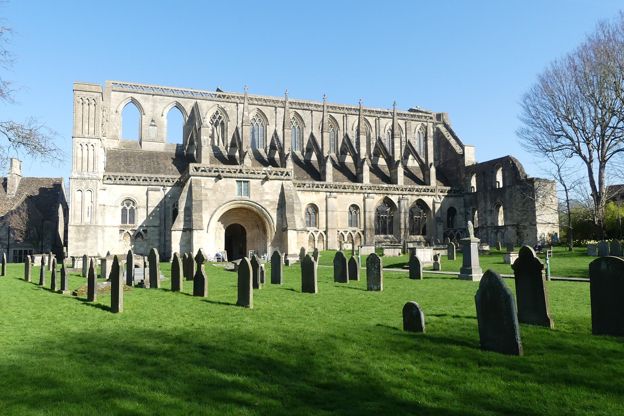
Malmesbury and the River Avon
Walk · Starts in Malmesbury · 1 hr · Circular · Dog-friendly
A 2.5-mile (3.9km) circular walk from Cross Hayes in Malmesbury, easy and about an hour, mostly level with some stiles: down from the Market Cross past Daniel's Well, along the Avon by the meads and the silk mills, and back round under the abbey.
Stay and eat near St Paul's Bell Tower, Malmesbury
-
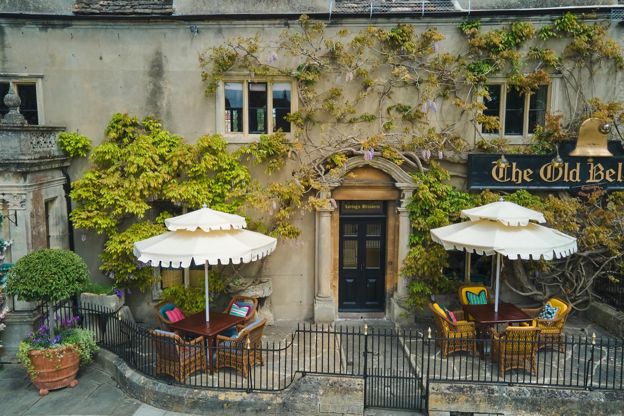
The Old Bell
Hotel · Malmesbury
A Grade I listed hotel beside Malmesbury Abbey, which says it has welcomed guests since 1220, with the Abbey Row restaurant, afternoon tea and dogs welcome.
Dog-friendly
Verified Nov 2026
-
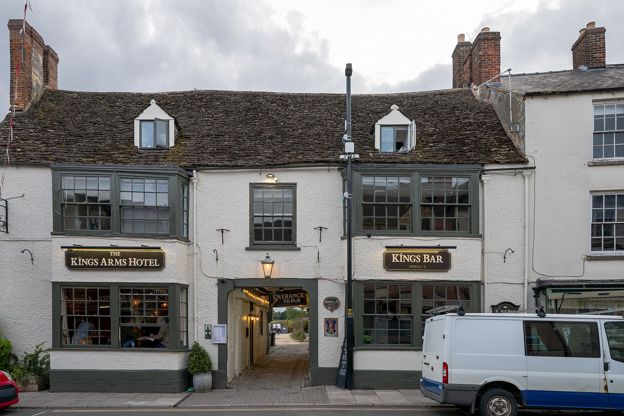
The Kings Arms, Malmesbury
Inn · Malmesbury
A refurbished coaching inn with 15 rooms and a tapas restaurant on Malmesbury's High Street, two minutes' walk from the abbey.
Verified Nov 2026
-
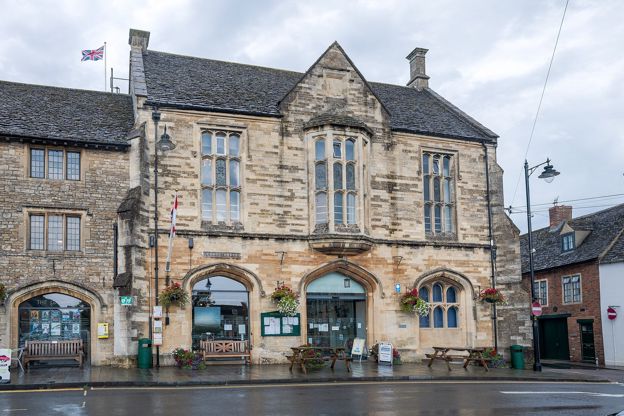
Athelstan Museum
Museums and galleries · Malmesbury
Malmesbury's free museum in the Town Hall, with the stories of King Athelstan and Eilmer the flying monk, a wheelchair lift and dogs welcome.
Dog-friendly · Rainy days · Family-friendly
Verified Oct 2026
More sights to see
-
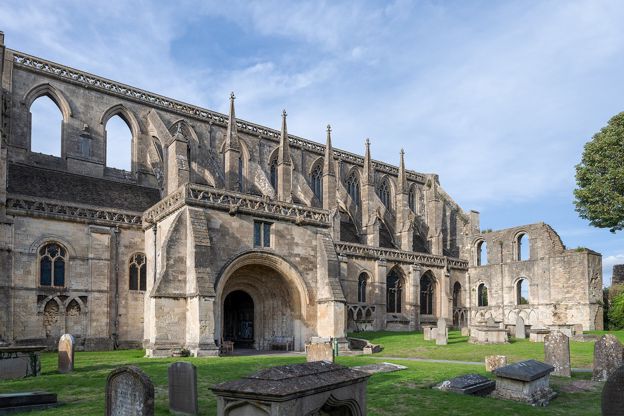
Malmesbury Abbey
Sight · Church · Malmesbury
The surviving nave of Malmesbury's great Norman abbey church, built mostly about 1160 to 1180 and the parish church since 1541, with a south porch of carved Romanesque Apostles and King Athelstan's empty tomb. Grade I; free, open daily.
-
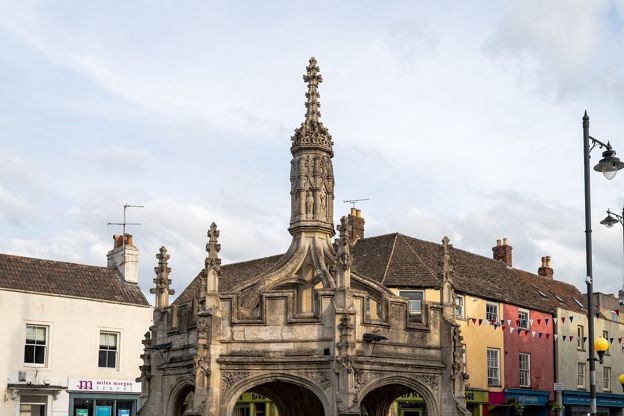
Market Cross, Malmesbury
Sight · Historic building · Malmesbury
Malmesbury's octagonal stone market cross of the late fifteenth or early sixteenth century, a vaulted shelter with pinnacles, flying buttresses and a lantern of saints, built, John Leland wrote, to keep poor market folk dry. Grade I; free.
-
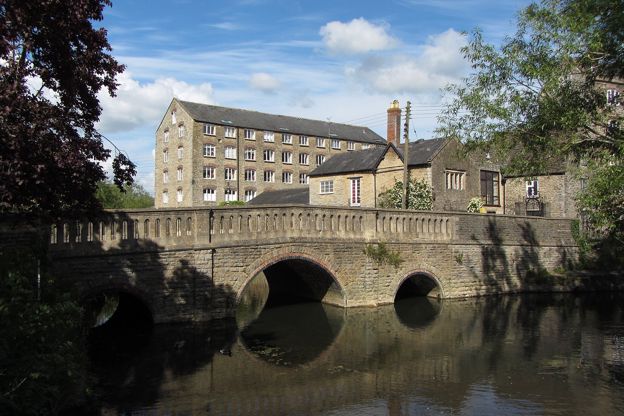
River Avon at Malmesbury
Sight · River · Malmesbury
The two branches of the Bristol Avon that almost ring Malmesbury's hilltop and meet below it, with riverside meads, old mill sites, Daniel's Well and a level path round the town. Free, on public paths and town council parks.