Roger Davies, CC BY-SA 2.0, via Wikimedia Commons
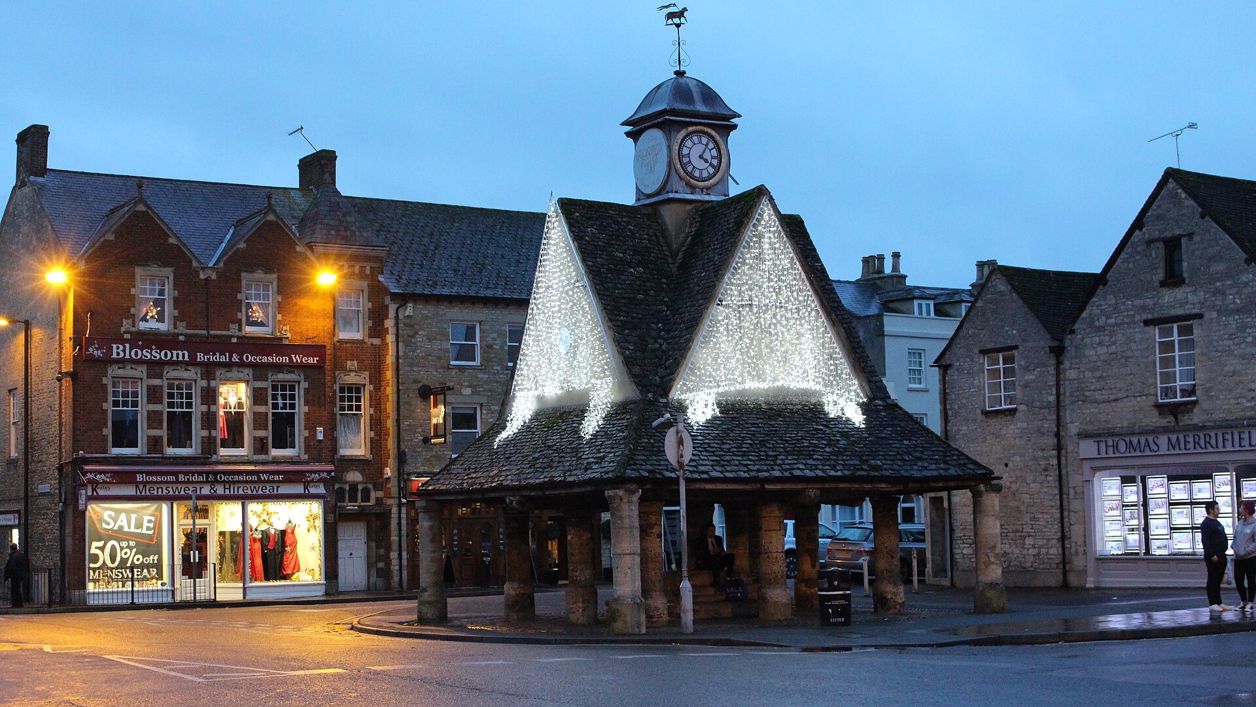
Butter Cross, Witney
The Butter Cross is Witney's open market house in the Market Square, built soon after 1606 on 13 stone pillars, probably round an older cross, with a clock turret and sundial added in 1683 by William Blake of Cogges. Grade II* and scheduled; free to walk under.
Historic building
WitneyThe Butter Cross stands in the Market Square in Witney, where the High Street opens into Church Green. It is an open-sided market house on 13 stone pillars, built soon after 1606, probably over the town's old stone cross, with a clock turret and sundial added in 1683. It is listed Grade II* and is a scheduled monument.
History
The Butter Cross was paid for by a bequest. In 1560 Walter Jones left £20 towards a market house, but nothing seems to have come of it; then in about 1606 Richard Ashcombe of Curbridge left £50 to the town's bailiffs for a house over and about the cross of Witney, and the building followed soon afterwards, the Victoria County History says. From the early eighteenth century it was often called the Butter Cross.
William Blake's clock
In 1683 William Blake of Cogges, a wool merchant and clothier who owned the manor of Cogges across the river, added the central clock turret with its cupola and sundial, and left a rent charge of 30 shillings a year for its upkeep. A medallion on the turret still records his gift, in Latin, as erected in 1683 by Gulilmus Blake, Armiger (esquire), of Cogges. His family's memorial, with three marble busts, is in St Mary's Church at Cogges.
Repairs
The building has been mended many times. It was much out of repair by 1810 and renovated the next year, largely at the expense of the Duke of Marlborough. In 1868 it was restored by public subscription and timber decoration was added to the gables; the clock face was lit by gas from 1869 and replaced in 1889. The clock mechanism was renewed in 1962, and in 1973 the Victorian timbering came off and the gables were rendered, while a local clockmaker saved the old clock bell. The bell was hung again in 1999 for the Millennium.
What to look for
The Butter Cross is small enough to take in at a glance, but worth a slow walk round. Look for:
- the 13 round piers of limestone ashlar that carry the roof, rougher and older-looking than the frame above;
- the cross-gabled roof of stone slates, with a lean-to roof running round all four sides;
- the clock turret and cupola on the ridge, with the sundial and Blake's inscribed medallion;
- inside, the central stone pier standing on three steps, probably the base of the old cross that the market house was built round;
- the view south down Church Green to the spire of St Mary's Church, one of the finest views in the town.
Visiting
The Butter Cross is open on all sides and free to walk under at any time. It stands on the level paving of the Market Square, though the central pier inside is raised on three steps. On market days the square is busy round it; come early on a weekday for a quiet look at the stonework.
Getting there
The Butter Cross is in the Market Square in the middle of Witney, at the north end of Church Green. West Oxfordshire District Council keeps its town-centre car parks free, among them Woolgate and Marriotts Walk, both a few minutes away.
On foot, Witney Lake and Cogges starts nearby in Le Touquet Square and loops down the River Windrush to Witney Lake and back by Cogges.
Nearby
Walk down Church Green to St Mary's Church, or cross the river to St Mary's at Cogges and Cogges Manor Farm, the Blakes' old home. On the square itself, the Blue Boar is a seventeenth-century coaching inn, and the Fleece looks down Church Green. Huffkins, on the High Street, is a café and bakery with outdoor tables.
Walks past Butter Cross, Witney
-
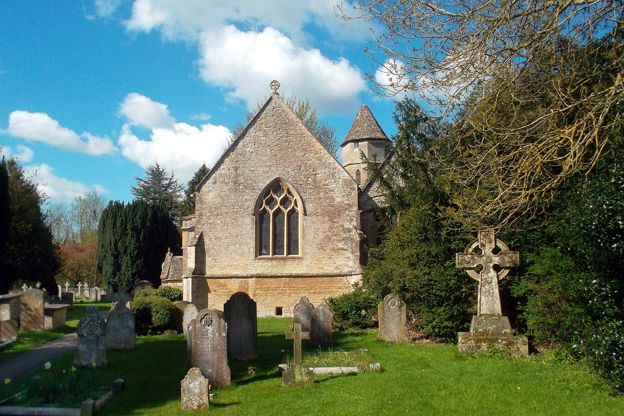
Witney Lake and Cogges
Walk · Starts in Witney · 1 hr, 15 mins · Circular
A 3.2-mile (5.1km) easy, flat loop of about an hour and a quarter from the middle of Witney: down the Windrush through the meadows to Witney Lake, back by farm tracks and a lane to Cogges, its manor farm, café and church.
Stay and eat near Butter Cross, Witney
-
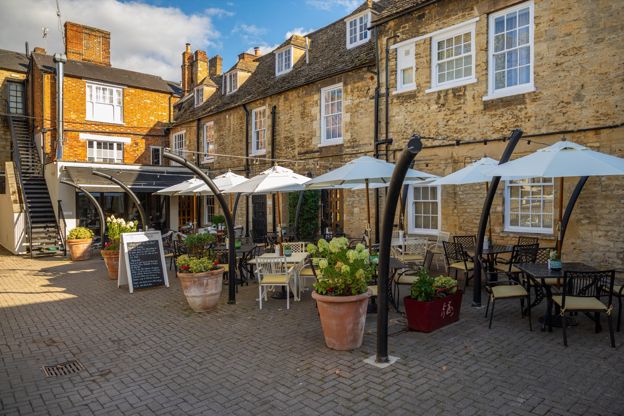
The Blue Boar
Inn · Witney
A 17th-century coaching inn on Witney's Market Square with twenty rooms, breakfast from 7am and a grill and wood-fired pizza menu.
Family-friendly · Car-free
Verified Oct 2026
-
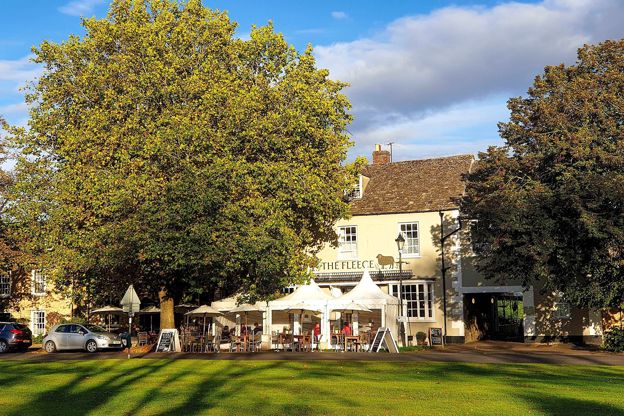
The Fleece, Witney
Inn · Witney
An inn with ten rooms on Church Green, Witney, run by Peach Pubs, with breakfast from 7.30am and food all day.
Verified Oct 2026
-
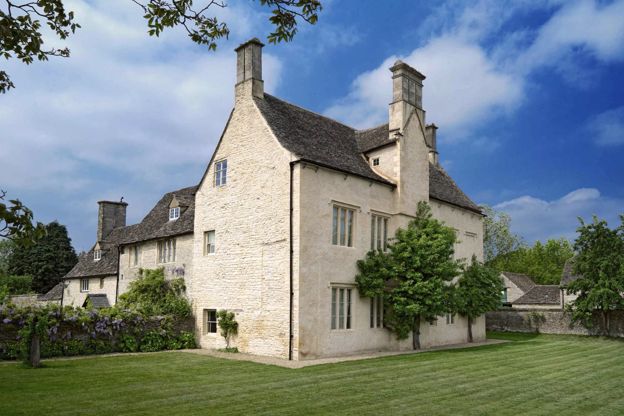
Cogges Manor Farm
Family days out · Witney
A manor house of the thirteenth century with a farm, walled garden, orchard and adventure playground on the edge of Witney, with free parking.
Family-friendly · Dog-friendly · Car-free
Verified Nov 2026
More sights to see
-
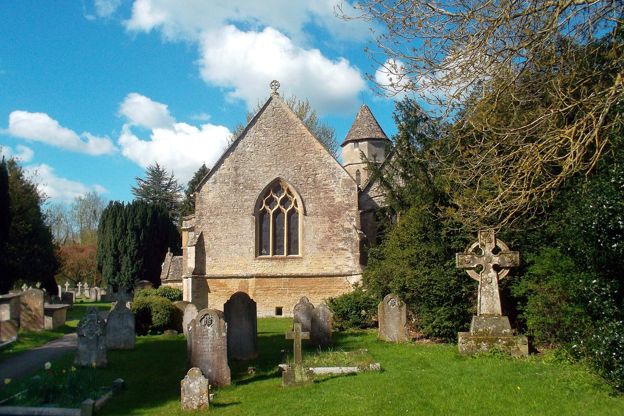
St Mary's Church, Cogges
Sight · Church · Witney
St Mary's at Cogges, across the Windrush from Witney, is a Grade I church of the late twelfth and thirteenth centuries, once shared with a small priory, with an octagonal-topped tower, a chapel frieze of stone musicians and the busts of the Blake family.
-
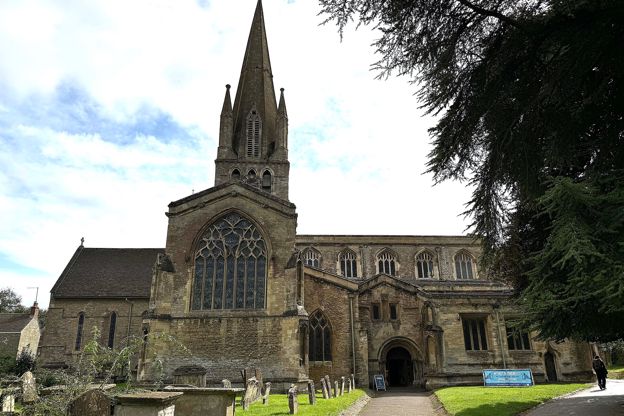
St Mary's Church, Witney
Sight · Church · Witney
St Mary the Virgin is Witney's cross-shaped parish church at the south end of Church Green, rebuilt in the thirteenth century around a central tower and broach spire, with a late Norman porch and a fine fourteenth-century north transept. Grade I; open daily.
-
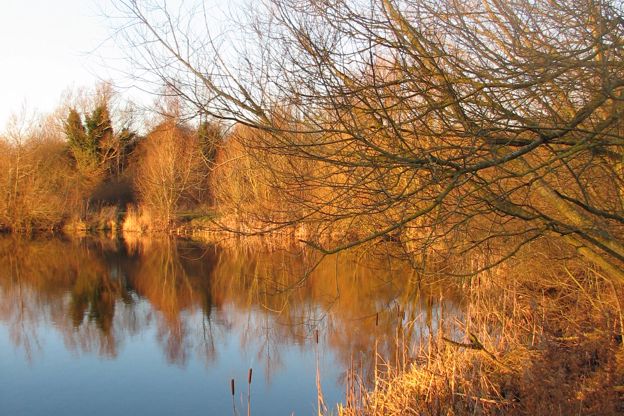
Witney Lake and Country Park
Sight · Nature reserve · Witney
Witney Lake and Country Park is a Local Nature Reserve on the south side of Witney: a former gravel pit and Windrush meadows run by the town council, with a lakeside path of under 2km, wildfowl in winter and terns in spring. Free.