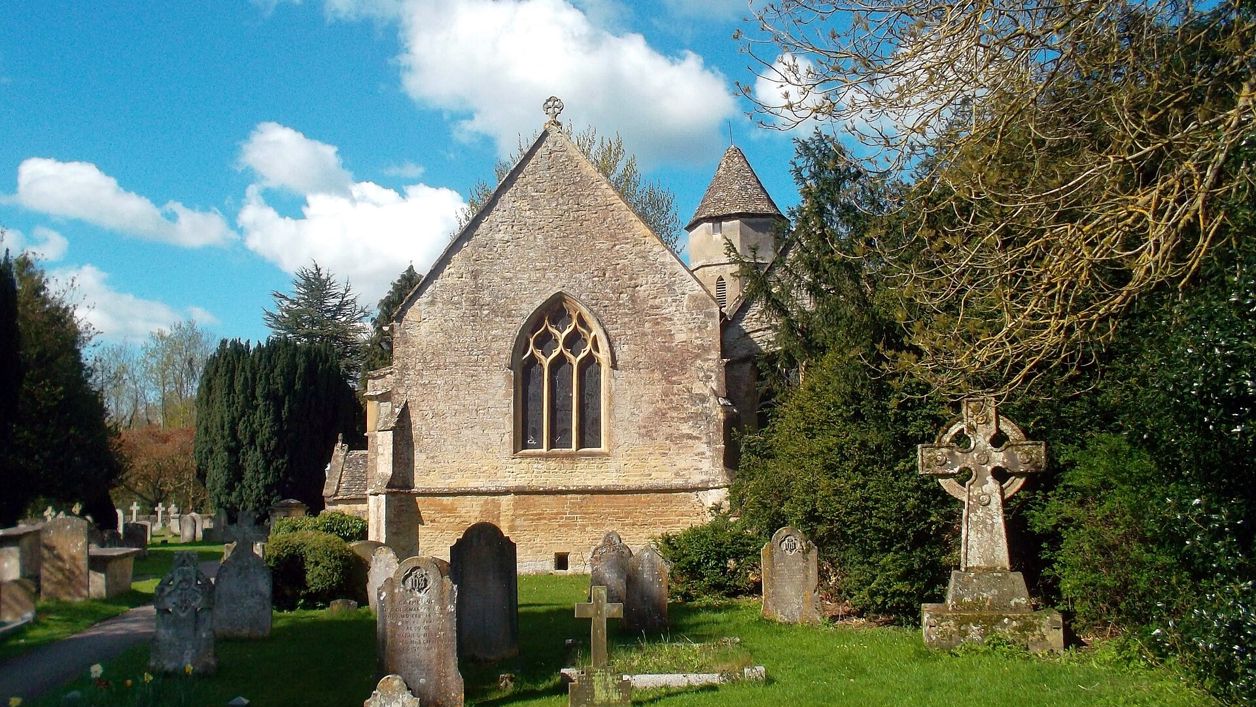
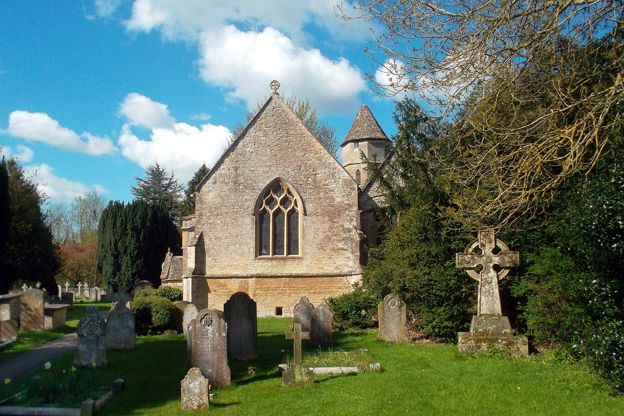
Des Blenkinsopp, CC BY-SA 2.0, via Wikimedia Commons
St Mary's Church, Cogges
St Mary's at Cogges, across the Windrush from Witney, is a Grade I church of the late twelfth and thirteenth centuries, once shared with a small priory, with an octagonal-topped tower, a chapel frieze of stone musicians and the busts of the Blake family.
Church
WitneySt Mary's stands beside the old priory and Cogges Manor Farm, across the River Windrush from the middle of Witney. Built in the late twelfth and thirteenth centuries on the site of a late Saxon church and remodelled in the 1330s, it is listed Grade I for its tower, its carved north chapel and its tombs.
History
Cogges church is older than its documents. The estate was given after the Conquest to Odo, Bishop of Bayeux, the Conqueror's half-brother, and the first record of the church is a charter of 1103 in which Manasses Arsic, lord of the manor, gave it to the Abbey of Fécamp in Normandy. The listing records a two-cell late Saxon church beneath the present one.
The priory
Fécamp set up a small priory next to the church, with three or four monks who worshipped there and looked after the abbey's English estates; they probably used the north aisle for their own services. As an alien priory, owned from France, it was seized by the Crown in 1294 and several times after, and finally suppressed in 1441. Henry VI then gave the church's patronage to his new foundation, Eton College, which kept it until the end of the nineteenth century.
The Greys and the Blakes
The north chapel was built, probably in the 1340s, by the Grey family, lords of the manor. The listing says Lord Grey built it for his mother, Lady Margaret, whose effigy lies on the tomb; the parish history suggests it may have been a chantry for Isabella de Grey. The parish history has the north aisle rebuilt and the tower added shortly afterwards, though the listing dates the tower to the early fourteenth century; little has changed since the late fourteenth century. In the seventeenth century the manor belonged to William Blake, a clothier and wool merchant, who founded schools and charities and added the clock tower to Witney's Butter Cross in 1683; in 1669 a nonconformist meeting at the manor house was reported to the Archbishop of Canterbury.
What to see
St Mary's is a small church with much to find. Look for:
- the early fourteenth-century tower at the north-west corner, square below and octagonal above under a pyramid roof;
- the round pier with a scalloped capital in the early thirteenth-century south arcade;
- the north chapel's frieze, which the listing calls fine and unusual: grotesques, animals and corbels of men and animals playing musical instruments;
- the tomb chest between the chancel and the chapel, with a fine early fourteenth-century effigy of a lady, angels at her pillow, and the symbols of the Evangelists on its sides;
- the Blake memorial in the chapel: marble busts of William (died 1695), Sara (died 1701) and Francis (died 1681) in a frame with a scrolled pediment;
- the twelfth-century tub font on a fourteenth-century octagonal base, with the war memorial behind it, carved with acorns and roses;
- the oak screen to the vestry under the tower, given in about 1935 by the children of Joseph and Elizabeth Mawle of Manor Farm in their memory;
- the early fourteenth-century glass of leaves in the chapel's east window.
Visiting
The National Churches Trust lists St Mary's as open Monday to Friday, 9am to 3pm: call in at the church office at the front of the site to be let into the church, or ring 01993 779613. Entry is free. It lists level access to the main areas and accessible toilets in the church. A visit pairs well with Cogges Manor Farm next door, which charges for entry.
Getting there
The church is on Church Lane (OX28 3LA) on the east side of Witney. On foot from the town centre, cross the Windrush by the path off Crown Lane near the Windrush Leisure Centre. West Oxfordshire District Council says parking is free in all its car parks, including those in Witney town centre, and Cogges Manor Farm lists free parking.
Witney Lake and Cogges comes back past the church on its second half, after the River Windrush and Witney Lake.
Nearby
Cogges Manor Farm, the thirteenth-century manor house of the Greys and later the Blakes, has its Cogges Kitchen café beside the church. Back over the river are the Butter Cross and Witney's own St Mary's at the end of Church Green, with the Fleece and the Blue Boar for food.
Walks past St Mary's Church, Cogges
-
Witney Lake and Cogges
Walk · Starts in Witney · 1 hr, 15 mins · Circular
A 3.2-mile (5.1km) easy, flat loop of about an hour and a quarter from the middle of Witney: down the Windrush through the meadows to Witney Lake, back by farm tracks and a lane to Cogges, its manor farm, café and church.
Stay and eat near St Mary's Church, Cogges
-
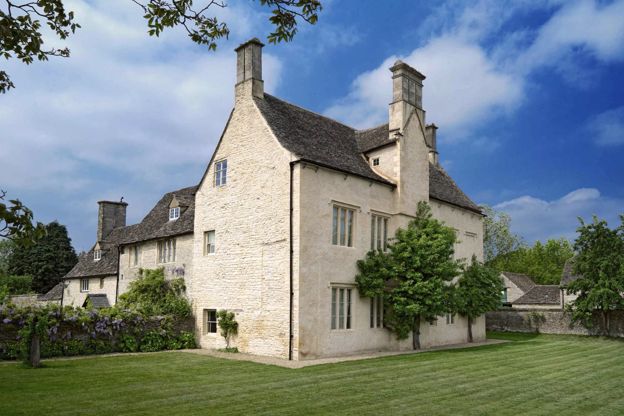
Cogges Manor Farm
Family days out · Witney
A manor house of the thirteenth century with a farm, walled garden, orchard and adventure playground on the edge of Witney, with free parking.
Family-friendly · Dog-friendly · Car-free
Verified Nov 2026
-
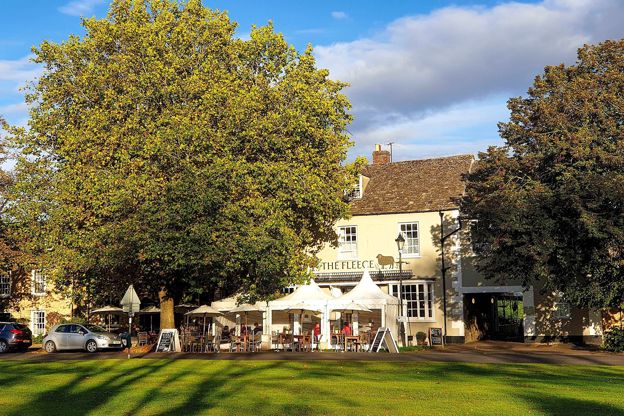
The Fleece, Witney
Inn · Witney
An inn with ten rooms on Church Green, Witney, run by Peach Pubs, with breakfast from 7.30am and food all day.
Verified Oct 2026
-
The Blue Boar
Inn · Witney
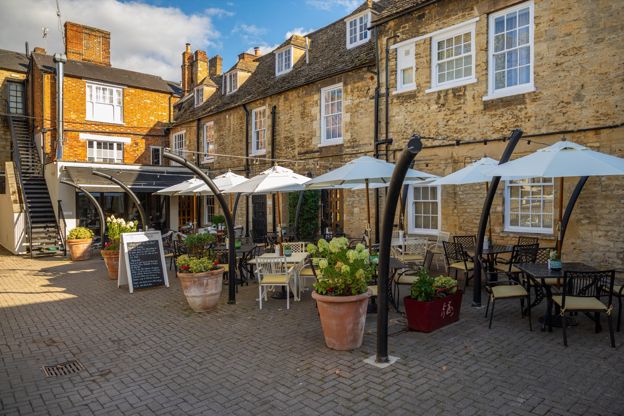
A 17th-century coaching inn on Witney's Market Square with twenty rooms, breakfast from 7am and a grill and wood-fired pizza menu.
Family-friendly · Car-free
Verified Oct 2026
Stories about St Mary's Church, Cogges
-
Cotswold film and TV locations
Story · Guides · 11 minute read
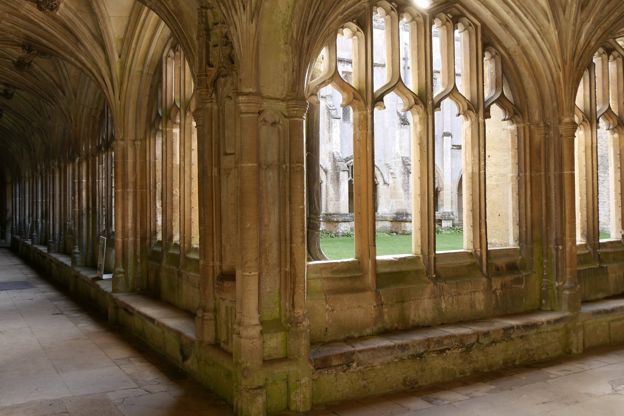
Where Clarkson's Farm, Downton Abbey, Harry Potter, Father Brown, Poldark, Bridget Jones and Cider with Rosie were filmed in and around the Cotswolds, what you can see today, and the claims that do not stand up.
-
Downton Abbey in the Cotswolds: Bampton, Cogges and Lacock
Story · Guides · 7 minute read
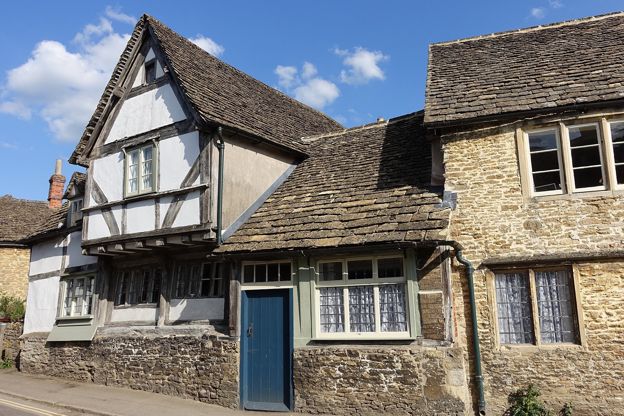
The Downton Abbey locations you can visit around the Cotswolds: Bampton as the village of Downton, Cogges as Yew Tree Farm and Lacock's livestock show and royal parade, with what each custodian confirms.
More sights to see
-
Butter Cross, Witney
Sight · Historic building · Witney
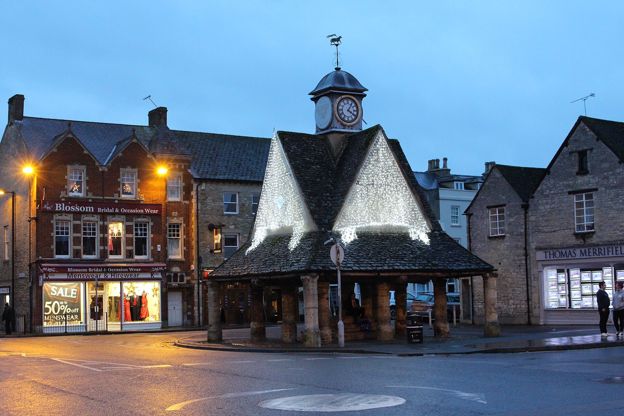
The Butter Cross is Witney's open market house in the Market Square, built soon after 1606 on 13 stone pillars, probably round an older cross, with a clock turret and sundial added in 1683 by William Blake of Cogges. Grade II* and scheduled; free to walk under.
-
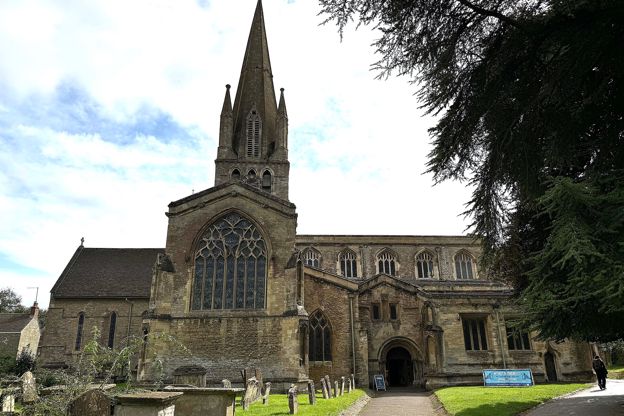
St Mary's Church, Witney
Sight · Church · Witney
St Mary the Virgin is Witney's cross-shaped parish church at the south end of Church Green, rebuilt in the thirteenth century around a central tower and broach spire, with a late Norman porch and a fine fourteenth-century north transept. Grade I; open daily.
-
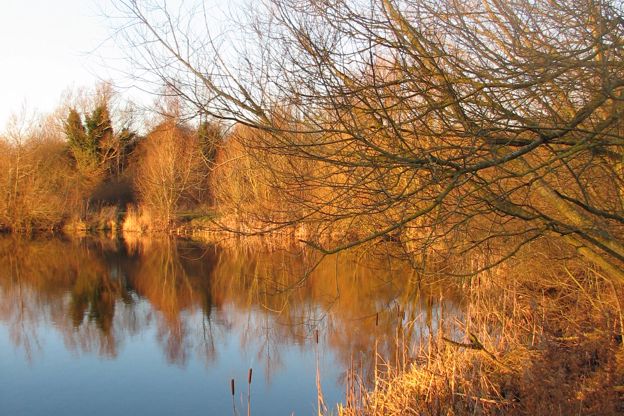
Witney Lake and Country Park
Sight · Nature reserve · Witney
Witney Lake and Country Park is a Local Nature Reserve on the south side of Witney: a former gravel pit and Windrush meadows run by the town council, with a lakeside path of under 2km, wildfowl in winter and terns in spring. Free.