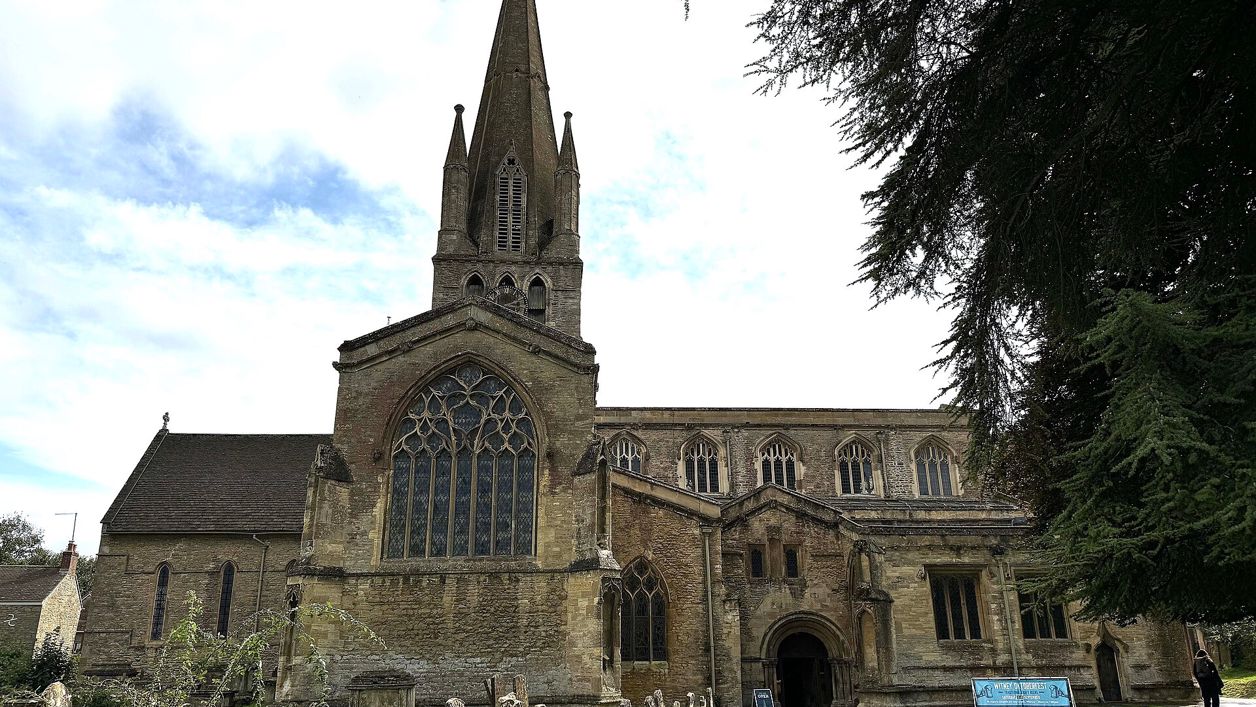
Steve Daniels, CC BY-SA 2.0, via Wikimedia Commons
St Mary's Church, Witney
St Mary the Virgin is Witney's cross-shaped parish church at the south end of Church Green, rebuilt in the thirteenth century around a central tower and broach spire, with a late Norman porch and a fine fourteenth-century north transept. Grade I; open daily.
Church
WitneySt Mary the Virgin closes the south end of Church Green in Witney, its spire visible across the town. A Norman church rebuilt in the thirteenth century as a cross around a central tower, it was enlarged in the later Middle Ages on the wealth of the wool trade and restored by G. E. Street in the 1860s. It is listed Grade I.
History
St Mary's grew from a Norman church into the large cruciform building you see now in about three centuries. Blocked windows high in the nave suggest a church of the late eleventh or early twelfth century, and a north aisle and the north porch were added late in the twelfth century.
The thirteenth-century church
Early in the thirteenth century the church was transformed: transepts were added, the chancel rebuilt, a south aisle added and the crossing tower and broach spire built. Some of the work may date to about 1243, when the church may have been reconsecrated. In the fourteenth century chapels were added to the north transept and the north aisle, and in about 1485 the south transept aisle was remodelled for the Fermor chantry. Lower roofs, clerestories and new east and west windows came in the fifteenth and early sixteenth centuries.
Storm, galleries and Street
A storm in 1636 blew the top of the spire into the church, and it was rebuilt. Galleries filled the church in the seventeenth and eighteenth centuries, with a west gallery for the organ by 1794. G. E. Street swept them away in his restoration of 1866 to 1867, which cost about £4,500: he gave the chancel a steep roof and a new east window and cleared the old pews. In 1942 an RAF aircraft clipped the spire, and the tip was rebuilt in 1944.
What to see
St Mary's rewards a walk round the outside before you go in. Look for:
- the spire: eight-sided and ribbed, with gabled lucarnes topped by small crouching figures, and in Pevsner's view among the most impressive of its date in Oxfordshire;
- the north porch: late twelfth century, with a round arch of four orders on shafts with stiff-leaf capitals, and a fifteenth-century room above, a rare survival;
- the north transept: corner buttresses with cusped statue niches, a seven-light window of flowing early fourteenth-century tracery and a corbel table of carved heads;
- inside, the fine early fifteenth-century screen to the north chapel, the tomb chest with brasses of the Wenman family, and the black marble tomb of Sir Francis Wenman, who died in 1640;
- two fourteenth-century effigies of a man and a woman, unidentified, in recesses in the north transept;
- the glass: a west window of 1869 by William Wailes and some 15 windows by Clayton and Bell from 1880 to 1899;
- the nave altar, made from a cedar of Lebanon that had to be felled in the churchyard, its central support shaped like a bobbin and carved with shuttles and warp-and-weft patterns for Witney's weavers;
- outside again, the churchyard's chest tombs, dozens of them listed in groups of their own.
Visiting
St Mary's is generally open every day from before 9am; A Church Near You says until 6pm, and the National Churches Trust until about 4pm, and the parish says its opening times are still being confirmed, so ring the parish office (01993 779492) before a special trip. Entry is free. The way in by the north door is flat, the parish says, though you may need help with one of the outer doors. A Church Near You lists a ramp, a hearing loop and toilets, and the National Churches Trust entry gives level access to the main areas and says the church is dog friendly. The Arts Society has written a children's trail, and the tower holds a ring of eight bells.
Getting there
St Mary's is at the south end of Church Green (OX28 4AW), about 300m from the Market Square. On weekdays Church Green has time-limited parking, but The Leys is free all day, and the council's town-centre car parks are free too.
On foot, Witney Lake and Cogges starts nearby in Le Touquet Square and goes down to Witney Lake, whose park begins just south of the church.
Nearby
At the top of Church Green is the Butter Cross, and across the River Windrush is Witney's other St Mary's, the church at Cogges, beside Cogges Manor Farm. Up the valley, St Kenelm's at Minster Lovell is a fifteenth-century church by the ruined hall. The Fleece looks down Church Green to the church, and the Blue Boar is on the Market Square.
Walks past St Mary's Church, Witney
-
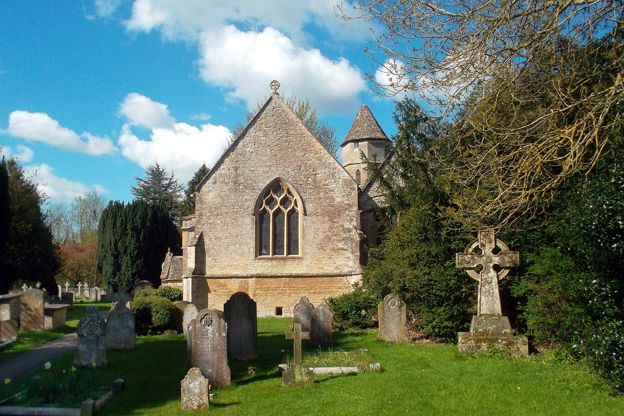
Witney Lake and Cogges
Walk · Starts in Witney · 1 hr, 15 mins · Circular
A 3.2-mile (5.1km) easy, flat loop of about an hour and a quarter from the middle of Witney: down the Windrush through the meadows to Witney Lake, back by farm tracks and a lane to Cogges, its manor farm, café and church.
Stay and eat near St Mary's Church, Witney
-
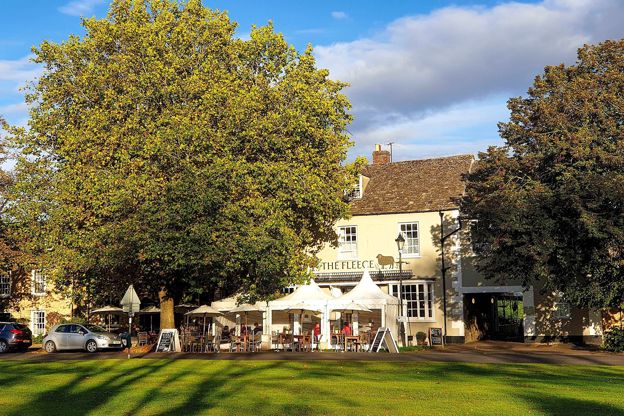
The Fleece, Witney
Inn · Witney
An inn with ten rooms on Church Green, Witney, run by Peach Pubs, with breakfast from 7.30am and food all day.
Verified Oct 2026
-
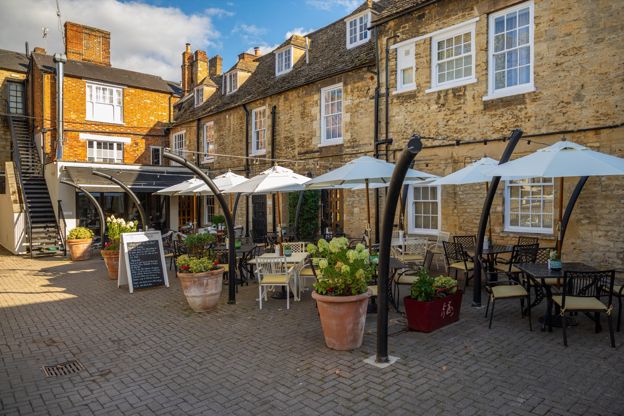
The Blue Boar
Inn · Witney
A 17th-century coaching inn on Witney's Market Square with twenty rooms, breakfast from 7am and a grill and wood-fired pizza menu.
Family-friendly · Car-free
Verified Oct 2026
-
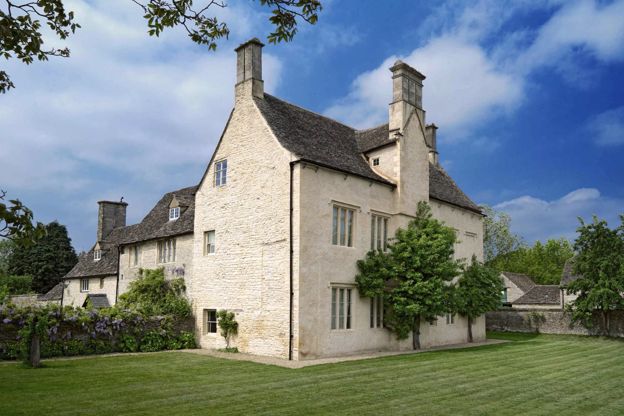
Cogges Manor Farm
Family days out · Witney
A manor house of the thirteenth century with a farm, walled garden, orchard and adventure playground on the edge of Witney, with free parking.
Family-friendly · Dog-friendly · Car-free
Verified Nov 2026
More sights to see
-
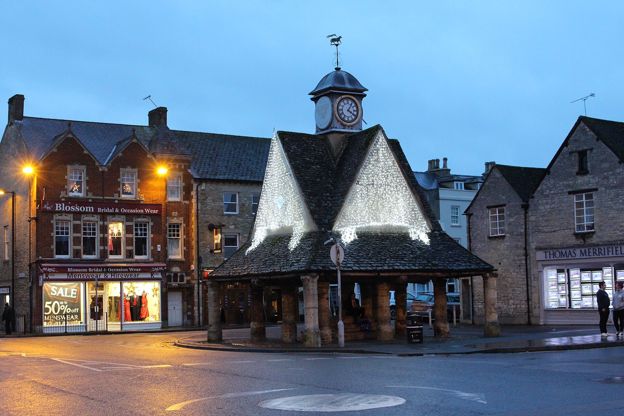
Butter Cross, Witney
Sight · Historic building · Witney
The Butter Cross is Witney's open market house in the Market Square, built soon after 1606 on 13 stone pillars, probably round an older cross, with a clock turret and sundial added in 1683 by William Blake of Cogges. Grade II* and scheduled; free to walk under.
-
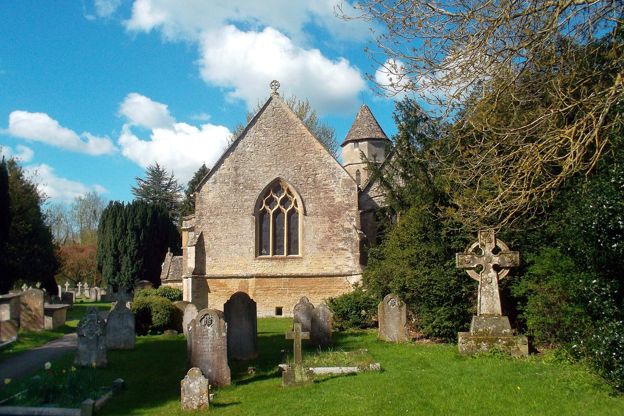
St Mary's Church, Cogges
Sight · Church · Witney
St Mary's at Cogges, across the Windrush from Witney, is a Grade I church of the late twelfth and thirteenth centuries, once shared with a small priory, with an octagonal-topped tower, a chapel frieze of stone musicians and the busts of the Blake family.
-
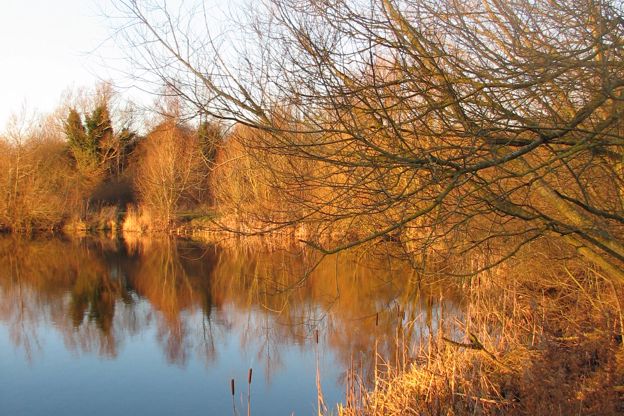
Witney Lake and Country Park
Sight · Nature reserve · Witney
Witney Lake and Country Park is a Local Nature Reserve on the south side of Witney: a former gravel pit and Windrush meadows run by the town council, with a lakeside path of under 2km, wildfowl in winter and terns in spring. Free.