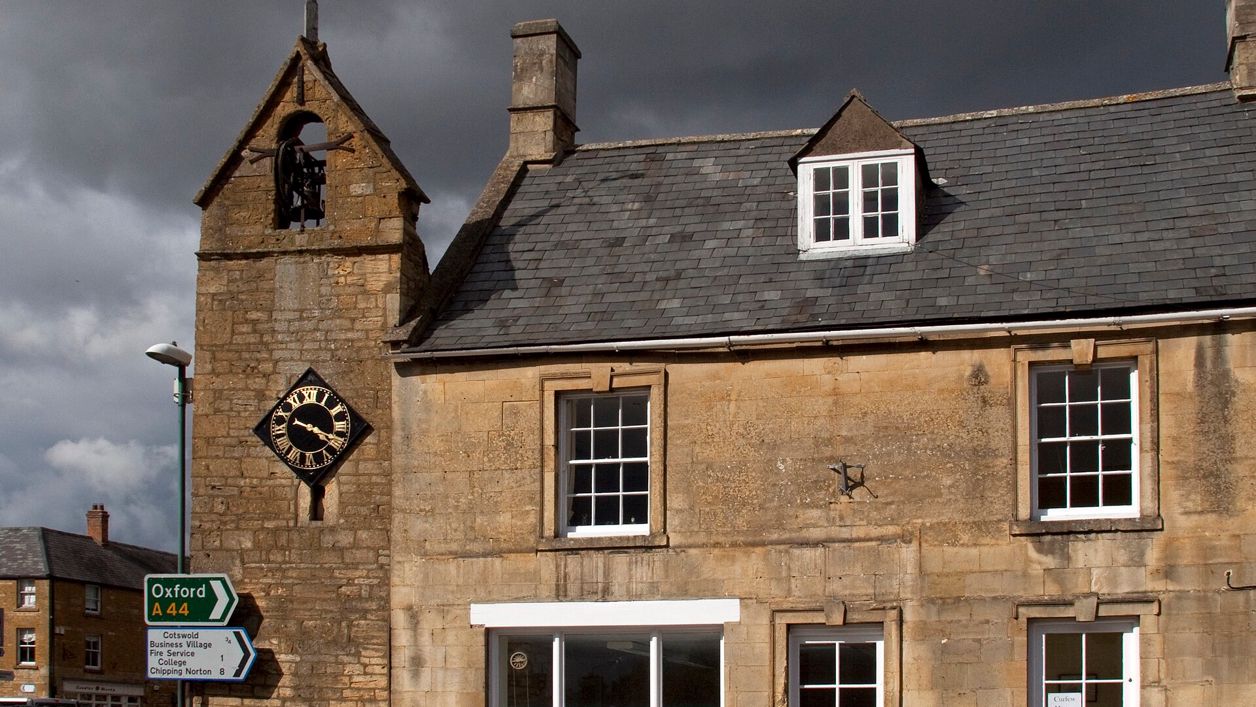
Tony Hisgett, CC BY 2.0, via Wikimedia Commons
Curfew Tower, Moreton-in-Marsh
The Curfew Tower is a small sixteenth-century stone bell tower on the corner of Moreton-in-Marsh's High Street and Oxford Street, perhaps the town's oldest public building, with a bell of 1633, a clock of 1648 and a past as the town lock-up.
Historic building
Moreton-in-MarshThe Curfew Tower is a small stone bell tower on the corner of the High Street and Oxford Street in Moreton-in-Marsh, facing the wide market street. It dates from the sixteenth century, and both Historic England's listing and its scheduling suggest it may be the oldest public building in the town. Its bell is dated 1633, and it was also the town's lock-up.
History
Moreton has been a market town since its charter of the 1220s, and the Curfew Tower stands on the edge of that old market place. It did two jobs for the town: it carried the bell and the clock, and it held the drunk and the disorderly, because Moreton had nowhere else to lock them up.
The bell and the clock
The bell is dated 1633 and the clock 1648. An inscription, no longer visible, recorded seventeenth-century gifts from Robert Fry: 10 shillings for a bell ringer and 20 shillings for keeping the clock in repair. The bell is said to have been rung every day until 1860; the listing calls it the curfew bell, and tradition has it that the bell gave the tower its name. The clock's works were taken out in the 1950s.
The lock-up
The scheduling records that the tower served as Moreton's lock-up, where local drunks and minor offenders were held. Inside, a low plank bench against the north wall was presumably added in those years. Historic England scheduled the tower as a monument in 1955, for its place in the life of the market town from the sixteenth century onwards.
What to see
The tower is small: two storeys of stone rubble under a stone slate roof, with a gabled turret for the bell and a cockerel weathervane on top. Facing the street is a four-centred arched doorway with a smaller loft door above it, both with studded wooden doors. The inside, which you cannot enter, is only about 2m square and has no east wall of its own, which suggests it was built against another building. Its walls were plastered, with floorboards over an earth floor, and a second floor about 4m up.
Visiting
The Curfew Tower is seen from outside, from the pavement of the High Street, at any time and for nothing; the doors are kept padlocked. The best time to see it in its setting is a Tuesday, market day, when the stalls fill the High Street, though early on a quiet morning you can take a photograph without the traffic.
Getting there
Moreton-in-Marsh station is a few minutes' walk away, with trains to London Paddington in about an hour and a half. The 801 bus links the town with Stow, Bourton, Cheltenham and Chipping Norton, and Stagecoach buses run to Stratford-upon-Avon. By car, the Old Market Way car park (GL56 0JY) is the nearest council car park. On foot, the Moreton and Batsford walk starts at the war memorial, about 100m north up the High Street, and turns off into Corders' Lane almost opposite the tower.
Nearby
Redesdale Hall, the market hall of 1887, stands in the middle of the High Street beside it, and the Redesdale Arms, the White Hart Royal, the Swan Inn and the Manor House are all within a few minutes' walk. The Black Bear Inn, a Donnington Brewery pub, is on the High Street too. The walk goes on to Batsford, whose neo-Norman St Mary's Church is the Redesdales' estate church. In Stow-on-the-Wold, the market cross is another relic of a Cotswold market place.
Walks past Curfew Tower, Moreton-in-Marsh
-
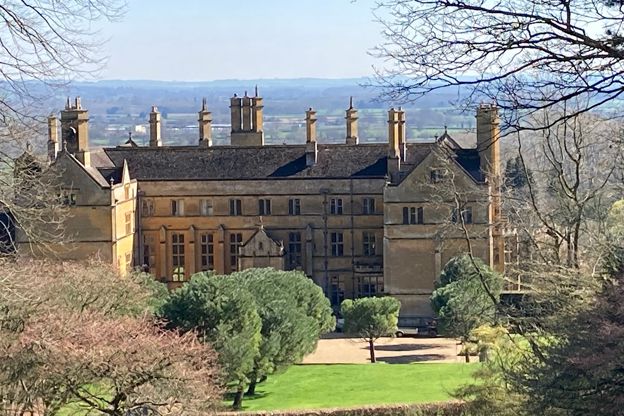
Moreton-in-Marsh and Batsford
Walk · Starts in Moreton-in-Marsh · 2 hrs · Circular
A 4-mile (6.4km) circular walk from Moreton-in-Marsh's war memorial, easy, stile-free and about two hours: west through field gates to Batsford, along the deer park below Batsford House, east on the watershed lane to Dorn and back past the mound of a Roman fort.
Stay and eat near Curfew Tower, Moreton-in-Marsh
-
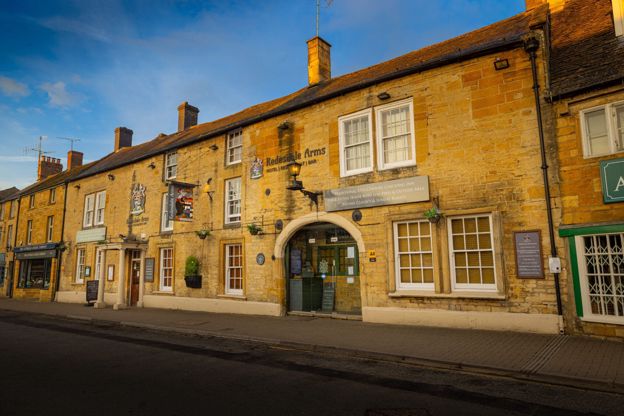
The Redesdale
Pubs · Moreton-in-Marsh
A Brakspear pub with rooms on the High Street in Moreton-in-Marsh, open from 8am, with local produce and ales, a terrace and Sunday roasts.
Dog-friendly
Verified Nov 2026
-
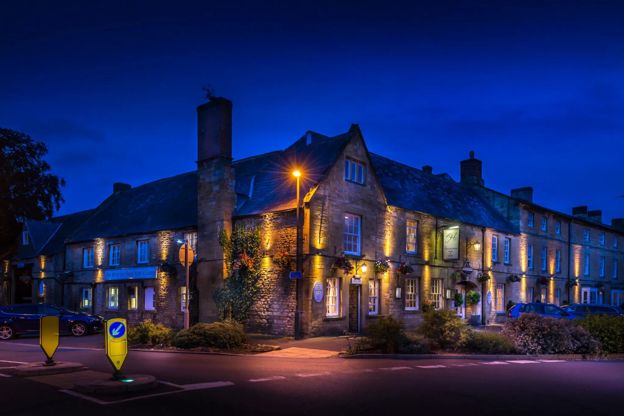
The White Hart Royal Hotel
Inn · Moreton-in-Marsh
An old coaching inn on Moreton-in-Marsh's High Street, where tradition says Charles I stayed, with a courtyard restaurant and accessible rooms.
Dog-friendly · Car-free · Wedding venues
Verified Oct 2026
-
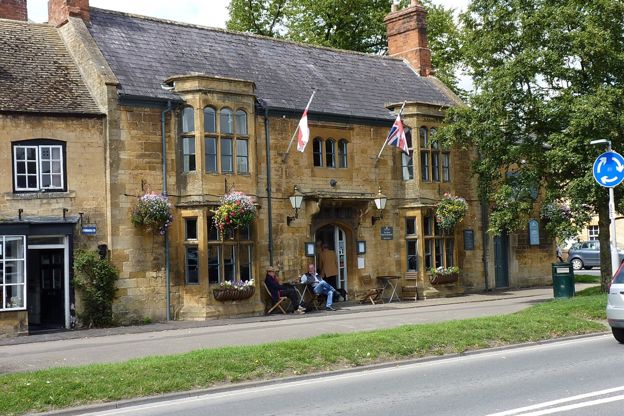
The Swan Inn, Moreton
Inn · Moreton-in-Marsh
An inn with eight rooms in a Grade II listed nineteenth-century building on Moreton-in-Marsh's High Street, with pub food five days a week.
Verified Oct 2026
Stories about Curfew Tower, Moreton-in-Marsh
-
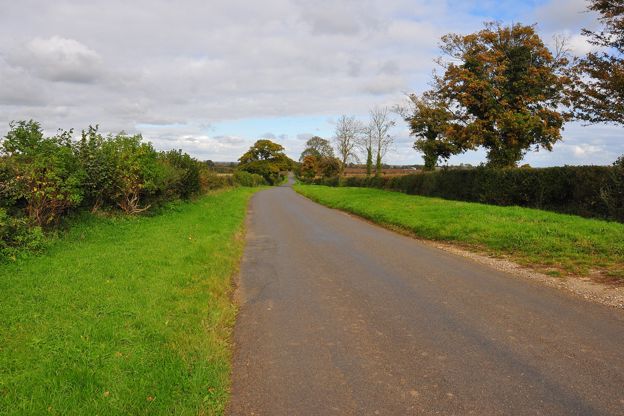
The Fosse Way through the Cotswolds
Story · History · 8 minute read
The Roman road from Exeter to Lincoln through the Cotswolds: its line by Cirencester, Northleach, Stow, Moreton and Stretton-on-Fosse, where it is the A429 and where a green lane, the Saltway and the roads that cross it, the towns it made, and walks on it.
More sights to see
-
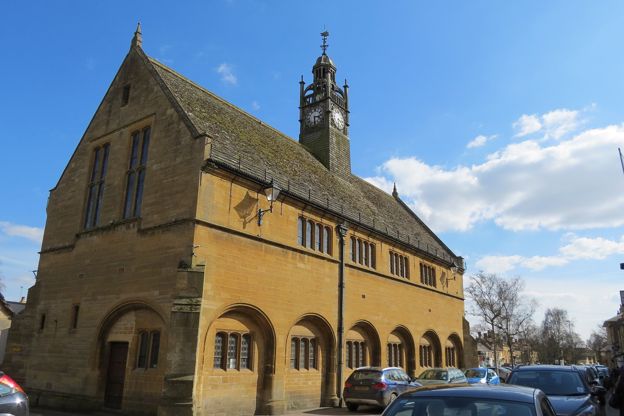
Redesdale Hall, Moreton-in-Marsh
Sight · Historic building · Moreton-in-Marsh
Redesdale Hall is Moreton-in-Marsh's market hall of 1887, standing in the middle of the High Street: designed by Sir Ernest George for Bertie Mitford of Batsford, later Lord Redesdale, with an arched ground floor, a clock turret and a tall chimney. Listed Grade II.
-
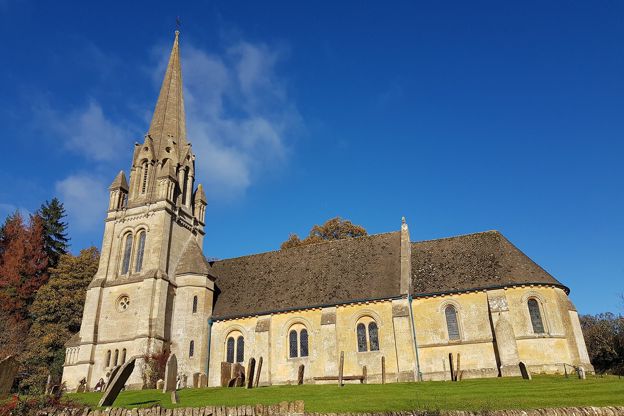
St Mary's Church, Batsford
Sight · Church · Moreton-in-Marsh
St Mary's is the estate church of Batsford, near Moreton-in-Marsh: rebuilt in 1861 and 1862 for the Mitford family in a neo-Norman style, with a spired tower, an apsidal chancel, Kempe glass and monuments to the Freemans and Mitfords. Grade II*.
-
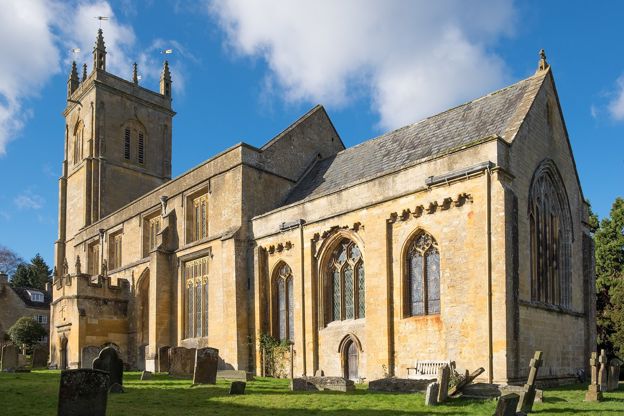
St Peter and St Paul, Blockley
Sight · Church · Blockley
St Peter and St Paul is Blockley's church by the square, founded about 800 by its own account: a late twelfth-century chancel, medieval brasses, Childe and Rushout monuments and a tower of 1725 to 1727 attributed to the Woodwards. Grade II*, open daily and Father Brown's church.