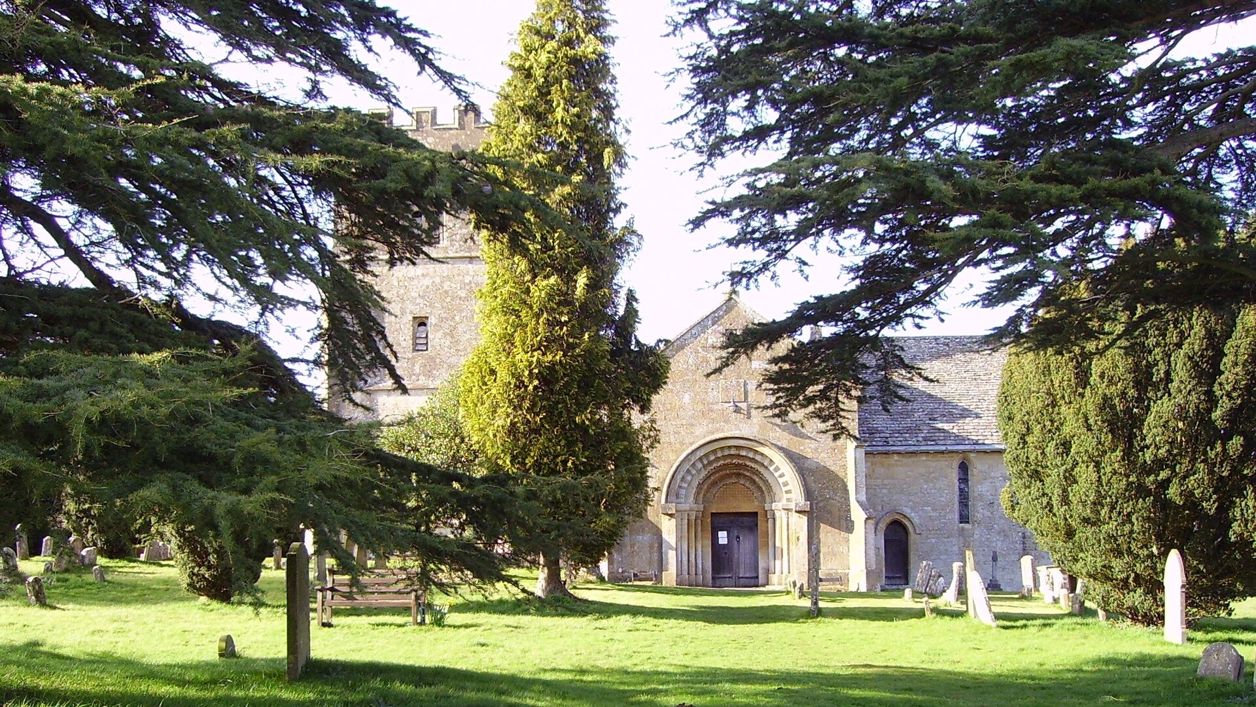
Ballista, CC BY-SA 3.0, via Wikimedia Commons
St Michael's Church, Guiting Power
Guiting Power’s Norman church of about 1180, open daily, with two carved twelfth-century doorways (one capital a head with its tongue out), a fifteenth-century tower, transepts of 1820 and 1844 and Green Men in its roof. Grade II*; accessible toilet in the churchyard.
Church
Guiting PowerSt Michael and All Angels stands on Church Lane in Guiting Power, in the Windrush valley. It was built around 1180 and keeps two carved Norman doorways, a fifteenth-century west tower and a nave roof partly of the same century, and it is listed Grade II*. The church is open every day.
History
St Michael's is a Norman church, built about 1180 according to the parish, and enlarged in the later Middle Ages and the nineteenth century. The village was there long before it: Guiting appears in Domesday Book, which records that before the Conquest its manor was held under King Edward by Alwin, the sheriff of Gloucestershire, and the Guiting Manor Amenity Trust records that the remains of a Saxo-Norman chapel have been found by excavation near the present church. The village takes the second half of its name from the le Poher family, its medieval lords.
The Hospitallers
The parish says the de Lacy family gave lands of the Guiting estate to the Knights Templar, and that the church passed to the Knights Hospitaller between 1218 and 1279. Gilbert de Lacy was among the founders, in the middle of the twelfth century, of the Knights Templar’s preceptory at Temple Guiting, a little way up the Windrush; the story of both orders in the Cotswolds is told in Templars and Hospitallers in the Cotswolds.
Tower, transepts and the restoration of 1903
The three-stage west tower was added in the fifteenth century, the parish says, in the Perpendicular style, with diagonal buttresses and battlements. To make room for a growing congregation, a north transept was built in 1820 and a south transept in 1844, and the Norman south doorway was moved from the nave to the end of the new south transept. In 1903 the late twelfth-century chancel was largely rebuilt, keeping only its Early English priest's doorway and a small trefoil-headed window; the transept and chancel roofs and a vestry date from the same work. Stone heads of Edward VII and Queen Alexandra, the king and queen at the time, were carved at the west end. Around the church, the parish notes, houses that once clustered close to it have gone.
What to see
The north doorway is the best thing here: a twelfth-century round arch carved with chevron, billet and star ornament, on shafts with voluted and scalloped capitals, and on the left-hand capital a head with its tongue hanging out.
- The south doorway, also Norman, with three orders of roll and chevron moulding, now at the end of the south transept with a modern tympanum carved with an hourglass.
- The nave roof, partly fifteenth century, on stone corbels carved as faces, with Green Men and central bosses of a bearded man and a Tudor rose.
- The heads of Edward VII and Queen Alexandra at the west end, and traces of a wall painting on the north wall.
- A Perpendicular octagonal font, a stone pulpit on an old base and the royal arms of George III over the south door.
- Tablets to the Snell, Walker and Stratford families and to a lieutenant drowned in Canada in 1842, a brass plaque of 1712, a wooden plaque of 1601 behind the altar and three nineteenth-century charity boards in the tower.
- In the churchyard, a medieval cross base, square below and octagonal above, listed Grade II.
Visiting
St Michael's is open every day and entry is free; visitors are welcome to look round or to sit quietly. Guidebooks are on hand. In the churchyard is an accessible composting toilet with baby changing, open in daylight hours, and the church lists accessible parking and welcomes assistance dogs. A small parking area is by the main gate on Church Lane. The parish lists Holy Communion in church on the first Sunday of the month, an evening service on the fourth Sunday and a short Morning Prayer on Tuesday mornings, with times on its A Church Near You page. The churchwarden can be reached on 01451 851806.
Getting there
Guiting Power is about 8km east of Winchcombe and about 10km west of Stow-on-the-Wold, on lanes in the upper Windrush valley. The church is on Church Lane (GL54 5TX); park by the church gate or at the Village Hall car park on the same lane. We have found no regular bus to the village. On foot, the Guiting Power and Naunton walk comes through its last field gates to the church, and the Wardens' Way and the Windrush Way both pass through the village.
Nearby
The Cotswold Guy, a farm shop and café, is a few steps away on Church Lane, and the Farmers Arms and the Hollow Bottom are in the village, with Guiting Guest House for a night. Down the Windrush valley are Naunton's St Andrew's Church and its dovecote, and the clapper bridge and deserted village at Lower Harford. To the west, in Winchcombe, is the town church, St Peter’s.
Walks past St Michael's Church, Guiting Power
-
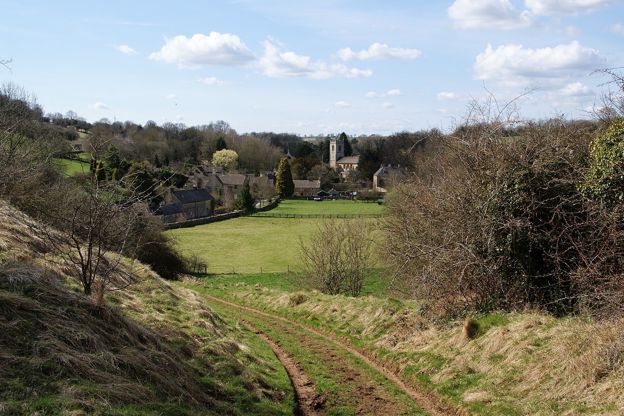
Guiting Power and Naunton
Walk · Starts in Guiting Power · 3 hrs, 30 mins · Circular
A 6.3-mile (10.1km) circular walk from Guiting Power's green, moderate and three to three and a half hours with two stiles: south on the Windrush Way round Gazeley Wood past Aylworth, up by the golf course above Naunton, and home on the Wardens' Way.
Stay and eat near St Michael's Church, Guiting Power
-
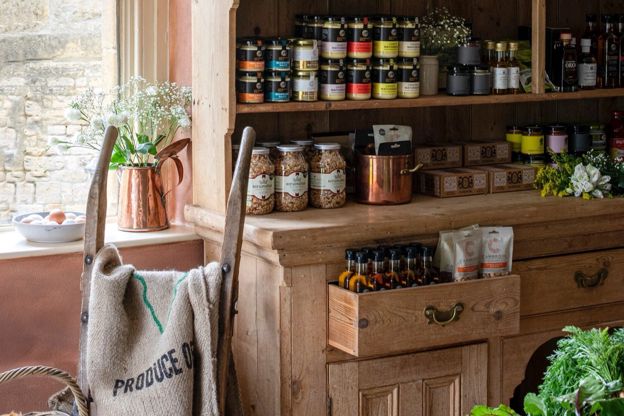
The Cotswold Guy
Farm shops and delis · Guiting Power
A chef-run farm shop and takeaway on Church Lane, Guiting Power, with seats inside and in the garden, which also does catering and events, open every day.
Verified Oct 2026
-
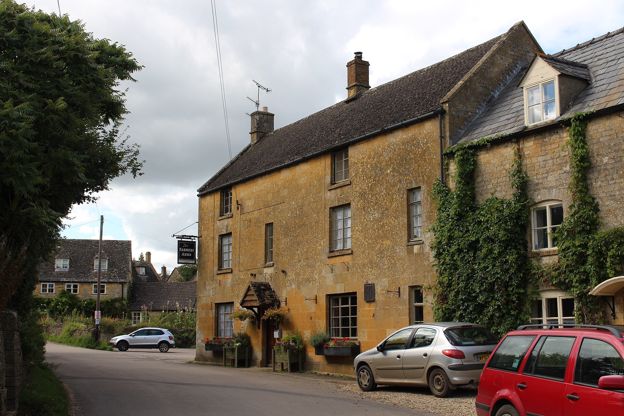
The Farmers Arms
Pubs · Guiting Power
A Donnington Brewery pub in Guiting Power with a log burner, a large beer garden and a skittle alley, serving food from Tuesday to Sunday.
Verified Nov 2026
-
The Hollow Bottom
Inn · Guiting Power
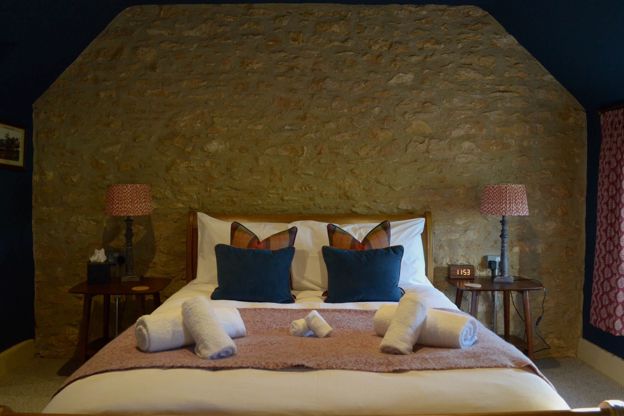
A racing pub with six bedrooms in Guiting Power, once Ye Olde Inn, bought in 1996 by Nigel Twiston-Davies and Raymond Mould, with dogs welcome throughout.
Dog-friendly
Verified Oct 2026
More sights to see
-
St Andrew's Church, Naunton
Sight · Church · Naunton
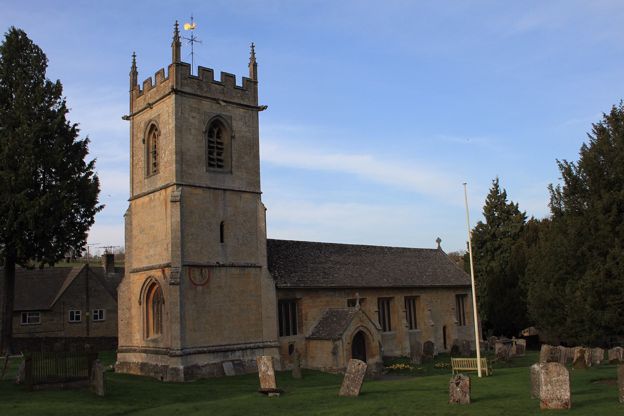
St Andrew's is Naunton's parish church in the Windrush valley: largely rebuilt around 1500 on an older site, with a pinnacled tower carrying two painted sundials, a stone pulpit of about 1500, a Saxon cross and a ring of six bells. Grade II*; open daily.
-
Naunton dovecote
Sight · Historic building · Naunton
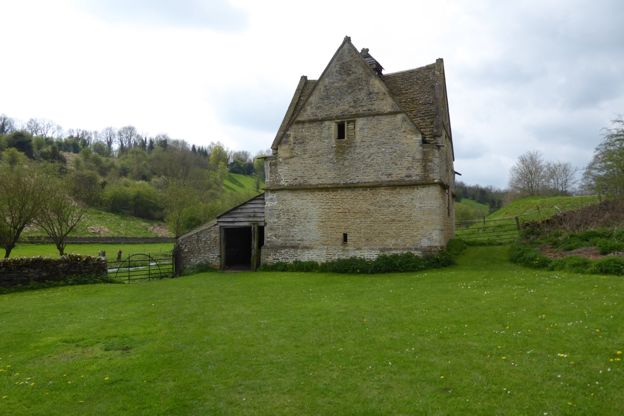
Naunton's dovecote is a square stone pigeon house of the sixteenth century or earlier, with a gable on each face, a lantern on top and its nesting boxes still inside. Listed Grade II*, it is looked after by a charity, the Naunton Dovecote Trust.
-
Clapper bridge, Lower Harford
Sight · Bridge · Naunton
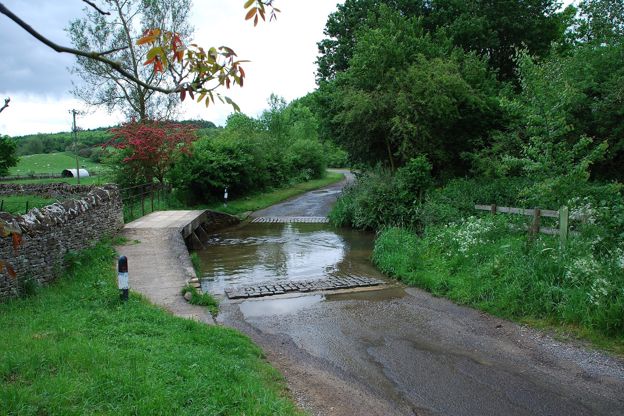
The clapper bridge at Lower Harford Farm near Naunton is a low bridge of limestone blocks laid flat on stone piers across the Windrush, of the eighteenth century or earlier: a rare survival here of a kind of bridge more often found in upland country. Grade II.