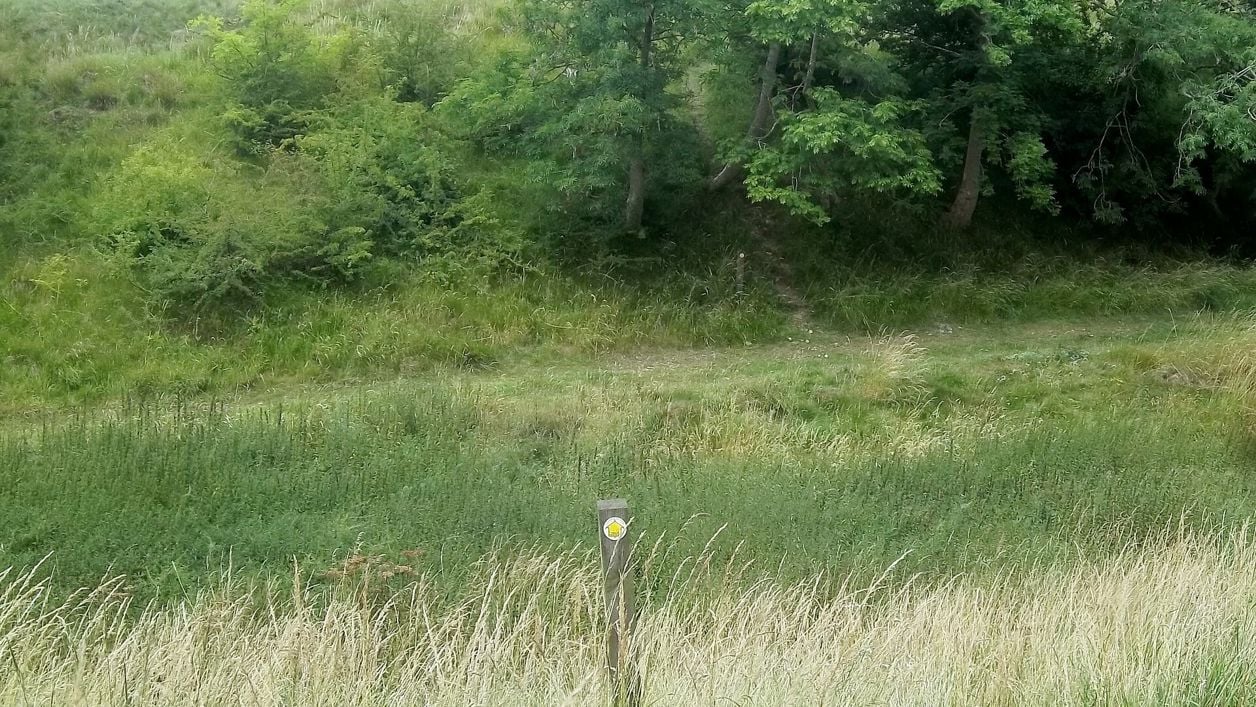
Michael Dibb, CC BY-SA 2.0, via Wikimedia Commons
Shenberrow Camp
Shenberrow Camp is a small Iron Age hill fort on the Cotswold Edge above Stanton, a D-shaped enclosure of about 1.9 hectares inside two banks and ditches, nearly 300m up beside Shenberrow Buildings farm. The Cotswold Way runs through it. A scheduled monument.
Hill fort or barrow
StantonShenberrow Camp is a small Iron Age hill fort high on the Cotswold escarpment above Stanton, nearly 300m up, beside the farm called Shenberrow Buildings. Two banks with ditches enclose a D-shaped area of about 1.9 hectares, and the Cotswold Way runs straight through it. It was scheduled as an ancient monument in 1927.
History
The fort was built in the Iron Age on the upper south-west slopes of a ridge, above a steep scarp overlooking a side valley of the River Isbourne. Historic England records it under the name Shenbarrow Hill camp.
The ramparts
An inner and an outer rampart, each with its ditch outside, enclosed the settlement; in places the steep natural slope did the work instead. The inner bank is up to 9.1m wide and 1.5m high. The outer one survives best to the north, as a bank up to 7.6m wide and 0.6m high with a ditch 0.9m deep; elsewhere it has been levelled and shows only as crop and soil marks on aerial photographs.
The dig of 1935
Partial excavation in 1935 found that the rampart faces had been built up with dry stone walling. Among the finds were Iron Age and Romano-British pottery, fragments of iron and part of a rotary quern for grinding grain, which suggests people were still living here in the Roman period. Later buildings stand within the fort.
What to see
The earthworks are modest, so look for them with care.
- The inner bank, the clearest part, a broad grassy rise round the enclosure
- To the north, the outer bank and its ditch, still an earthwork
- The way the scarp drops away on the south-west, where the slope itself was the defence
- The view from the edge over Stanton and the vale below
Visiting
Shenberrow Camp is on public rights of way, free and open at any time. The farm buildings within it are private, so keep to the Cotswold Way through the fort and close gates behind you. The National Trail asks for dogs on a lead unless signs say otherwise, and warns that sheep, cows and horses may graze the farmland. There are no facilities; the nearest pub is the Mount Inn in Stanton (closed on Mondays and Sunday evenings), and Broadway has cafés and toilets. Come on a clear day for the view.
Getting there
On foot only. From Stanton, the Stanton, Snowshill and the edge walk climbs the Cotswold Way through Shenberrow on its way to Snowshill; park in the parish car park by the cricket ground and not in the village centre. From Broadway, the Cotswold Way: Broadway to Wood Stanway walk makes the long climb to Shenberrow before the steep drop into Stanton. Both are part of the Cotswold Way National Trail. Pulhams bus 606 stops at the Stanton turns on the main road, about half a mile from the village, Monday to Saturday, with no Sunday service.
Nearby
Below in Stanton are the church of St Michael and All Angels and the medieval village cross. Over the top to the east is Snowshill, with St Barnabas Church and Snowshill Manor, and north along the edge Broadway Tower stands on the hill above Broadway. South along the escarpment, Beckbury Camp above Hailes is another Iron Age fort on the Edge.
Walks past Shenberrow Camp
-
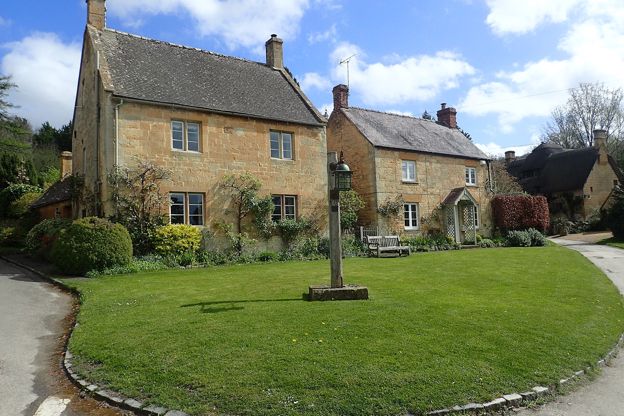
Cotswold Way: Broadway to Wood Stanway
Walk · Starts in Broadway · 3 hrs, 15 mins · Dog-friendly
A 6.5-mile (10.5km) one-way walk on the second section of the Cotswold Way, from Broadway's green, moderate and three to three and a half hours: a long climb to Shenberrow, a steep descent into Stanton, then field paths by Stanway's church and gatehouse to Wood Stanway.
-
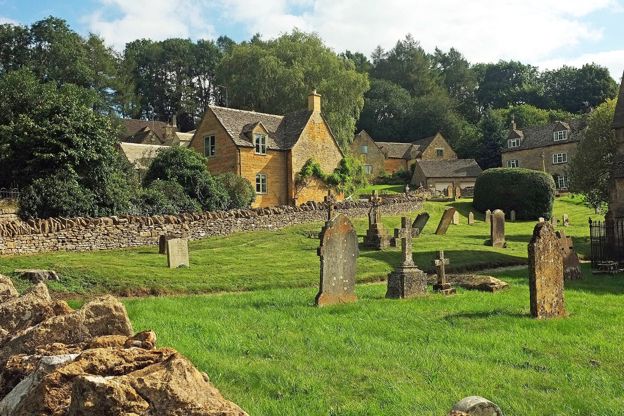
Stanton, Snowshill and the edge
Walk · Starts in Stanton · 4 hrs, 30 mins · Circular
A 6.6-mile (10.6km) moderate loop from Stanton of three and a half to four and a half hours, with steep sections and stiles: up the Cotswold Way, through Littleworth Wood to Snowshill and its manor, then back along the top to the Mount Inn, or 2.5 miles by a short cut.
-
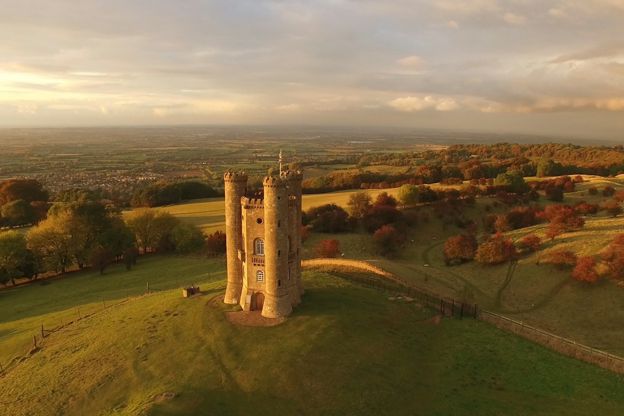
The Cotswold Way
Walk · Dog-friendly
The Cotswold Way is a 102-mile (164km) National Trail walk from Chipping Campden to Bath along the escarpment, in 15 sections; the official guidebook suggests seven to ten days, and its frequent steep climbs make it hard going.
Stay and eat near Shenberrow Camp
-
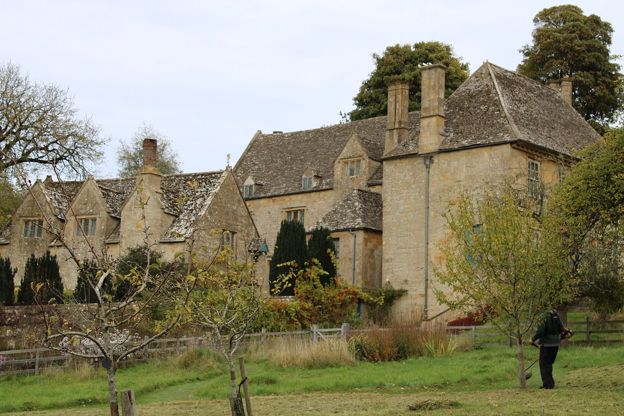
Snowshill Manor and Garden
Historic houses and heritage · Snowshill
Charles Wade's house of collected craftsmanship, from bicycles to armour, above Broadway, given to the National Trust in 1951, with its garden and model village.
Dog-friendly · EV charging
Verified Oct 2026
-
Broadway Tower
Historic houses and heritage · Broadway
James Wyatt's folly of 1798 on Beacon Hill above Broadway, with a museum in the tower, a red deer park, two cafés and a Cold War nuclear bunker.
Family-friendly · Dog-friendly · Walker-friendly
Verified Oct 2026
-
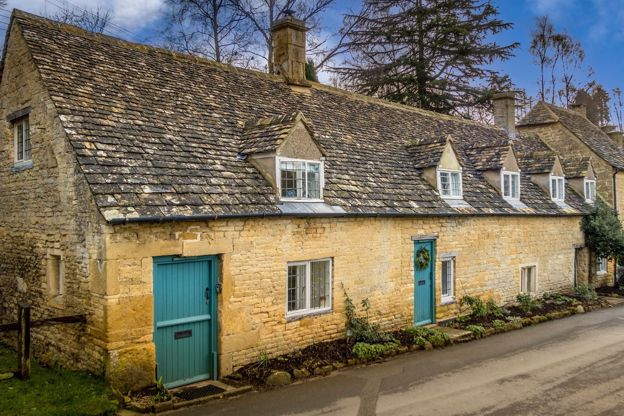
Diston's Cottage
Self-catering · Snowshill
A National Trust cottage for two on the street in Snowshill, opposite the manor, with a multi-fuel stove, a terraced garden and dogs welcome.
Dog-friendly · Walker-friendly
Verified Nov 2026
More sights to see
-
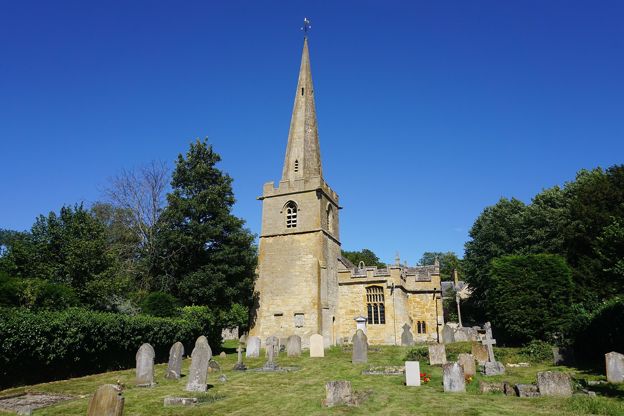
St Michael and All Angels, Stanton
Sight · Church · Stanton
St Michael and All Angels is Stanton's Grade I church, of the twelfth to seventeenth century, with a spired west tower, medieval wall paintings and a rood loft and east window by Sir Ninian Comper. It stands on Church Lane, by the cross and the Cotswold Way.
-
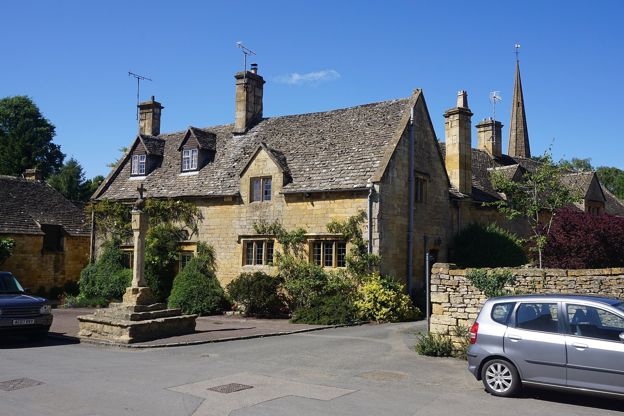
Stanton village cross
Sight · Monument · Stanton
Stanton's village cross stands where the High Street meets Church Lane: medieval steps and socket stone carrying a later shaft topped by a sundial, a ball and a cross. Listed Grade II and a scheduled monument, it is on the Cotswold Way, open at all times.
-
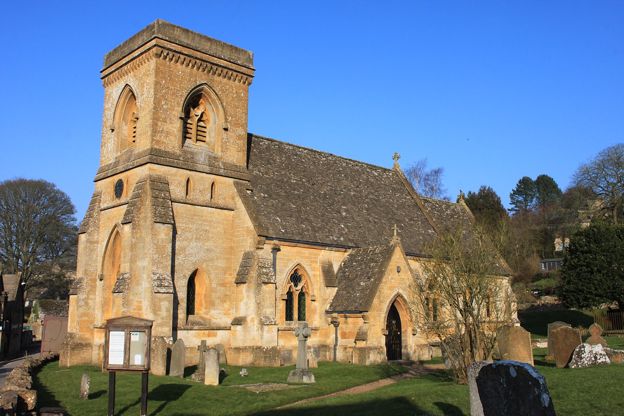
St Barnabas's Church, Snowshill
Sight · Church · Snowshill
St Barnabas is Snowshill's village church, rebuilt in 1864 in coursed stone with a three-stage west tower and a clock, and keeping a fifteenth-century font. It stands beside Snowshill Manor, and it and the cottages round it were filmed for Bridget Jones's Diary. Grade II.