The Mitford sisters in the Cotswolds
Six sisters grew up in the Windrush valley in the 1920s: among them a novelist, a duchess, a communist and two fascists. Here is where they lived, where four of them lie, and how to see it with care.
· 8 minute read
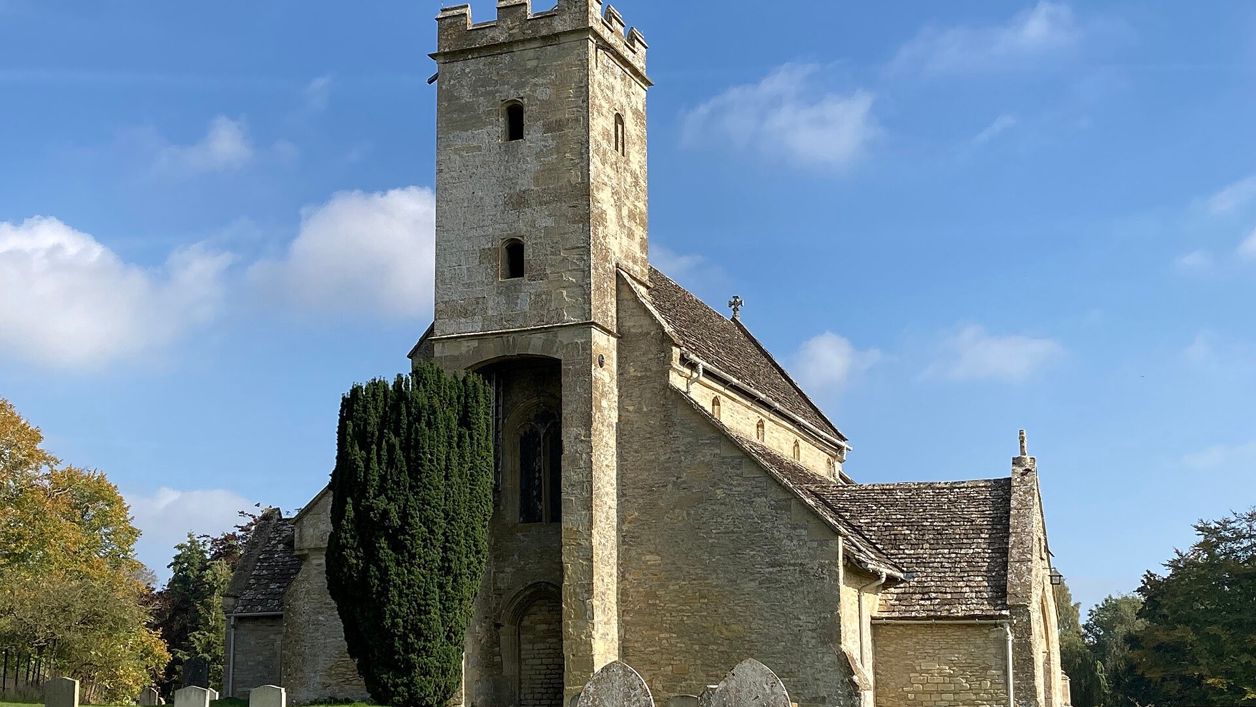
The Mitford sisters grew up in the Cotswolds. Their father, David Freeman-Mitford, the second Lord Redesdale, moved the family from Batsford near Moreton-in-Marsh to Asthall Manor in the Windrush valley in 1919, and in 1926 to South Lawn at Swinbrook, under a mile upstream. Of the six daughters, Nancy became a novelist, Deborah a duchess and Jessica a communist, and Diana and Unity became fascists. Four of them, Nancy, Pamela, Diana and Unity, are buried in the churchyard of St Mary's, Swinbrook, with their parents.
Batsford and the first Lord Redesdale
The family's Cotswold story starts with the girls' grandfather. Algernon Bertram Freeman-Mitford, Bertie to his family, a diplomat who had served in Japan and China, inherited the Batsford estate in 1886. He laid out a wild garden in the Japanese and Chinese taste, rebuilt Batsford House in the late 1880s and early 1890s to designs by Ernest George, and gave Moreton-in-Marsh its market hall, Redesdale Hall, in 1887. He was made Baron Redesdale in 1902 and died in 1916.
His son David inherited, and the family lived at Batsford until the estate was sold after the First World War, to Gilbert Wills, later the first Lord Dulverton. The house is private. The garden is now Batsford Arboretum, replanted as an arboretum by the second Lord Dulverton from 1956 and open every day, and the Freeman and Mitford memorials are in the estate church of St Mary's, Batsford, though none of the sisters is buried there. Our walk from Moreton to Batsford passes both.
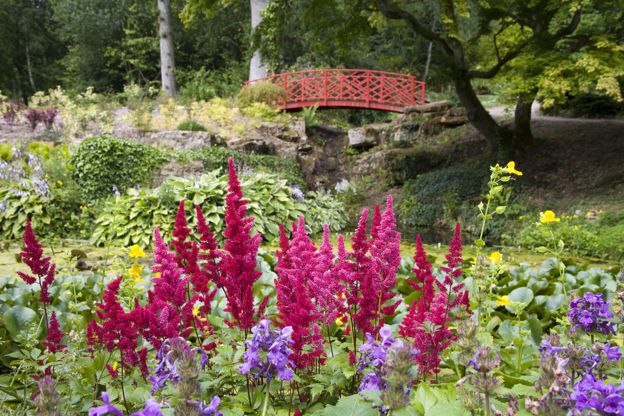
Bertie's garden is the part of the family's Batsford you can still walk through. Our guide to Cotswold gardens describes what survives of it: a watercourse about 600m long, a rest house and a bronze Buddha among the later trees. A charitable trust has run the arboretum since the second Lord Dulverton died in 1992, and it is at its best in spring and autumn.
Asthall Manor, 1919 to 1926
Asthall Manor is the house of the Mitford childhood. The Victoria County History of Oxfordshire (opens in a new tab) records that David bought it in 1919, with farms around it, and sold it in 1926; the house's own history says the family spent seven years of their childhood there. It is a gabled house of the early seventeenth century beside the church at Asthall, and the county history records it as a military convalescent home in 1916.
Lord Redesdale turned the old barn into a ballroom and library with a plaster barrel vault and a big bay window, linked to the house by a covered walk. Asthall Manor's own history (opens in a new tab) calls the house one of the models for Alconleigh, the family seat in Nancy's novels, beginning with The Pursuit of Love (1945).
Asthall is still a private home, and the house is not open. In 2026 its garden opened on Wednesday, Friday and Saturday afternoons from 20 May to 20 June, by ticket booked online and with no dogs except assistance dogs, and otherwise only for ticketed events on its website; later dates are posted on its website. From the lane you can see the gateway and the church beside it, and the Three Horseshoes, whose innkeepers, the pub says, shod travellers' horses from 1726, is a few steps away.
Swinbrook and the Swan
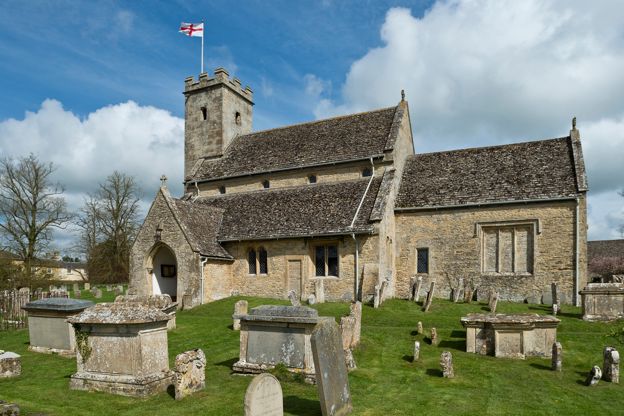
In 1926 Lord Redesdale sold Asthall and moved the family to South Lawn, Swinbrook. The village sits by the Windrush about 2 miles (3km) east of Burford as the crow flies, a little over 3 miles by road, and its inn, the Swan, listed as probably mid eighteenth-century, stands by the river with the old mill beside it.
The Swan stayed in the family. Writing in 2013, the inn described itself as owned by the youngest sister, Deborah, the Dowager Duchess of Devonshire, and run on her behalf, with Mitford photographs in the dining room, and its website still calls her a most inspirational landlady. It does not say who owns it now. It serves lunch and dinner every day, with rooms in the stables and a riverside cottage, and says bookings are preferred because kitchen times change with the season.
Six sisters
Nancy, the eldest, became the best known as a writer. Her comic novels of upper-class family life, The Pursuit of Love and Love in a Cold Climate, drew on the household at Asthall and Swinbrook, and she died in 1973. Pamela, the second, became Pamela Jackson by marriage and died in 1994. Their brother Tom has a memorial plaque inside St Mary's.
Jessica went the other way from her sisters in politics. She became a communist, married Esmond Romilly and settled in the United States, where she wrote The American Way of Death. Her memoir of the family, Hons and Rebels (1960), tells the story from her side. Deborah, the youngest, married Andrew Cavendish, who became Duke of Devonshire in 1950, and made her life at Chatsworth in Derbyshire; she died in 2014. Neither is buried at Swinbrook.
Diana, Unity and fascism
Two of the sisters gave their loyalty to fascism, and that is the part of the story that still shapes how the family is remembered. Unity, born in 1914, went to Munich in the 1930s and belonged to Hitler's inner circle, as the Wiener Holocaust Library's catalogue (opens in a new tab) puts it. On 3 September 1939, the day Britain declared war on Germany, she shot herself in Munich. She survived with the bullet still lodged in her head, and the catalogue says she died of meningitis linked to the swelling around it on 28 May 1948. She was buried at Swinbrook.
Diana married Sir Oswald Mosley, the leader of the British Union of Fascists. In 1940 she and Mosley were detained under Defence Regulation 18B, and the National Archives' catalogue (opens in a new tab) records their release in November 1943. She died in 2003.
Visitors come to the graves for different reasons, some for Nancy's books, some for the scandal, some for the history of the 1930s. The graves are in a working parish churchyard, so come quietly and leave nothing but a donation in the church.
The Cotswolds Info newsletter
Events, new places and the best of the season, about once a month. Unsubscribe at any time.
St Mary's, Swinbrook
St Mary's is a medieval church by the Windrush with a tower built in 1822, and the Mitford graves are in its churchyard. The Oxfordshire Historic Churches Trust places the headstones of Nancy, Unity and Diana together near the porch, with Pamela and their parents elsewhere in the churchyard.
Go inside if the door is open. The chancel holds the Fettiplace monuments of about 1613 and 1686, six effigies of the family who held Swinbrook for three centuries, lying on their elbows on shelves one above another. A south aisle window keeps fragments of old glass shattered by a wartime bomb, and Tom Mitford's memorial plaque is inside the church. The church publishes no regular opening times, but the churchyard is open at any time, and there is no toilet.
Getting there and a walk
Swinbrook is about 2 miles east of Burford, with on-street parking near the church and no public car park. Charlbury station is about 9 miles away by road, and the smaller station at Shipton-under-Wychwood about 5, so you need a taxi from either. The best way to arrive is on foot: our Swinbrook, Fulbrook and Widford loop, 4.3 miles (6.9km) and about two hours, starts at the Swan and finishes along the river at the graves, passing St Oswald's, Widford, a church alone in a field, on the way. From Burford, the Windrush valley walk reaches Widford, and several walkers report detouring the 700m to the Swan for lunch.
Mentioned in this story
The places, sights and walks in this story, each with a page of its own: what it is, when to go and how to get there.
-
Batsford Arboretum
Parks and gardens · Moreton-in-Marsh
-
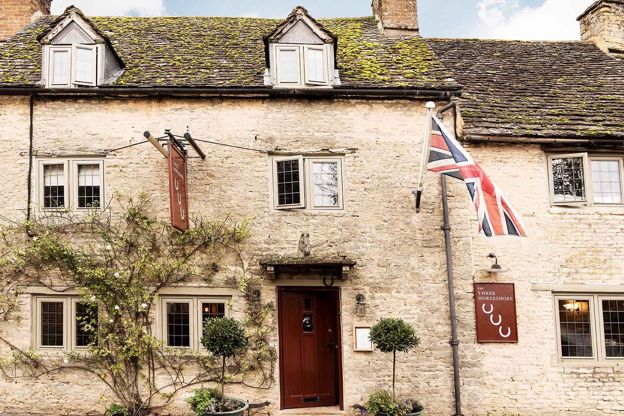
The Three Horseshoes, Asthall
Inn · Burford
-
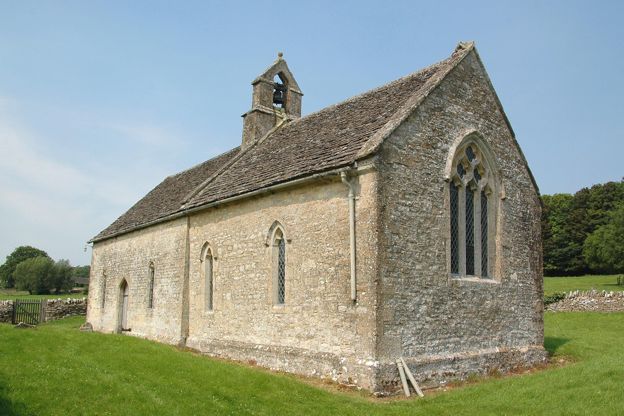
St Oswald's Church, Widford
Sight · Church · Burford
-
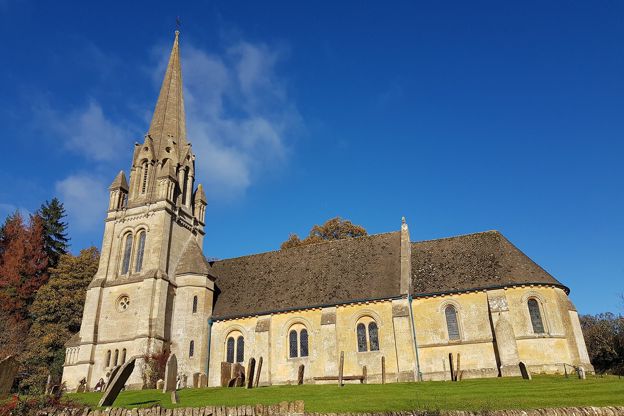
St Mary's Church, Batsford
Sight · Church · Moreton-in-Marsh
-
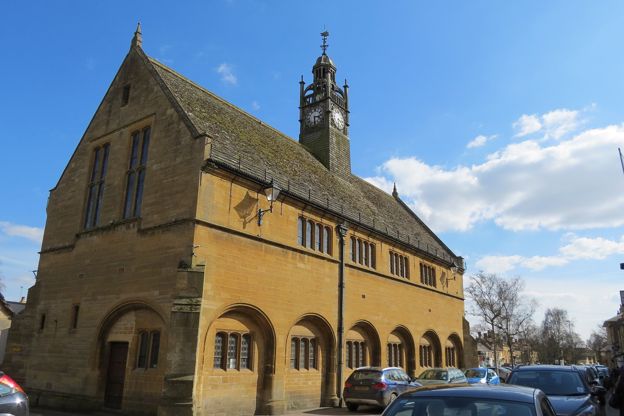
Redesdale Hall, Moreton-in-Marsh
Sight · Historic building · Moreton-in-Marsh
-
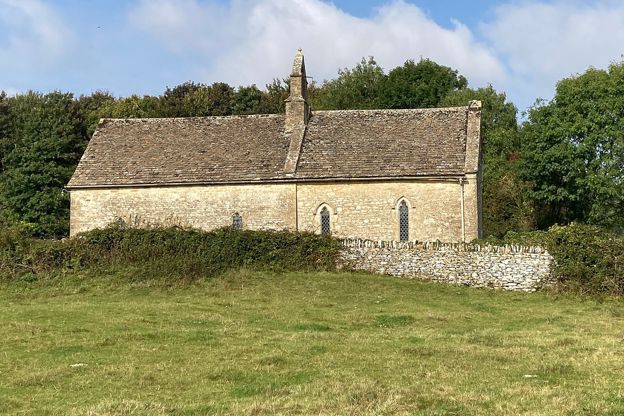
Burford, Fulbrook and Widford
Walk · Starts in Burford · 2 hrs, 30 mins · Circular · Dog-friendly
-
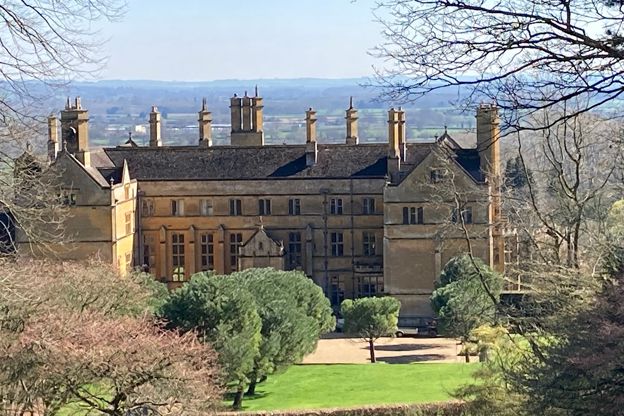
Moreton-in-Marsh and Batsford
Walk · Starts in Moreton-in-Marsh · 2 hrs · Circular
Places to stay near Swinbrook and Asthall
-
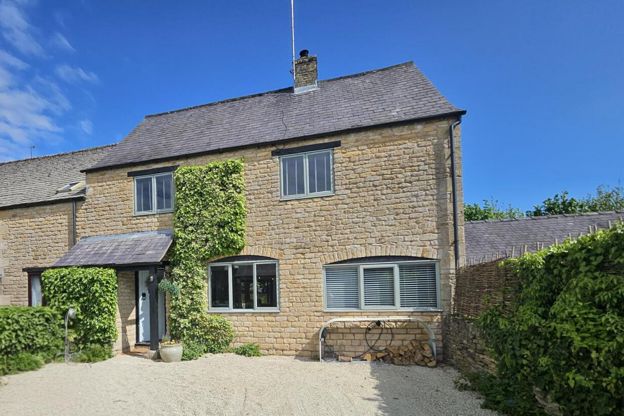
Cotswold Stay
Self-catering · Burford
A four-bedroom house in Burford that sleeps eight, let for self-catering, with no dogs.
Family-friendly
Verified Oct 2026
-
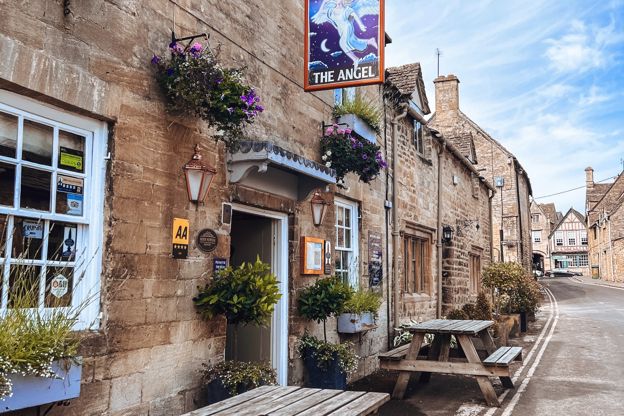
The Angel at Burford
Pubs · Burford
An inn on Witney Street, Burford, run by the King family since 2011, with an AA Rosette for its cooking, a walled garden and sun terrace, three bedrooms and food from breakfast onwards.
Verified Nov 2026
-
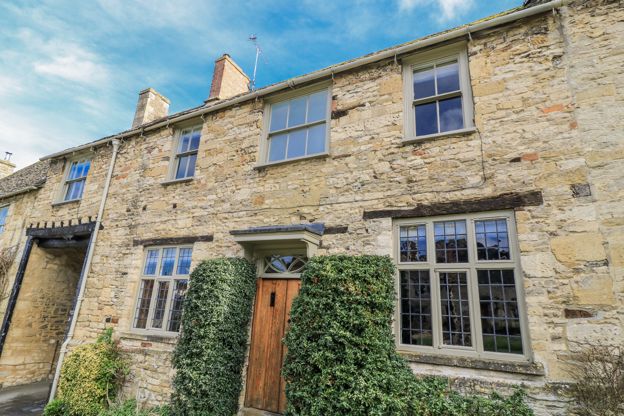
Ostlers
Self-catering · Burford
A three-bedroom holiday cottage in Burford, let through Manor Cottages, sleeping six, with a garden, a woodburner and parking for one car; no pets.
Family-friendly
Verified Oct 2026
Read next
-
Famous people with Cotswold connections
Story · History · 10 minute read
The writers, composers, scientists, queens and prime ministers whose lives are tied to Cotswold places, from Tyndale and Katherine Parr to Laurie Lee, Holst and Edward Thomas, and where to find their traces.
-
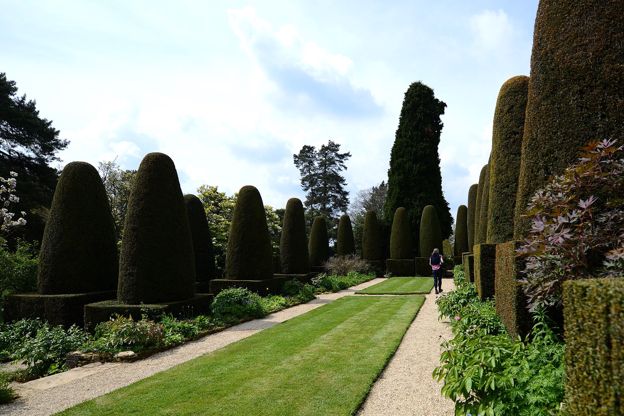
The great gardens of the Cotswolds
Story · Guides · 12 minute read
Eighteen Cotswold gardens by kind and season: Hidcote, Kiftsgate, Sezincote, Batsford, Westonbirt, the Rococo Garden, Colesbourne's snowdrops, Rodmarton, Highgrove and more, with who made each, the best month, how long to allow and the dog rules.
-
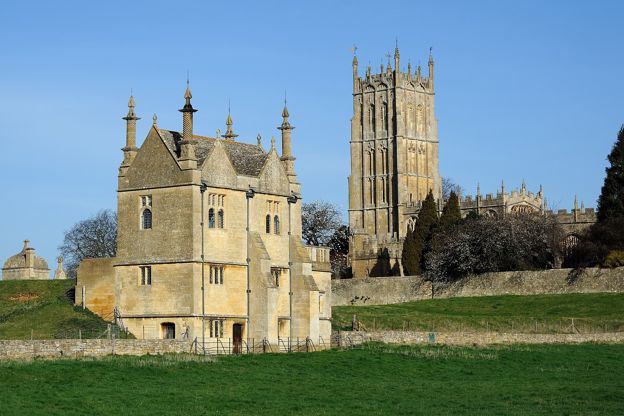
The Civil War in the Cotswolds
Story · History · 9 minute read
The storming of Cirencester and the battle of Lansdown in 1643, Sudeley Castle besieged and slighted, Campden House burned, the last battle of the first war at Stow in 1646, the Levellers at Burford and Chastleton's hidden Royalist, with where to see each.