Sights to see
Churches, hill forts, commons, viewpoints and rivers, with the walks that pass them and the places to stay and eat nearby.
173 sights
-
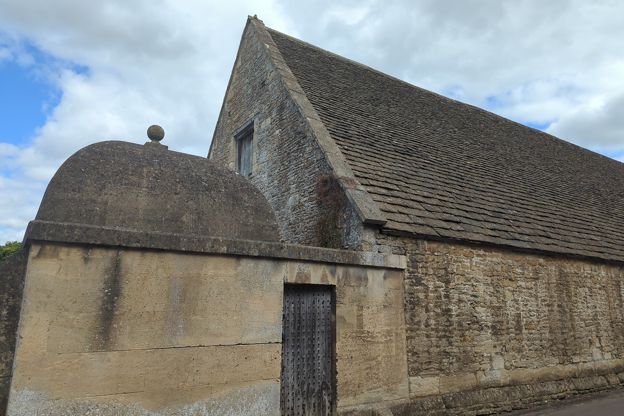
Lock-up, Lacock
Sight · Historic building · Lacock
Lacock's village lock-up on East Street: a late eighteenth-century stone cell with a domed roof and ball finial, no windows and a studded door, where drunks and offenders were held overnight. Joined to the tithe barn. Grade II.
-
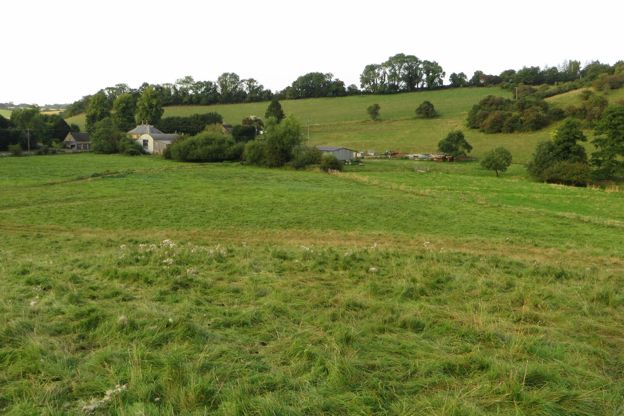
Lower Harford deserted village
Sight · Monument · Naunton
Lower Harford is a lost medieval village by the River Windrush near Naunton: house platforms beside a hollow way, terraces and water channels in a field. Seven people were recorded here in 1086 and two in 1327, and by 1341 it was largely deserted. A scheduled monument.
-
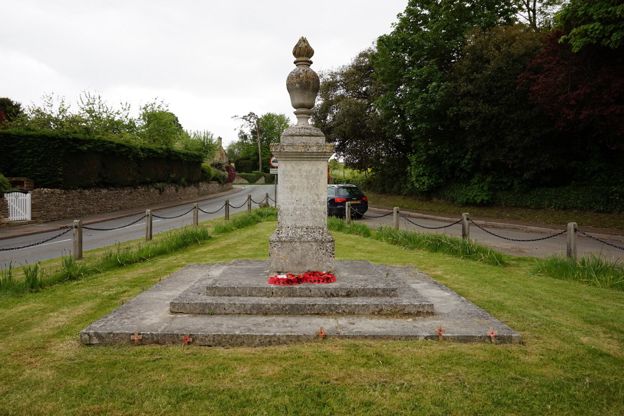
Lower Swell war memorial
Sight · Monument · Stow-on-the-Wold
Lower Swell's war memorial is a flaming urn on a stone pedestal on the village green, designed by Sir Edwin Lutyens and unveiled in 1921. Lutyens had worked at Abbotswood nearby for Mark Fenwick. It is on the Stow and Lower Swell walk, open at all times. Grade II.
-
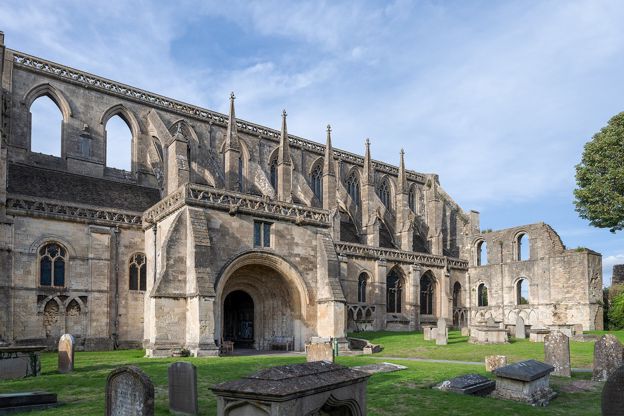
Malmesbury Abbey
Sight · Church · Malmesbury
The surviving nave of Malmesbury's great Norman abbey church, built mostly about 1160 to 1180 and the parish church since 1541, with a south porch of carved Romanesque Apostles and King Athelstan's empty tomb. Grade I; free, open daily.
-
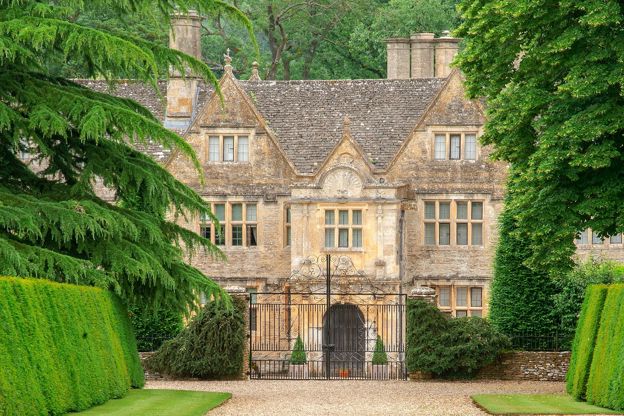
Manor House, Upper Slaughter
Sight · Historic building · Upper Slaughter
Upper Slaughter's Elizabethan manor house, Grade I, home of the Slaughter family until 1741: gabled Cotswold stone over a fifteenth-century vaulted basement, with a two-storey porch of the early seventeenth century covered in fretwork. A private house, seen from the lane.
-
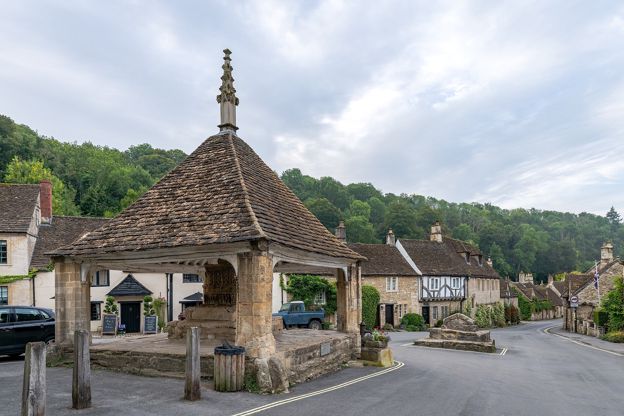
Market Cross, Castle Combe
Sight · Monument · Castle Combe
Castle Combe's medieval market cross, a stone-tiled roof on four corner posts over a central pedestal, stands where the village street begins, beside St Andrew's church. It is a scheduled monument, free to see at any time.
-
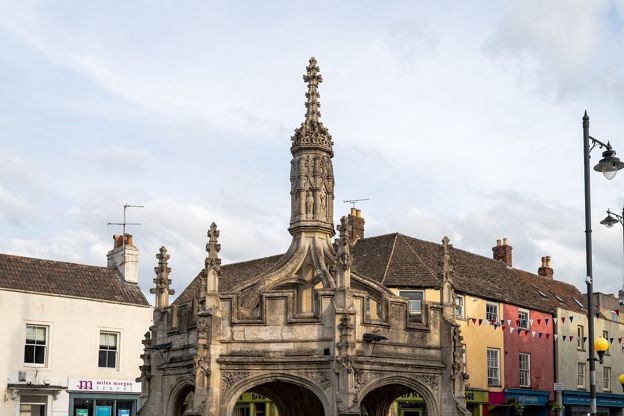
Market Cross, Malmesbury
Sight · Historic building · Malmesbury
Malmesbury's octagonal stone market cross of the late fifteenth or early sixteenth century, a vaulted shelter with pinnacles, flying buttresses and a lantern of saints, built, John Leland wrote, to keep poor market folk dry. Grade I; free.
-
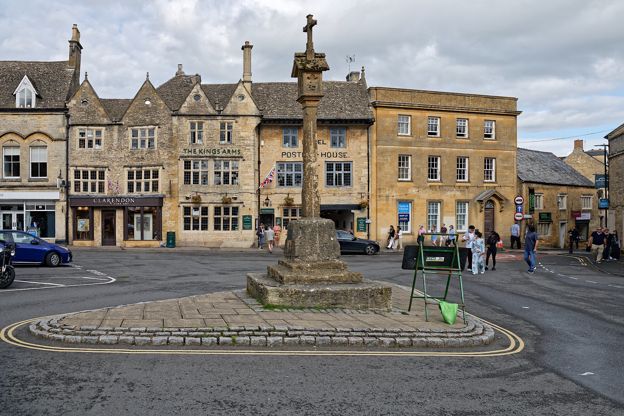
Market cross, Stow-on-the-Wold
Sight · Monument · Stow-on-the-Wold
Stow's market cross stands in the southern half of the Market Square: a medieval calvary and socket stone, probably of the fourteenth century, carrying a shaft and lantern head restored in 1878 and again in 1995, when its four carved panels were restored. Grade II and scheduled.
-
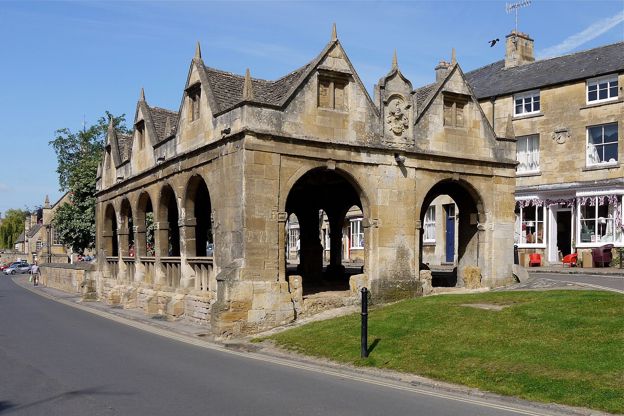
Market Hall, Chipping Campden
Sight · Historic building · Chipping Campden
The open arcade of 1627 in the middle of Chipping Campden's High Street, built by Sir Baptist Hicks as a sheltered market for butter, cheese and poultry, saved from sale to America in the 1940s and now the National Trust's. Grade I; the Cotswold Way starts beside it.
-
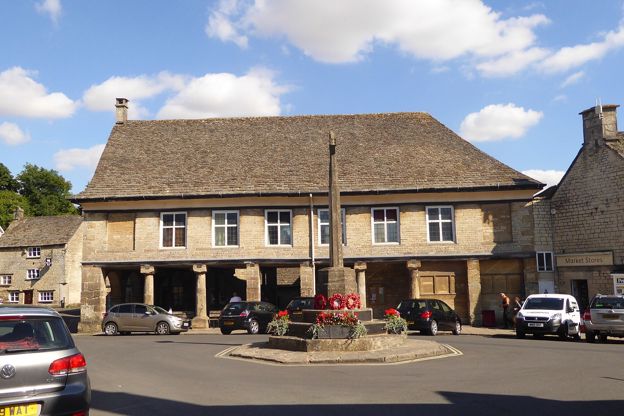
Market House, Minchinhampton
Sight · Historic building · Minchinhampton
Minchinhampton's Market House was built in 1698 by the lord of the manor, Philip Sheppard, for the wool and yarn trade: an open arcade on stone piers with a hall above. Listed Grade II*, it still holds a country market on Wednesday mornings.
-
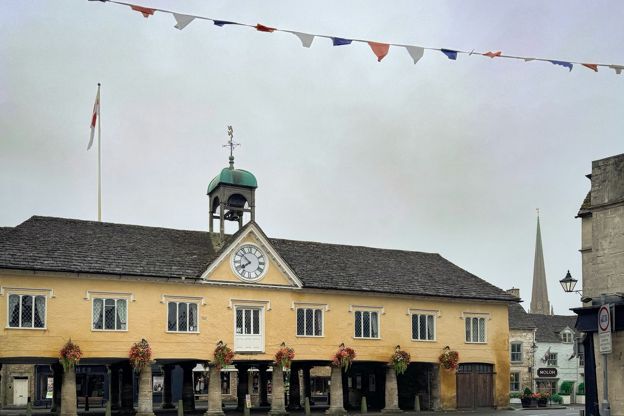
Market House, Tetbury
Sight · Historic building · Tetbury
Tetbury's pillared Market House of 1655 stands in the middle of the town: a timber-framed hall on three rows of stone columns, built and still owned by the Tetbury Feoffees, with a cupola, a dolphin weathervane and markets underneath every week. Grade I.
-
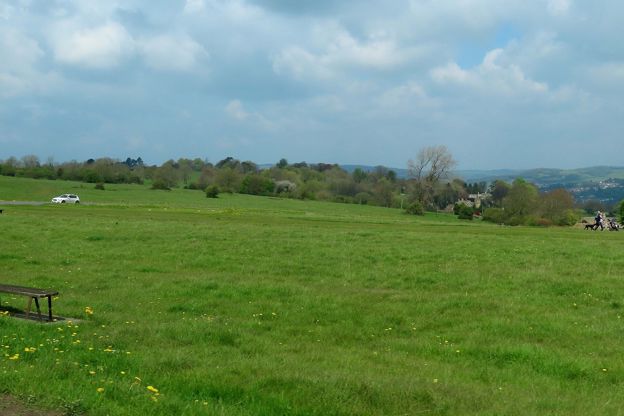
Minchinhampton Common
Sight · Common or park · Minchinhampton
Minchinhampton Common is a wide sweep of limestone grassland above Stroud and Nailsworth, in the care of the National Trust since 1913, where commoners' cattle graze and an Iron Age bank, a long barrow, pillow mounds and wartime trenches lie in the turf. Free to wander.
-
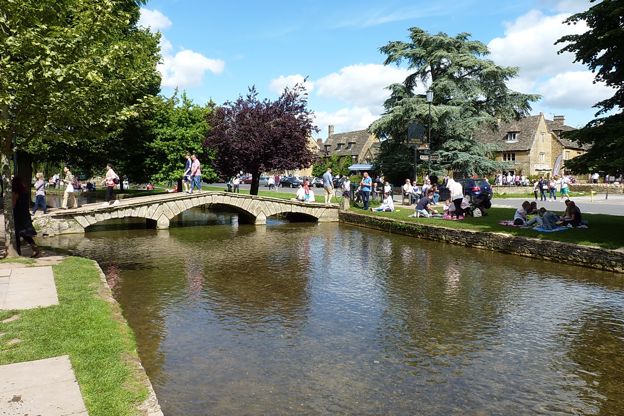
Narrow Bridge, Bourton-on-the-Water
Sight · Bridge · Bourton-on-the-Water
Narrow Bridge is the oldest dated of the low stone footbridges over the Windrush in Bourton-on-the-Water, built in 1756 with three rusticated arches and low parapets. Listed Grade II with three of its neighbours, it is crossed free at any time.
-
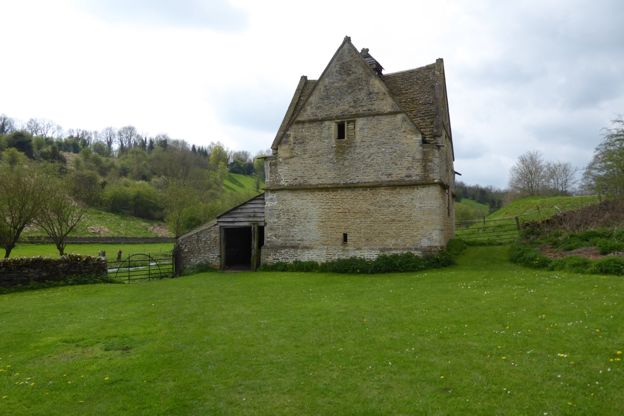
Naunton dovecote
Sight · Historic building · Naunton
Naunton's dovecote is a square stone pigeon house of the sixteenth century or earlier, with a gable on each face, a lantern on top and its nesting boxes still inside. Listed Grade II*, it is looked after by a charity, the Naunton Dovecote Trust.
-
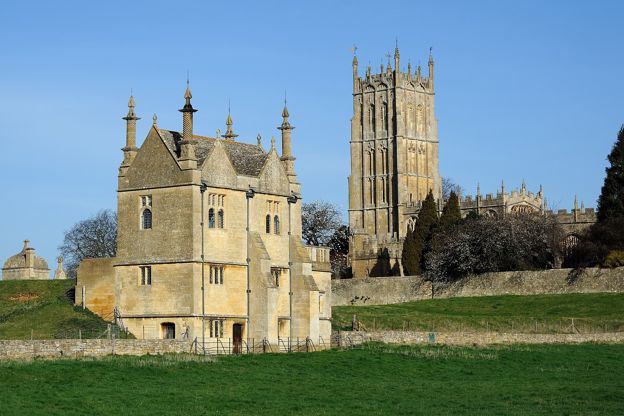
Old Campden House, Chipping Campden
Sight · Historic building · Chipping Campden
The lodges, gateway and two banqueting houses that survive of Sir Baptist Hicks's great house beside St James's in Chipping Campden, burned by its own Royalist garrison in 1645. The banqueting houses are Landmark Trust holiday lets; the grounds open only on occasional open days.
-
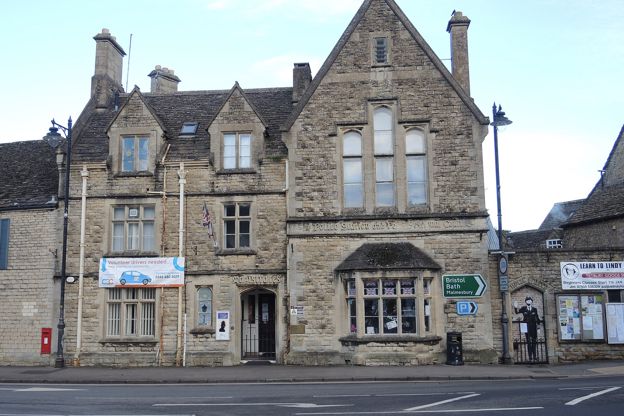
Old police station and court, Tetbury
Sight · Historic building · Tetbury
Tetbury's police station and magistrates' court of 1884 on Long Street, with its cells and courtroom intact, now the town council offices and a free police museum holding what the council calls the largest collection of British handcuffs and restraints on public view.
-
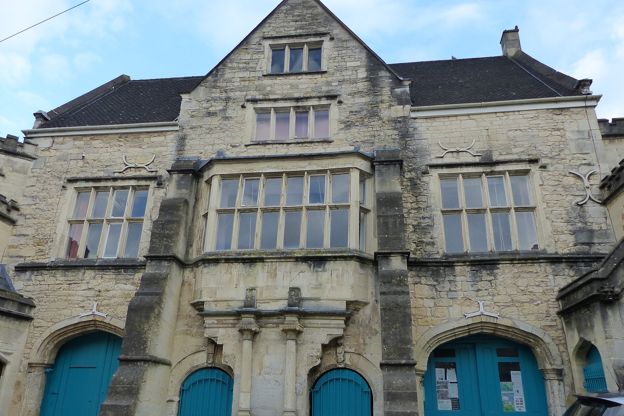
Old Town Hall, Stroud
Sight · Historic building · Stroud
Stroud's market house of the 1590s in the Shambles beside St Laurence's, with an eight-light oriel on scrolled brackets, lion-mask arches and Victorian battlemented stair towers. Grade II*; seen from the market place.
-
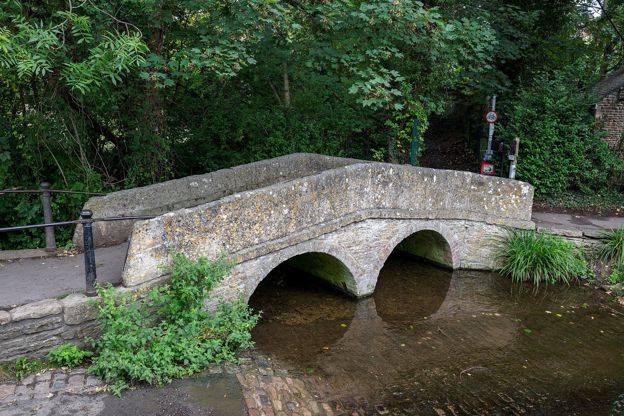
Packhorse bridge, Lacock
Sight · Bridge · Lacock
A small humpbacked eighteenth-century bridge of two arches over the Bide Brook below St Cyriac's Church in Lacock, by the lane called Nethercote Hill, marked on the tithe map as Dummer's Bridge. Grade II; free on a footpath.
-
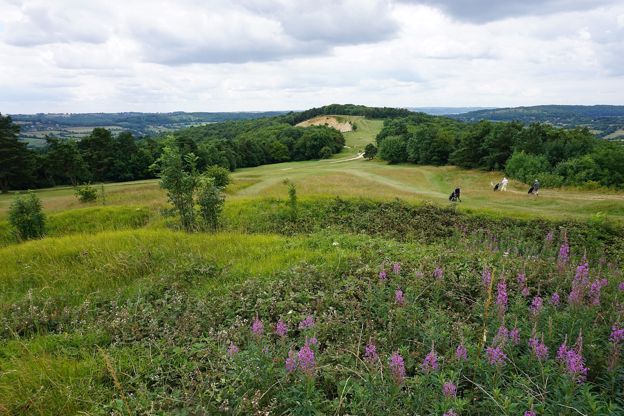
Painswick Beacon
Sight · Hill fort or barrow · Painswick
Painswick Beacon is a hill north of Painswick, about 280m high, crowned by a large Iron Age hill fort with triple ramparts. Royalist troops camped here in 1643. It is open common land on the Cotswold Way, shared with a golf course, with views over the Severn Vale.
-
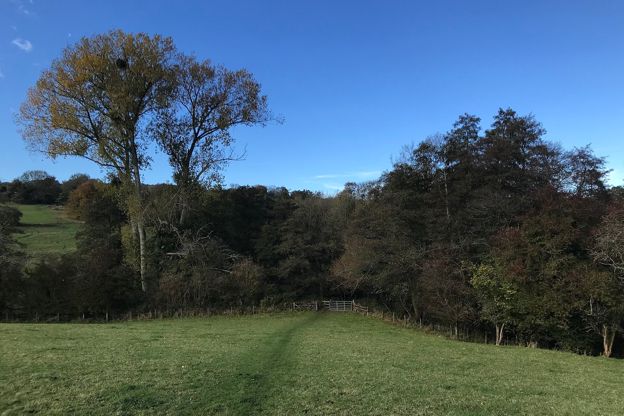
Painswick Stream
Sight · River · Painswick
The Painswick Stream runs south in the valley below Painswick to the River Frome at Stroud. It drove the town's cloth trade: 25 mills stood in the parish in 1820. Footpaths follow it past Loveday's Mill, Skinners Mill and Kingsmill, old mills that are now homes.
-
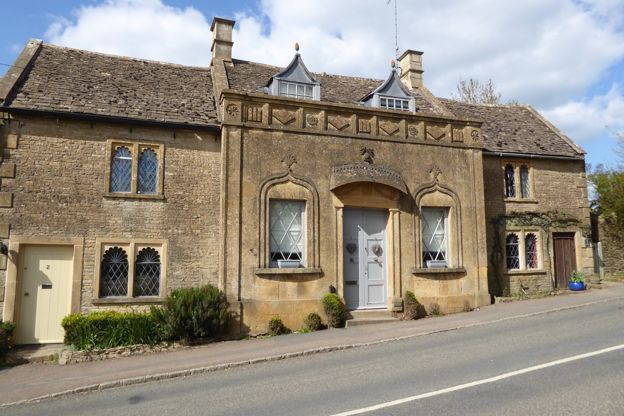
Pineapple Spa, Lower Swell
Sight · Historic building · Stow-on-the-Wold
The Pineapple Spa is a row of cottages beside the B4068 between Lower Swell and Stow-on-the-Wold that began as a spa over a mineral spring found in 1807, with a front in the Indian style of Sezincote and a stone door hood crowned by a pineapple. Grade II*; private.
-
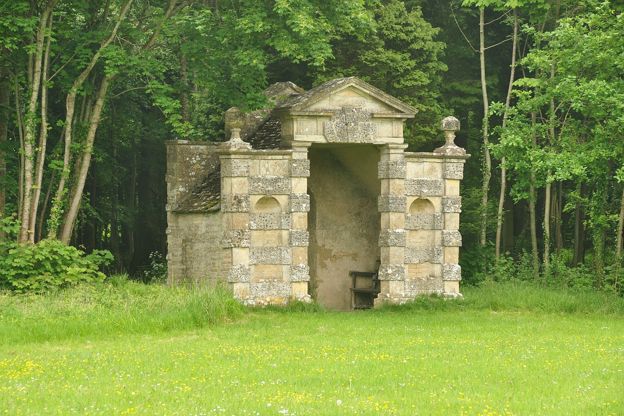
Pope's Seat, Cirencester Park
Sight · Historic building · Cirencester
A small stone pavilion of the early eighteenth century at Seven Rides in Cirencester Park, with a Doric portico and POPE'S SEAT cut in its pediment, named after the poet who helped Lord Bathurst lay out the park. Grade II*; a park day pass is needed.
-
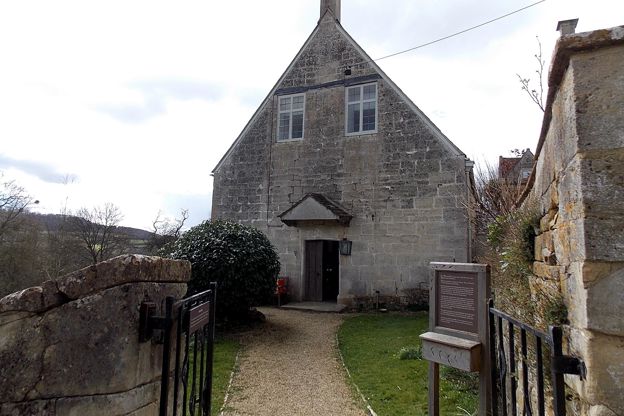
Quaker Meeting House, Painswick
Sight · Historic building · Painswick
Painswick's Friends Meeting House is a plain stone meeting house of 1706 off Vicarage Street, built on land given by the Loveday family and still used by Quakers every Sunday. Its walled garden, an old burial ground, is open for quiet reflection. Grade II.
-
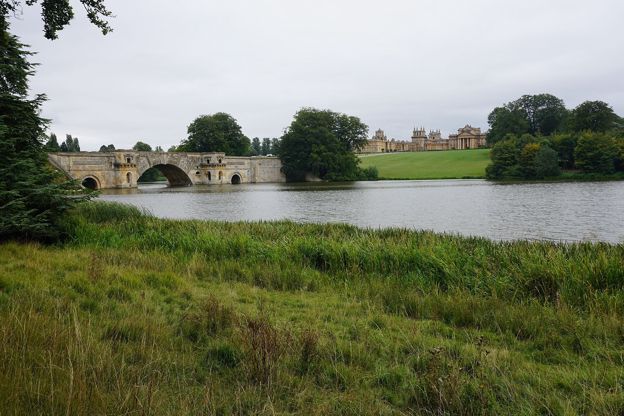
Queen Pool, Blenheim
Sight · Lake · Woodstock
Queen Pool is the northern arm of the lake Capability Brown made at Blenheim from 1764, above Vanbrugh's Grand Bridge, with Rosamund's Well just west of the bridge and the Column of Victory above. Reached free on public footpaths from Combe; the lakeside road is permissive.