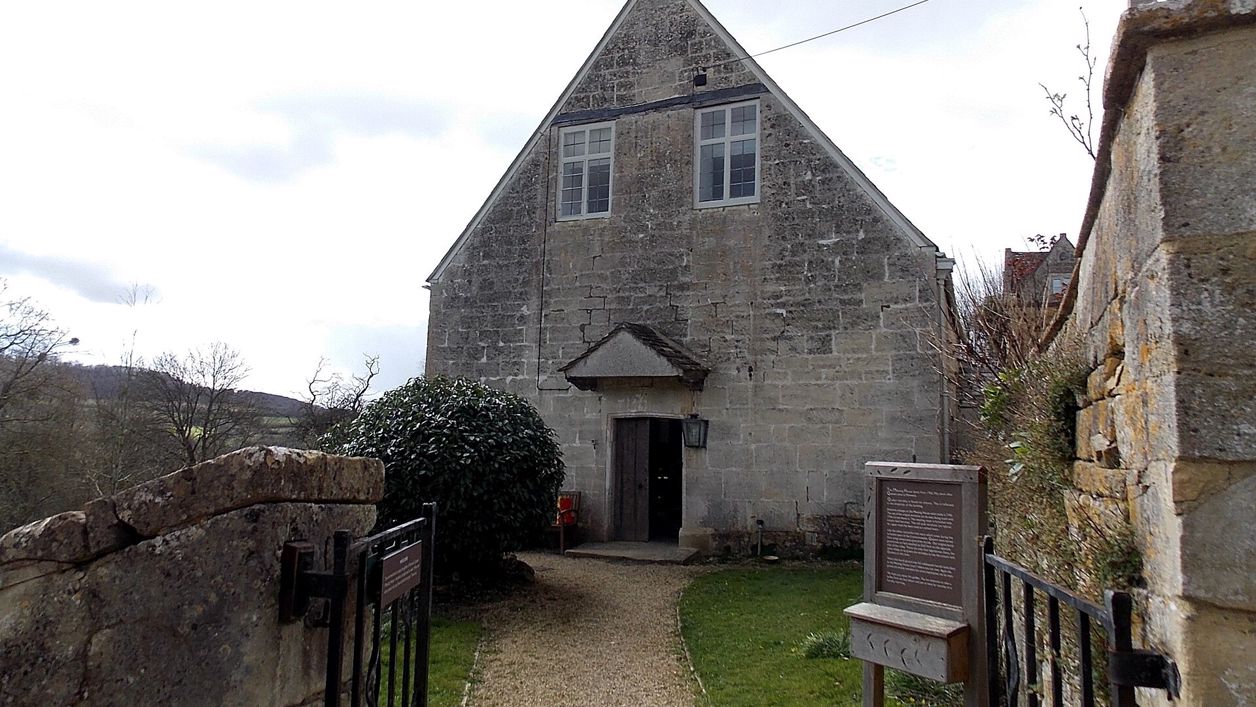
Jaggery, CC BY-SA 2.0, via Wikimedia Commons
Quaker Meeting House, Painswick
Painswick's Friends Meeting House is a plain stone meeting house of 1706 off Vicarage Street, built on land given by the Loveday family and still used by Quakers every Sunday. Its walled garden, an old burial ground, is open for quiet reflection. Grade II.
Historic building
PainswickThe Friends Meeting House is a plain stone building of 1706, at the end of a short lane off Vicarage Street in Painswick. It was built on land given by Thomas Loveday, of a family of Quaker clothiers, keeps its early eighteenth-century meeting room with its beamed ceiling and raised stand, and is still used for worship every Sunday. It is listed Grade II.
History
Quakers were the first organised nonconformists in Painswick. Humphrey Smith's preaching in 1655 drew followers, and from 1658 the Friends had their own burial ground at Dell Farm, east of the town, given by Thomas Loveday; ten of the Loveday family were buried there between 1681 and 1729, and it was used until 1819. A meeting house was licensed in 1690, and in 1695 a Quaker school moved to Painswick from Nailsworth.
The meeting house of 1706
The present meeting house, with a burial ground beside it, was built in 1705 and 1706 on land Thomas Loveday gave, about 1km north-west of Dell Farm. The Lovedays and other textile families were its mainstay, and the meeting apprenticed members' sons and lent money to members in need. In 1793 and 1794 it was thoroughly repaired: a new stair and panelled partition went in, the entrance moved to the east gable and most windows were made sashes.
Decline and return
As Methodism grew the meeting dwindled. Followers of the prophetess Joanna Southcott disturbed it in the early nineteenth century, and by 1851 only three members were left. From about 1815 the building was used by the YMCA, Bible study groups and others, and the Plymouth Brethren leased it from 1907 to 1953. The meeting ceased late in the nineteenth century, was revived in the twentieth and came back to its old house in 1953; by 1972 it had 42 members. In 2013 the ground-floor west addition was rebuilt to give an accessible toilet and kitchenette and the upstairs rooms were refurbished, and in 2014 the boundary walls were repaired, new iron gates hung and the garden relandscaped.
What to see
Look at the south front first. Between two large twelve-pane sash windows of the eighteenth century is the original central doorway, blocked, with the date 1706 cut into its lintel. The way in since 1794 has been at the east gable, through a door with a moulded surround under a gabled hood on long timber brackets; the plank doors may be the originals of 1706.
Inside, the single meeting room, about 9m by 7m, has a ceiling of heavy chamfered beams in six compartments, a painted dado and, at the west end, a raised stand with a panelled front facing the room. A late eighteenth-century stair climbs to the upper rooms, which were a schoolroom, lodgings for travelling ministers and a room for the women's business meetings. The garden round the house was the burial ground: 25 burials are recorded there between 1770 and 1886, and nine headstones of 1809 to 1886 now stand round its edge, inside a dry stone wall.
Visiting
The meeting house is a place of worship rather than a monument. Meeting for worship is on Sundays at 10.30am, and anyone may come and sit in the silence. The garden is open for quiet reflection. The building is wheelchair accessible, including the toilet, and has a hearing loop. Children's meeting is by prior arrangement only, so get in touch first if you are bringing children; Britain Yearly Meeting lists the meeting's phone number as 01453 828268.
Getting there
The meeting house is off Vicarage Street in Painswick, down a short lane from Dover House (GL6 6XS), beside the Grade II* Dover House and Dover Cottage. Park in the Stamages Lane car park (GL6 6UT), a few minutes’ walk, or take Stagecoach bus 66 between Stroud and Cheltenham, about hourly Monday to Saturday and every two hours on Sundays. The Painswick and Painswick Beacon walk starts by the churchyard, a few minutes away.
Nearby
St Mary's Church and its yews are at the top of the town, with the Court House beside them, one of the places Painswick's dissenters met in the seventeenth century. Vicarage Street runs on down to the Painswick Stream and its old mills, and to the north is Painswick Beacon. For a meal or a bed, The Painswick hotel is close by.
Walks past Quaker Meeting House, Painswick
-
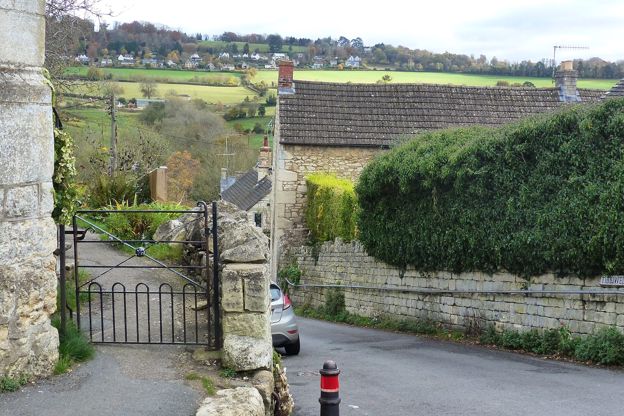
The Painswick Stream
Walk · Starts in Painswick · 1 hr, 30 mins · Circular
A 3-mile (4.6km) circular walk from Painswick, moderate, with stiles and one steep climb, in one to one and a half hours: through the churchyard and down Vicarage Street to the Painswick Stream, along it past five old mills, and back up Knapp Lane to the stocks.
-
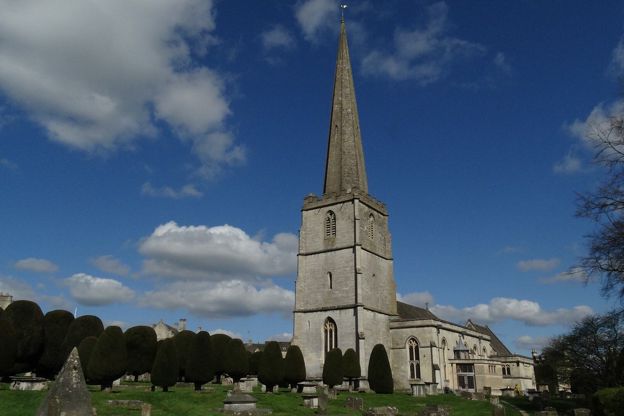
Painswick and Painswick Beacon
Walk · Starts in Painswick · 2 hrs, 45 mins · Circular · Dog-friendly
A 5-mile (8.2km) circular walk from Painswick, moderate and two and a half to three hours, with 250m of climbing: out by Butt Green and the Holcombe farms, over the B4073 and up to the Iron Age ramparts on Painswick Beacon, then down past the golf course and the Rococo Garden.
-
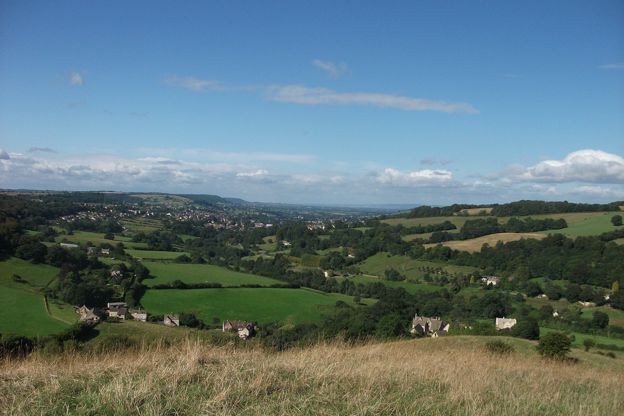
The Laurie Lee Wildlife Way
Walk · Starts in Painswick · 2 hrs, 45 mins · Circular
A 5-mile (8.4km) circular walk from Bulls Cross round the Slad valley, moderate with steep climbs and three to five hours with stops: Gloucestershire Wildlife Trust's loop by Longridge Wood, Snows Farm, Catswood and Swift's Hill, with ten posts carrying Laurie Lee's poems.
Stay and eat near Quaker Meeting House, Painswick
-
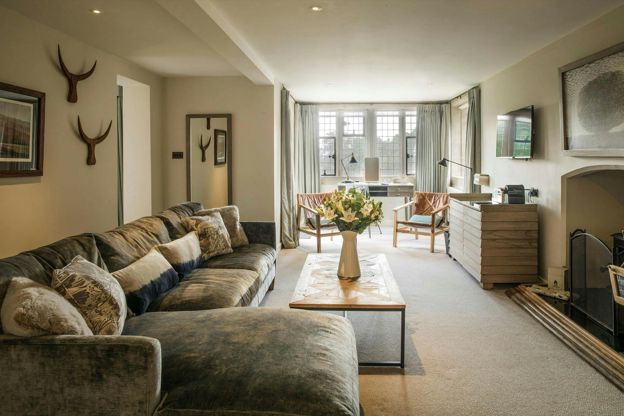
The Painswick
Hotel · Painswick
A 16-room hotel in a Palladian house on Kemps Lane, Painswick, part of the Calcot Collection, with an AA Rosette restaurant and dogs in some rooms.
Dog-friendly · Wedding venues
Verified Nov 2026
-
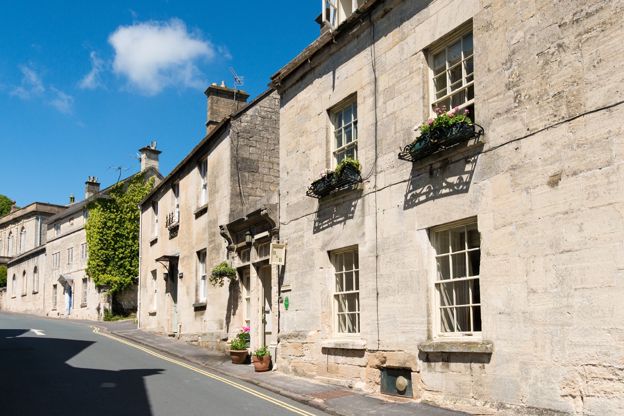
St Anne's
B&B · Painswick
A three-room bed and breakfast in a former wool merchant's house on Gloucester Street, Painswick, suited to Cotswold Way walkers.
Dog-friendly · Walker-friendly · Car-free
Verified Oct 2026
-
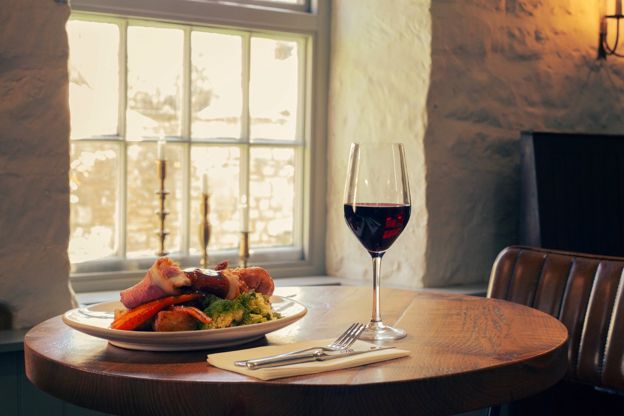
The Falcon Inn
Inn · Painswick
A family-run inn with eleven rooms on New Street, Painswick, established in 1828 and under new owners since February 2026, with dogs welcome throughout.
Dog-friendly · Wedding venues
Verified Oct 2026
More sights to see
-
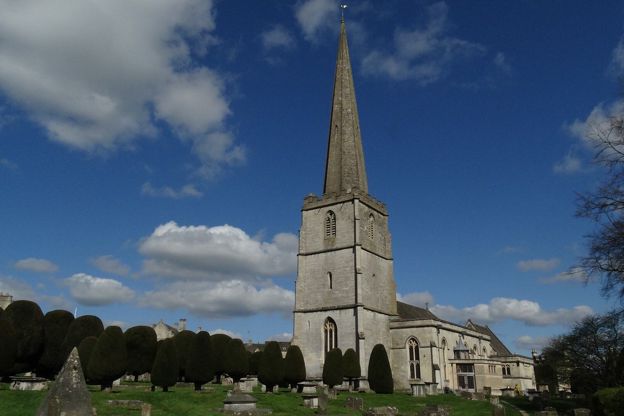
St Mary's Church, Painswick
Sight · Church · Painswick
St Mary's is Painswick's Grade I parish church, of the late fourteenth and fifteenth centuries with a tall stone spire, set in a churchyard of clipped yews and carved table tombs that is on the national Register of Parks and Gardens. Open daily; the clipping is each September.
-

Court House, Painswick
Sight · Historic building · Painswick
The Court House is a gabled stone manor house of 1604 on Hale Lane, beside Painswick churchyard, with a panelled court room and a bedroom named after Charles I. Listed Grade I, it is a private home seen from the lane and the churchyard.
-
Painswick Stream
Sight · River · Painswick
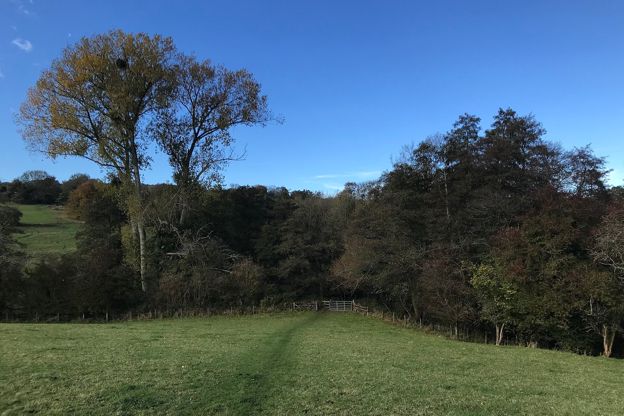
The Painswick Stream runs south in the valley below Painswick to the River Frome at Stroud. It drove the town's cloth trade: 25 mills stood in the parish in 1820. Footpaths follow it past Loveday's Mill, Skinners Mill and Kingsmill, old mills that are now homes.