|
|
|
|
| TRAVEL ASSISTANT |
We'll
help you to choose the perfect Cotswolds holiday and accommodation with
unique and customised advice.
CLICK HERE |
|
|
|
|
|
Cotswolds History - Places of History in the Cotswolds are many
and varied. You will find here details of some of the most popular venues with tourists
to the region. The contents cover Blenheim Palace, Warwick and Sudeley Castles, Tudor
and Jacabeon Manor Houses and Stately Homes. You will also find Shakespeare's birth
place and Roman heritage sites including the famous Roman Baths at Bath. The magnificent
Cathedrals at Worcester and Gloucester are included as are also the homes of such
famous people as Holst, William Morris, and Queen Katherine Parr.
For Famous People
connected to the Cotswolds - Click Here.
|
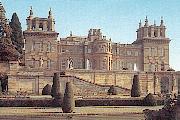
Blenheim Palace
|
Open
March to end October. www.blenheimpalace.com |
| Home of the Duke of Marlborough
and the birthplace of Sir Winston Churchill. This magnificent palace is located
on the outskirts of the small town of Woodstock on the A44 road approximately
20 minutes from Oxford. Designated a World Heritage site - one of the great buildings
of the World with a superb art collection. Extensive 'Capability' Brown landscaped
Park. The Marlborough Maze - the worlds largest symbolic hedge maze. Allow at
least a good half day for visiting. |
|
|
| |
|
Charlecote Park
|
Open
24 March to 4 November www.nationaltrust.org.uk |
| The House is the home of
the Lucy family, begun in 1551 and situated next to the river Avon in the heart
of an ancient deer-park with views to Stratford-upon-Avon a few miles away. Capability
Brown landscaped the grounds and Queen Elizabeth I stayed. Shakespeare poached
deer here. A beautiful house and well worth a visit. Located 5 miles east of Stratford
and 6 miles south of Warwick on the north side of the B4086. |
|
|
| BACK
TO TOP |
Chastelton House
|
Open
4 Apr to 3 Nov www.nationaltrust.org.uk |
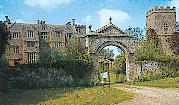
| Chastleton House is one of England's
finest and most complete Jacobean houses and competed in 1612. The same family
occupied the house for nearly 400 years with little or no modernisation taking
place. The rules for the game of Croquet were written here. Since aquiring the
property the National Trust has concentrated on conserving it rather than restoring
it to pristine condition. Located near the village of Chastleton a few miles from
Moreton-in-Marsh off the A44. |
|
|
| |
|
Chedworth Roman Villa
|
Open
March to October www.nationaltrust.org.uk |
The remains of one of the largest Roman Villas in the country
and set in a wooded Cotswold Combe. Over 1 mile of walls survive and there
are several fine mosaics, two bathhouses, hypocausts, a water-shrine and latrine.
Excavated in 1864, the site still has a victorian feel to
it and the site museum houses objects from the villa. A 15 minute audiovisual
presentation gives visitors an insight into the history of this fascinating
place.
Located at Yanworth, near Cheltenham.
Email chedworth@smtp.ntrust.org.uk.
Tel 01242 890256 Fax 01242 890544
|
|
|
| BACK
TO TOP |
Corinium Museum
|
Open
all year.
www.cotswolds.gov.uk/
tourism/museums_detail.asp?id=3 |
| The dominant theme of this nationally important museum
is life in Roman Britain with displays arranged in chronological sequence through
Cotswold history from Prehistory to the English Civil War. The Corinium Museum
houses one of the finest collections of antiquities from Roman times which come
alive using full-scale reconstructions to re-create life in Corinium, second largest
town in Roman Britain. |
|
|
| |
|
Coughton Court
|
Open
17 March to 28October www.coughtoncourt.co.uk |
One of the great Tudor
Houses, Coughton Court has been the home of the Throckmorton family since 1409.
It has important associations with the Gunpowder Plot, about which there is an
exibition and also much activity in the Civil War. The house has fine collections
of furniture, porcelain, and paintings. The grounds contain two churches, a lake,
riverside walk, formal walled garden, and bog garden.
Located near Alcester about 20 minutes by car from Broadway. |
|
|
| BACK
TO TOP |
Gloucester Cathedral
|
Open
all year gloucestercathedral.org.uk |
|
Described as Northern Europe's sixth most beautiful building
by John Betjamin. The architecture varies from the Norman nave with its massive
columns to examples of Romanesque and early perpendicular. Other features include
the glazed fan-vaulted cloisters, the monks' lavatorium, the medieval glass
of the great east window and the tombs of King Edward II and Robert Duke of
Normandy.
The cathedral was the scene of the only coronation to a monarch
outside of London to Edward II. Also you will find a Whispering Gallery.
Located in the centre of the city.
|
|
|
| |
|
Holst Birthplace Museum
|
Open
all year www.holstmuseum.org.uk |
| Regency terrace house where the composer of 'The Planets' was born
in 1874. The museum shows the 'upstairs downstairs' life of Victorian times and
includes a working kitchen, elegant drawing room and nursery aswell as Holst's
piano and the story of his life and music. Located at 4, Clarence Road, Cheltenham. |
|
|
| BACK
TO TOP |
Kelmscott Manor
|
Open
April to September
tel 01367 252486 |
The country home of William Morris and is the most evocative of
all his houses and continues to delight visitors with the charm of it's architecture.,
the fascination of its contents, and the beauty of its garden. Location Swindon
16 miles and Oxford 18 miles.
www.kelmscottmanor.co.uk
|
|
|
| |
|
Malmesbury Abbey
|
 |
|
A Prayer of St. Benedict
'Oh Gracious and Holy Father, give us wisdom to perceive
you, intelligence to understand you, diligence to seek you, patience to
wait for you, eye to behold you, a heart to meditate upon you, and a life
to proclaim you, through the power of the Spirit of Jesus Christ our Lord'
|
|
| Founded in the 7th-century as a Benedictine
Monastry by Aldhelm, a nephew of King Ina of Wessex, the Abbey was once a major
European centre of scholarship and learning. The present building, now about a
third of its original size, was consecrated in about 1180 AD. At the Dissolution
of the Monastries by King Henry VIII (1539), it was sold with all its lands to
William Stumpe, a local wealthy clothier, for just over £1500. Today the
Abbey is the Parish Church and dedicated to St. Peter, St. Paul, St. Adhelm and
to St. Mary. The Abbey was an important centre for pilgrimage because it is the
burial place of St. Aldhelm (first Abbot) and King Athelstan. The Abbey House
gardens are especially enchanting and are one of the most beautiful in England.
See more details about the gardens -
Click Here. |
|
| BACK
TO TOP |
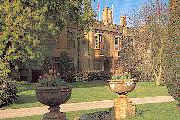
Owlpen Manor
|
Open
1 April to 30 September www.owlpen.com |
|
A romantic Tudor manor house first built in 1450 standing in
it's own valley under the edge of the Cotswolds with Queen Anne terraced yew
garden with medieval outbuildings. Beautiful walks. Has been descibed as the
most 'lovliest in place in England', 'the epitome of Romance', 'an ensemble
that is truly out of this world'.
Location 1 mile east of Uley off B4066. 3miles from
Tetbury and 3 miles from M5.
|
|
|
| |
|
|
|
| BACK
TO TOP |
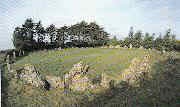
Rollright Stones
|
Open all year |
There are many prehistoric remains in the Cotswolds
but the most impressive is probably the Rollright stones. Situated high on an
exposed ridge, this is England's third most important stone circle after Stonehenge
and Avebury and is thought to be about 3500 years old. There are many legends
and superstitions associated with the stones, which are made even more atmospheric
by their bleak and elevated position. Located off the A44 between Moreton and
Chipping Norton.
www.rollrightstones.co.uk |
|
|
| |
|
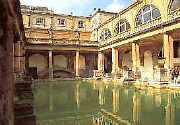
Roman Baths
|
Open
all year. www.romanbaths.co.uk |
| After invading Britain in AD 43 the
Romans investigated the steaming swampy spot in the Avon valley that was so revered
by the locals. With Roman efficiency and engineering ingenuity, in the space of
30-40 years they had drained the Marsh, contained the water, and built a temple
and Britain's first health hydro for restorative and pleasurable purposes. They
called their city Aquae Sulis and dedicated their temple to Sulis Minerva, their
own goddess of healing. |
|
|
| BACK
TO TOP |
Shakespeare's Home
|
Open
all year. www.shakespeare.org.uk |
| Shakespear's birthplace and exibition
at Henley Street, Stratford-upon-Avon. Mary Arden's house (mother) is at Wilmcote,
3 miles from Stratford. Ann Hatheway's (wife) cottage is at Shottery, 1 mile from
Stratford. Susanna's (daughter) house is Hall's Croft located in the old part
of Stratford. Nash's House (grand-daughter) and New Place (next door) where Shakespeare
spent his last years are located on Chapel Street. Shakespeare is laid to rest
in the Holy Trinity church in Stratford. |
|
|
| |
|
Snowshill Manor
|
Open
31 March to 4 November www.nationaltrust.org.uk |
|
A Cotswold manor house containing Charles Paget Wade's extaordinary
collection of craftsmanship and design, including musical instruments, clocks,
toys, bicycles, weavers and spinners tools and Japanese armour. The grounds
contain a beautiful 'cottage garden'.
Located in the village of Snowshill, 5 minutes by car
from Broadway.
|
|
|
| BACK
TO TOP |
Stanway House
|
Open
August and September on Tuesdays and Thursdays pm. |
|
A Superb Elizabethan House and Related Manorial Buildings
Stanway house is an outstanding example of an English Jacobethan manor house;
built of mellow Cotswold limestone between 1580 and 1640 by the Tracy's of Stanway.
It is a unique experience visiting this house because of the friendliness of
the resident Lord and Lady Neidpath, who you may meet, and the intimacy of the
closeness of their possessions on your walkabout.
The ancient manor of Stanway in the Cotswolds was presented
to Tewkesbury Abbey in the year 715 by two Mercian leaders Odo and Dodo. It
was the first and only remote property owned by the Abbey until the 12th century
when land was acquired in Dorset. Stanway supported four monks.
In 1533 Richard Tracy, the younger son of Sir William Tracy
of Toddington obtained the lease of the manor from Abbot Segar. Richard is known
to have led the commission that dissolved Hailes Abbey and it was around this
time that he was able to purchase the freehold to Stanway. It was his son Paul
who rebuilt the house incorporating some of the early Tudor house in it. This
work started in about 1580. Paul Tracy was created Baronet in 1611 and died
in 1620. His son, Sir Richard Tracy, continued building and it was he who had
the magnificent gatehouse erected in 1630. He died however in 1637. The house
was completed around 1640 by Sir Paul’s grandson Sir Humphrey Tracy. Sir
Humphrey supported the King during the Civil War and for this he had to pay
heavily in compensation to stop his property being confiscated. He died in 1651
without issue so the title and property was inherited by his brother Richard
who also died without issue in 1666 with everything passing to the younger brother
John. When Sir John died in 1677 the Stanway line came to an end and the property
passed to Ferdinando Tracy the second son John 3rd Viscount Tracy of Toddington.
The Tracy line continued at Stanway until 1817 when it was inherited
by Francis Charteris the 8th Earl of Wemyss and 4th Earl of March the son of
Francis Charteris and his wife Susan (nee Tracy-Keck) who was the great granddaughter
of Ferdinando Tracy. The present resident is Lord Neidpath a direct descendant
of Francis Charteris. Thus the property remained in the same family for over
450 years.
The house is built of soft mellow yellow stone under a stone
roof. The gabled west front is the Elizabethan and oldest part of the house
and includes the hall. The great hall is extraordinarily light and airy having
an enormous full height bay window and further bays at the south end. Manorial
courts were held here up until about 1800 and the raised dais at one end is
still in place. The south front is from the Stuart period and contains all the
principal rooms. A short flight of stairs leads from the hall into the drawing
room in which are a pair of unique ‘Chinese Chippendale’ day beds
from about 1760 which came from the Wemyss seat at Amisfield House in East Lothian,
Scotland. Further along is the ‘Elcho’ Lobby followed by ascending
stairs to the library passage from which an oak staircase leads to the upper
storey. Off the passage is the old library, which has only one window and is
the warmest room in the house in the winter. At the end of the passage is the
‘Elcho’ sitting room, very comfortable and lived in. The other wings
have been demolished leaving the house with an ‘L’ plan.
In the garden, up the hill to the rear is a canal above that
is a pyramid built by Robert Tracy in 1750 honouring his father John Tracy who
died in 1735. A cascade, which has been restored over the last few years, runs
from here to the canal where a 70ft fountain spouts into the air.
The gatehouse is a gem, one of the best pieces of architecture
in the Cotswolds. It was built for Sir Richard Tracy in 1630. It is unusually
positioned at right angles to the house, presumably because the church was in
the way in front of the house. The lodges, either side of the gateway, have
narrow bay widows and the whole is topped by shaped gables crowned with Tracy
scallop shells. The archway has fluted columns either side. It is a very attractive
building.
The tithe barn is medieval built around 1370 for Tewkesbury
Abbey. It has a stone roof supported by massive base cruck timbers. Apart from
the main entrances it has a small 13th century stone doorway. It is a fine building
and is now used for events and as a theatre.
The church of St. Peter is basically 12th century but
was drastically over-restored by the Victorians.This group
of buildings make a superb sight in their idyllic setting.
Located 7 minutes by car from Broadway in the village
of Stanway next to the village of Stanton. |
|
 |
 |
|
| BACK
TO TOP |
Sudeley Castle & Gardens
|
Open
31 March to 28 October sudeleycastle.co.uk |
|
Once the property of King Ethelred the Unready, later home of
Queen Katherine Parr and garison headquarters of Prince Rupert during the Civil
War. The castle houses an impressive collection of furniture and paintings.
Surrounded by magnificent award-winning gardens.
Located in Winchcombe off the B4632.
|
|
|
| BACK
TO TOP |
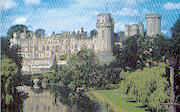
Warwick Castle
|
Open
All Year
www.warwick-castle.com |
Ancestral home of the Earls of Warwick
and the 'King Maker'. Warwick Castle is the finest medieval castle in England
dating back to the days of William the Conquerer and it brings to life 1000 years
of history. Many attractions including periodic displays of swordmanship, jousting,
and birds of prey.
Allow a full day for visiting. |
|
|
| |
|
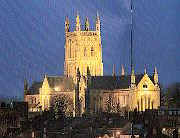
Worcester Cathedral
|
Open all year |
| Worcester Cathedral was the home of
a thriving community of monks from AD961 for nearly 600 years. They followed the
Rule of St. Benedict, in common with the monastries in many parts of Europe. These
religious houses kept alive not only the faith but also the tradition of classical
learning during the Dark Ages which followed the collapse of the Roman Empire.
King John is entombed here. |
|
|
|
|
|
|
|
|
| BACK
TO TOP |
|
|
| |
Towns
and Villages
to Visit in the Cotswolds
Cotswolds
Tourist Information - Towns and Villages in the English
Counties of Oxfordshire Gloucestershire Warwickshire
Wiltshire Worcestershire and Somerset making up the
Cotswolds region:- Places
to Visit Home
Ablington, Amberley,
Armscote,
Banbury,
Bath,
Batsford, Bladon,
Bibury,
Bisley, Blockley,
Bledington, Bourton-on-the-Water,
Broadway,
Broadwell, Broad
Campden, Buckland,
Burford, Castle
Combe, Charlbury,
Cheltenham, Chipping
Campden, Chipping
Sodbury, Cirencester,
Duntisbourne
Leer, Eastleach
Martin, Evesham, Fairford, Gloucester, Great
Tew, Greenfield
Village,
Guiting
Power, Hidcote
Bartrim, Laverton,
Lechlade,
Little
Barrington,
Little
Faringdon,
Longborough, Long
Compton, Lower
Slaughter,
Mickleton, Minster
Lovell, Moreton
in Marsh,
Minchinhampton, Nailsworth,
Naunton, North
Cerney, Northleach,
Oxford, Painswick,
Shipston
on Stour,
Snowshill, Shipton
under Wychwood,
Stanton, Stow
on the Wold,
Stratford upon Avon,
Stroud, Tetbury,
Tewkesbury,
Upper
Quinton,
Upper Slaughter, Upper
Swell, Willersey,Winchcombe,
Windrush, Woodstock,
Worcester,
Wotton under Edge, Wyck
Rissington
|
|
| BACK
TO TOP |
Places
to Stay in the Cotswolds
Places
to Stay Hotels Bed and Breakfast (B&B's) Guest Houses
Inns Pubs Self-Catering Cottages in the Cotswolds:- Places
to Stay Home
Armscote, Banbury, Barringtons, Bath,
Bibury, Bledington,
Blockley, Bourton
on the Water,
Broadway, Burford,
Cheltenham, Chipping
Campden, Chipping
Norton, Cirencester, Darlingscott,
Evesham, Fairford, Gloucester,
Guiting Power, Mickleton,
Moreton in
Marsh, Minchinhampton,
Oxford, Nailsworth,
Northleach, Painswick,
Shipston on Stour, Snowshill,
Stow on the Wold, Stratford
upon Avon, Stroud,
Tetbury, Tewkesbury,
Willersey, Winchcombe, Witney,
Woodstock, Worcester, Wotton
under Edge.
|
|
| |
|
|
|
| BACK
TO TOP |
|
|