Ley lines and the Rollright Stones
Ley lines began as a Herefordshire photographer's theory about old roads. How they became lines of earth energy, and what the Rollright Stones have to do with it.
· 5 minute read
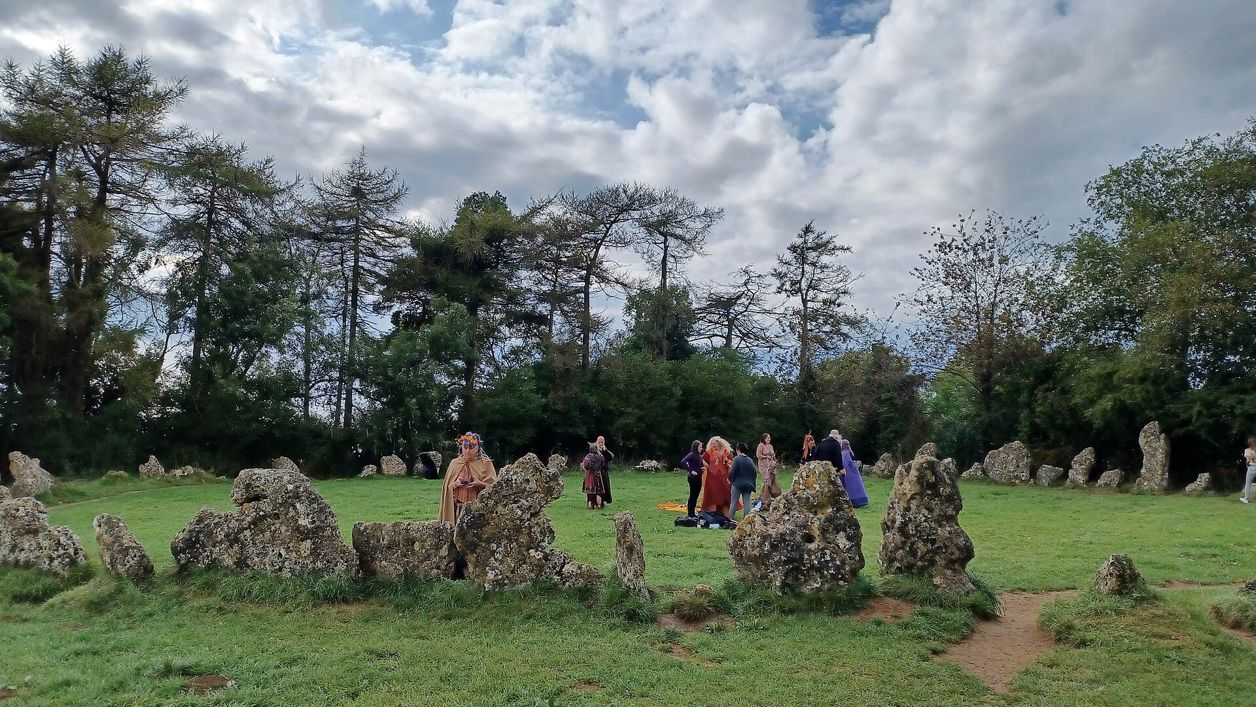
In the summer of 1921 Alfred Watkins of Hereford visited Blackwardine in Herefordshire and noticed on the map a straight line running through old sites; by his own account he had no such theory on 30 June that year. He presented the idea to the Woolhope Naturalists' Field Club in Hereford that September and set it out in Early British Trackways (1922) and The Old Straight Track (1925).
What Watkins meant
Watkins thought leys were prehistoric trackways, laid out by sight between landmarks. He gave them no supernatural meaning at all. He was also a photographer and a Progress Medallist of the Royal Photographic Society, and his first ley book was published by his own exposure-meter firm, the Watkins Meter of Hereford.
How leys became mystical
The energy came later. John Michell's The View Over Atlantis of 1969 made them lines of mystic power. Archaeologists treat all of this as pseudoarchaeology: a statistical study by Simon Broadbent in 1980 and Tom Williamson and Liz Bellamy's book Ley Lines in Question in 1983 showed that a landscape crowded with old sites will produce straight alignments by chance, and the ley Watkins drew through Rollright joins prehistoric stones to parish churches built thousands of years later.
The Rollright Stones
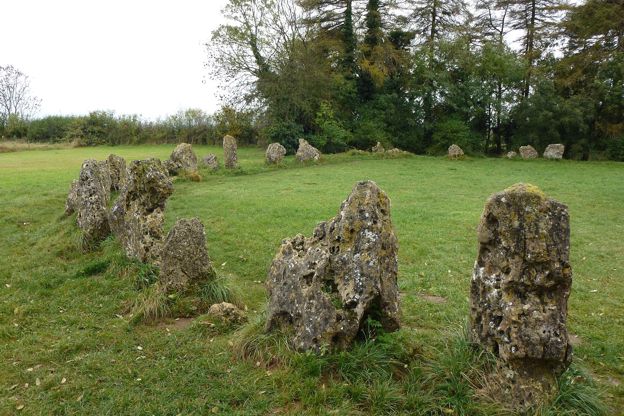
On the Oxfordshire and Warwickshire border near Long Compton stand the Rollright Stones: the King's Men, a ceremonial circle of some seventy weathered stones raised around 2500 BC, which the Trust calls famously uncountable; the King Stone, a standing stone of about 1500 BC; and the Whispering Knights, the remains of a burial chamber perhaps built around 3800 BC, over a thousand years before the circle. Folklore says they were a king and his army turned to stone by a witch. Watkins drew a ley through them, from Long Compton church to Chipping Norton church, and in the late 1970s the Dragon Project measured the stones for unusual energies; the Trust itself calls most of the results inconclusive.
The Cotswolds Info newsletter
Events, new places and the best of the season, about once a month. Unsubscribe at any time.
Visiting
The Rollright Trust (opens in a new tab) has owned the stones since 2001 and asks a small entry fee: £2 for adults and £1 for children aged 7 to 16 when we checked in October 2026, paid at the money box, by QR code or online. The site is normally open all year. Dogs must stay on a lead, away from the stones and out of the circle. Parking is in two small lay-bys that fill quickly, on a road busy with lorries, and the Trust warns of frequent thefts from cars.
Read next
-
Pagan Cotswolds? What the record says about old customs
Story · Strange Things · 4 minute read
Maypoles, wassails, well dressing and cheese rolling are often called pagan fertility rites. Here is what historians have actually found, and what is a modern myth.
-
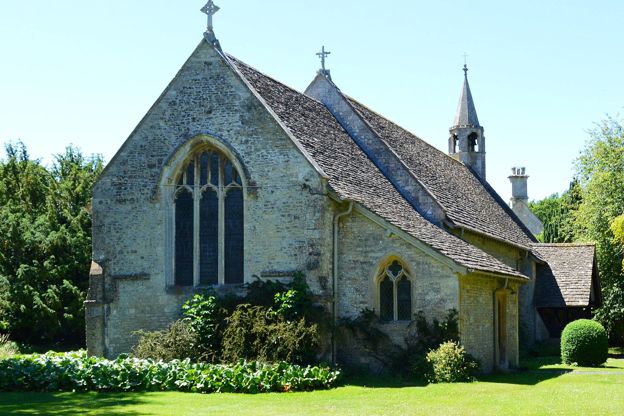
Templars and Hospitallers in the Cotswolds
Story · Strange Things · 5 minute read
The crusading orders held land in the Cotswolds: the Templars at Temple Guiting until their fall in 1308, and the Knights Hospitaller at Quenington until 1540.
-
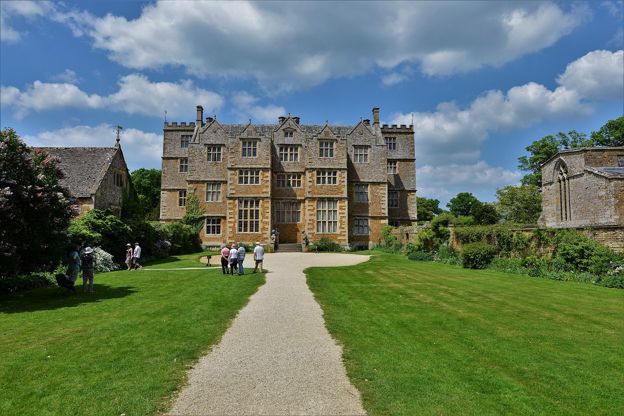
Robert Catesby, Chastleton and the Gunpowder Plot
Story · Strange Things · 4 minute read
The leader of the Gunpowder Plot, Robert Catesby, lived at Chastleton on the Oxfordshire edge of the Cotswolds before selling it in 1602, three years before the plot.