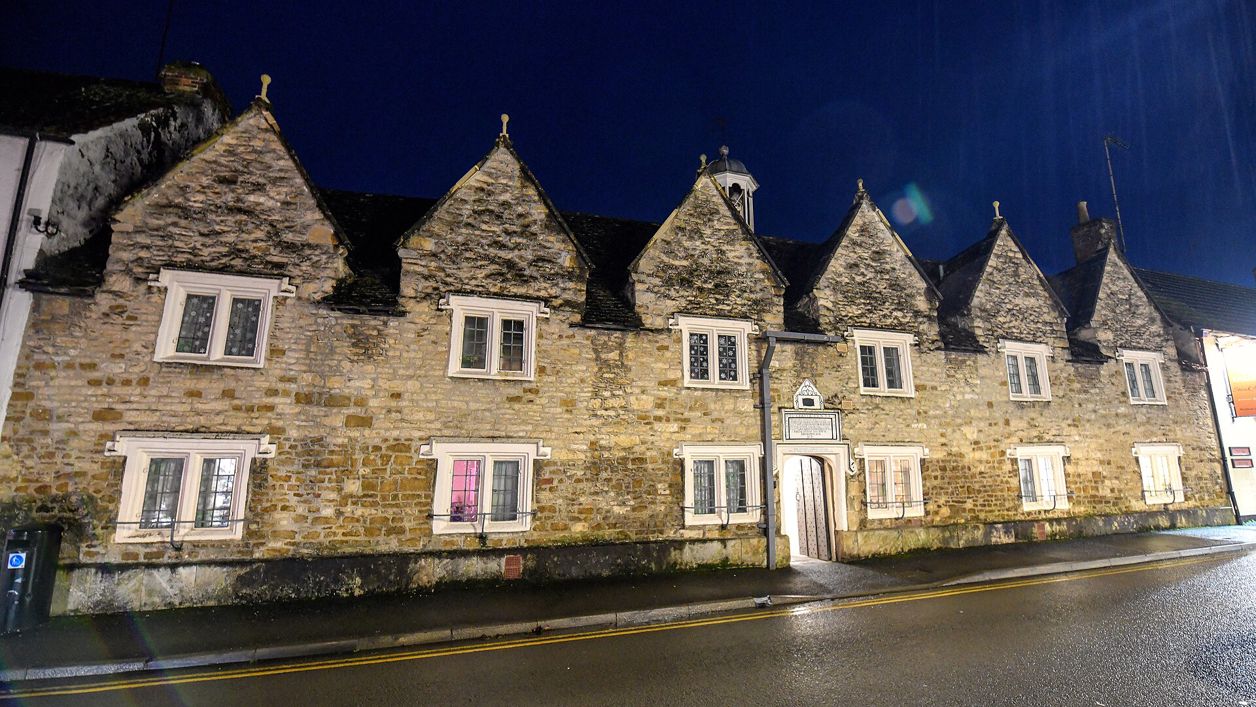
Lewis Clarke, CC BY-SA 2.0, via Wikimedia Commons
Hugh Perry Almshouses, Wotton-under-Edge
The Hugh Perry Almshouses on Church Street in Wotton-under-Edge were built in 1638 from the bequest of a London alderman from the town, and extended for Thomas Dawes's charity from 1723, round a courtyard with a small chapel. Grade II; still homes.
Historic building
Wotton-under-EdgeThe Hugh Perry Almshouses stand on Church Street in Wotton-under-Edge, between the High Street and St Mary's Church. The front range and chapel were built in 1638 from Hugh Perry's bequest, and more houses were added behind for Thomas Dawes's charity from 1723. They are listed Grade II and are still homes today.
History
The almshouses were paid for by a son of the town who made his fortune in London. Hugh Perry was a mercer and alderman of the City of London, a former Wottonian, and when he died in 1634 his will left £300 for an almshouse for six poor men and six poor women. He also left yearly sums for their clothing and fuel, and £8 for an usher who taught at the town's free school and read divine service in the chapel every day at 11 o'clock.
Perry's building
The oldest parts, fronting Church Street, and the chapel were built from his legacy in 1638. A memorial scroll over the entrance carries the town's old emblem, a woolsack, a reminder of the trade that made Wotton rich.
Thomas Dawes and the General Hospital
Thomas Dawes's property went to the poor of the town too. A Chancery decree of 1722 confirmed its sale, and the money paid for a site for a hospital for six poor people or families: six new houses behind the chapel, with six garden plots and the use of the chapel, under a lease of 19 June 1723. A General Hospital was built later, mainly from gifts out of Perry's estates, and it housed 30 almspeople and a matron. Historic England's listing dates part of the building to 1712, so some of the work behind the street front may be earlier than Dawes's lease.
Today
In the 1950s the quarters were reduced from thirty to twenty-two, and in the 1970s the buildings were modernised as nine flats, each with a sitting room, kitchen, bathroom and bedroom, with a common room and laundry. The trustees of the Wotton-under-Edge General Charities run them, a secular body of eleven: four appointed by the town council and seven foundation trustees from the community.
What to look for
From Church Street you see two storeys of rubble stone under six Cotswold gables. Look for:
- the stone two-light windows with square hoods and leaded glass;
- the central doorway under a flat elliptical arch, with the inscribed panel and memorial scroll above it;
- the hexagonal wooden cupola over the main block;
- behind the front, the private courtyard with its three wings and the small chapel, listed in its own right, whose modern memorial windows honour Perry and Dawes.
Wotton has other almshouses too: the Bearpacker almshouses opposite the church, with a plaque of 1837, and the Rowland Hill almshouses of 1815 on Tabernacle Pitch.
Visiting
The almshouses are private homes, so please see them from the pavement of Church Street and do not go into the courtyard uninvited. The street is a short walk from the town's council car parks.
Getting there
Church Street runs from the High Street down to St Mary's in the lower town. Stroud District Council runs car parks at Potters Pond, at the bottom of the street, and The Chipping, and lists no charge for them; there are free public toilets on Ropewalk.
On foot, Wotton, the Tyndale Monument and Coombe Hill starts on Gloucester Street, about 350m away, and the Cotswold Way passes through the town centre.
Nearby
St Mary's Church is at the bottom of the street, with the Ancient Ram Inn beside it on Potters Pond. Above the town are Jubilee Clump on Wotton Hill and the Tyndale Monument. The Royal Oak on Haw Street serves food.
Walks past Hugh Perry Almshouses, Wotton-under-Edge
-
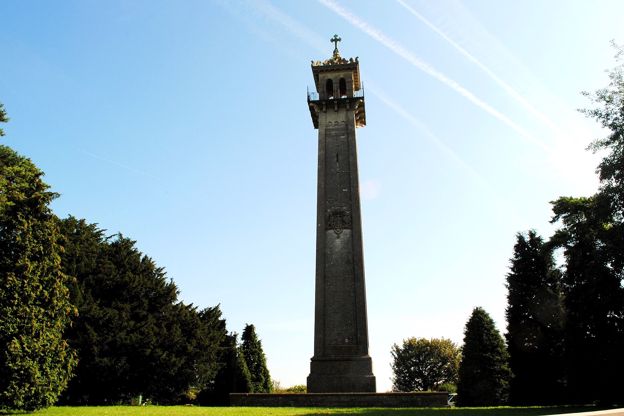
Cotswold Way: Wotton-under-Edge to Hawkesbury Upton
Walk · Starts in Wotton-under-Edge · 4 hrs, 45 mins · Dog-friendly
A 7.8-mile (12.6km) one-way walk on the twelfth section of the Cotswold Way, moderate and about four and three quarter hours: from Wotton-under-Edge up past Newark Park, along Wortley Hill, through Alderley and Lower Kilcott to the Somerset Monument and Hawkesbury Upton.
-
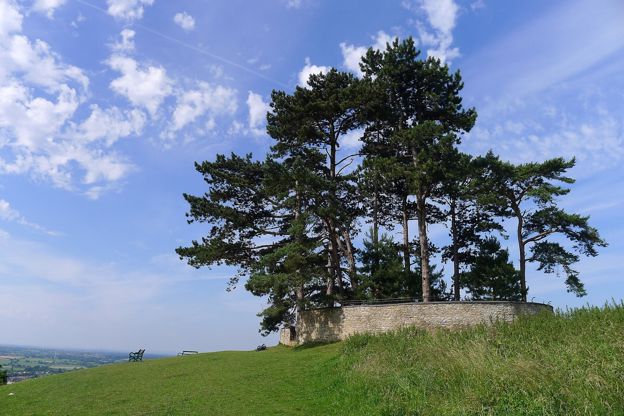
Wotton, the Tyndale Monument and Coombe Hill
Walk · Starts in Wotton-under-Edge · 4 hrs, 15 mins · Circular
An 8.5-mile (13.5km) moderate loop of four to four and a half hours from Wotton-under-Edge, with three big climbs: to the Tyndale Monument, down to North Nibley, north towards Stinchcombe Hill, round by Hermitage Wood and Waterley Bottom, and back over Coombe Hill.
-
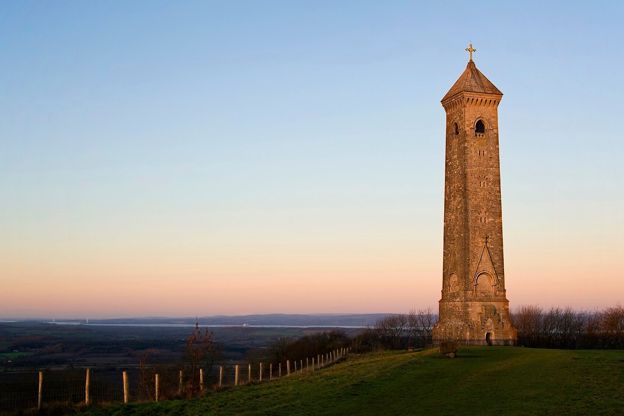
Wotton Hill and the Tyndale Monument
Walk · Starts in Wotton-under-Edge · 1 hr, 15 mins · Circular · Dog-friendly
A 3.5-mile (5.8km) easy ridge walk of an hour to an hour and a half from Old London Road above Wotton-under-Edge: out to the walled Jubilee Clump on Wotton Hill, through Westridge Wood past Brackenbury Ditches to the Tyndale Monument on Nibley Knoll, and back through the woods.
Stay and eat near Hugh Perry Almshouses, Wotton-under-Edge
-
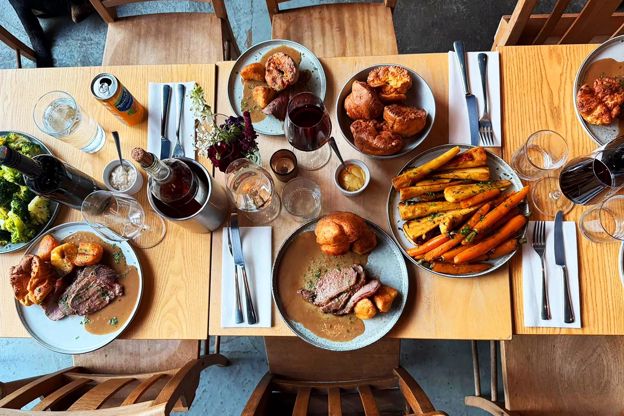
The Royal Oak, Wotton-under-Edge
Pubs · Wotton-under-Edge
A neighbourhood pub and kitchen on Haw Street, Wotton-under-Edge, serving pub classics from South West producers, open Tuesday to Sunday from midday.
Family-friendly
Verified Oct 2026
-
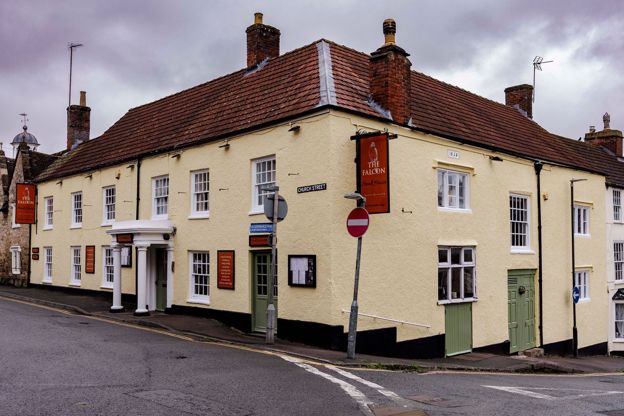
The Falcon Steakhouse, Wotton-under-Edge
Restaurants · Wotton-under-Edge
A steakhouse in a town pub of 1659 on Church Street, Wotton-under-Edge, serving locally reared beef at lunch and every evening, with a Sunday roast.
Verified Oct 2026
-
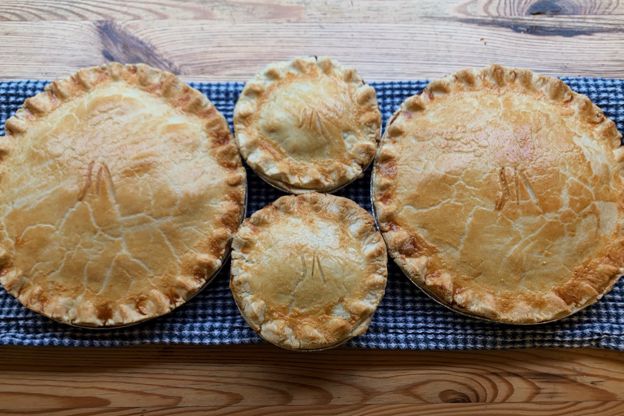
Relish, Wotton-under-Edge
Farm shops and delis · Wotton-under-Edge
An independent deli and bakery on Long Street, Wotton-under-Edge, baking bread every morning and cooking meals, quiches and cakes to take away.
Verified Oct 2026
More sights to see
-
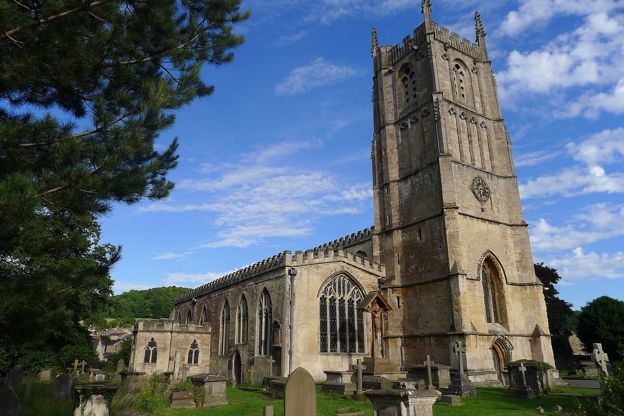
St Mary's Church, Wotton-under-Edge
Sight · Church · Wotton-under-Edge
St Mary's is Wotton-under-Edge's Grade I parish church, with late thirteenth-century arcades, a six-stage fourteenth-century tower, the brasses of Thomas, Lord Berkeley and his wife, and an organ bought in 1800. Open daily.
-
The Ancient Ram Inn, Wotton-under-Edge
Sight · Historic building · Wotton-under-Edge
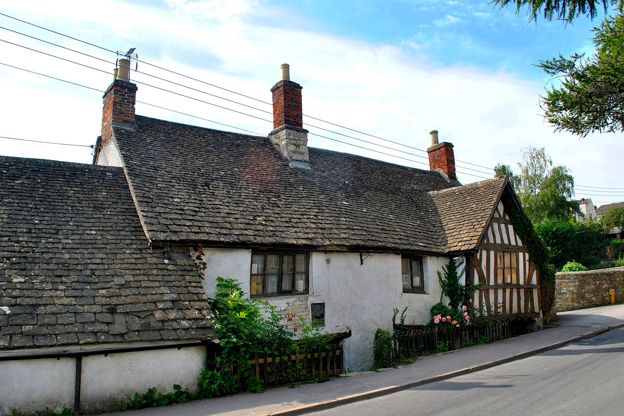
The Ancient Ram Inn is a late medieval house at Potters Pond in Wotton-under-Edge, by the church, with a jettied timber-framed gable. Often dated to 1145, its timbers were felled in 1495 to 1496. Grade II*; private, with booked paranormal events.
-
Jubilee Clump, Wotton Hill
Sight · Viewpoint · Wotton-under-Edge
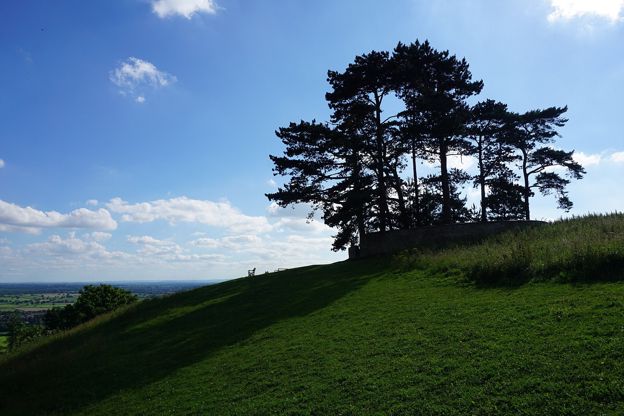
Jubilee Clump is the walled ring of trees on Wotton Hill above Wotton-under-Edge, replanted in 1888 for Queen Victoria's Golden Jubilee on a spot said to have been first planted after Waterloo: a landmark and viewpoint on the Cotswold Way. Free.