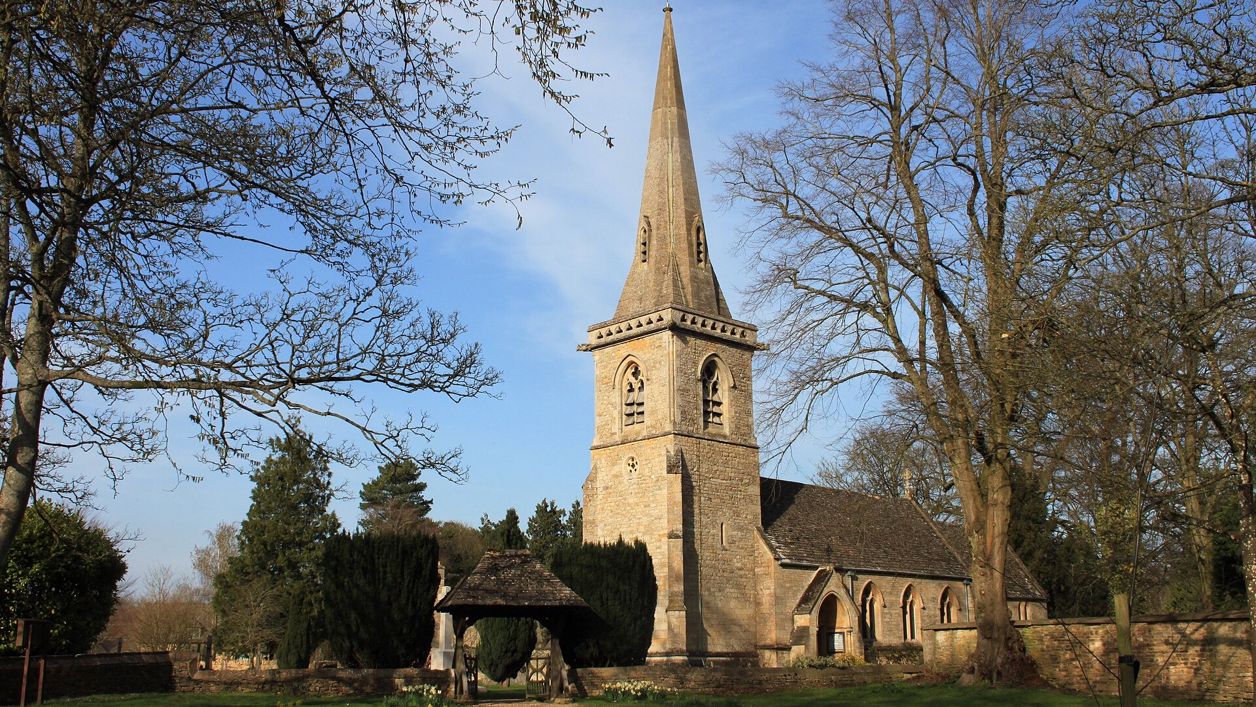
Roger Davies, CC BY-SA 2.0, via Wikimedia Commons
St Mary's Church, Lower Slaughter
Lower Slaughter's church, almost entirely rebuilt in 1867 for the Whitmore family, lords of the manor, but keeping a north arcade of around 1200, with a broad spire behind a pierced parapet. Grade II*; open, with a ramp.
Church
Lower SlaughterSt Mary's is the parish church of Lower Slaughter, its broad spire rising over the village near the manor house. It was almost entirely rebuilt in 1867 by Benjamin Ferrey for Charles Shapland Whitmore, lord of the manor, but it keeps an arcade from around 1200 inside. It is listed Grade II* and is listed as open to visitors.
History
St Mary's story is mostly that of the Whitmore family, who held the manor for about 350 years. The Victoria County History finds architectural evidence of a church here by 1235, and says it was tied to the rectory of Bourton-on-the-Water, whose patron was Evesham Abbey. It notes too that the dedication to St Mary is recorded only from 1867.
The old church
Around 1700 the church had a north aisle and a west tower with a saddleback roof, and by 1851 a gallery had been put in. Its surviving medieval work is the north arcade and a piscina.
The Whitmores
The Crown granted the manor to Sir William Whitmore in 1611, and in 1656 a new manor house was built near the church by Valentine Strong, apparently to the design of Richard Whitmore. The family lived there for nearly a century up to 1961, and the house is now The Slaughters Manor House hotel. Late seventeenth-century Whitmore monuments stand in the north aisle.
The rebuilding of 1867
In 1867 Charles Shapland Whitmore had the church rebuilt almost from scratch. Historic England's listing names the architect as Benjamin Ferrey, working in the Early English and Decorated styles of the thirteenth and fourteenth centuries. A window by the firm of Clayton and Bell went in the same year, and the saddleback tower recorded around 1700 gave way to the present tower and spire. Three new bells were cast in 1866 to join three older ones.
What to see
Outside, the two-stage tower has diagonal buttresses and a broad spire set behind parapets pierced with trefoils.
Inside, find the north arcade first. Its three cylindrical piers with scalloped capitals carry pointed, chamfered arches, a mix of round Norman and pointed Gothic forms that the listing dates to the late twelfth or early thirteenth century, the Transitional period. The Victoria County History calls it early thirteenth century.
Most of the fittings are Victorian or later, but look for the tub font, the thirteenth-century piscina in the chancel, an early twentieth-century alabaster reredos, the Clayton and Bell window of 1867, and the ledgers, brasses and glass to the Whitmore family. The church also owns a chalice and paten cover of 1576. Of its six bells, one is attributed to Robert Hendley of about 1500 and two are by Edward Neale, of 1683.
Visiting
A Church Near You lists the church as open, with guidebooks or notes for visitors, a ramp, accessible parking and a hearing loop. Holy Communion is at 11am on the second Sunday of the month and Morning Praise at 11am on the fourth, with Morning Prayer at 9.15am on Mondays. We found no public toilets in the village; the nearest are in Bourton-on-the-Water. The village is busy at popular times, and walkers recommend arriving early.
Getting there
The church is in the middle of Lower Slaughter (GL54 2HR), beside the Slaughters Manor House. A Church Near You lists parking at the church; otherwise walkers report street parking on Copsehill Road, which fills at weekends, and the district council has no car park in the village. Coaches are barred from the village except to drop off at the hotels. No timed bus calls, but the Robin, a minibus you book ahead, serves both Slaughters.
On foot, three of our walks come through the village close by. Lower Slaughter to Upper Slaughter starts at the Slaughters Country Inn, a few steps from the church, and follows the River Eye past the mill to Upper Slaughter. Bourton, Upper Slaughter and Lower Slaughter is the loop from Bourton-on-the-Water, and Bourton-on-the-Water, the Slaughters and Naunton goes on over the hill to Naunton.
Nearby
The Old Mill is at the top of the village, and The Slaughters Country Inn is along the lane. About a mile up the river in Upper Slaughter are St Peter's Church, with the mortuary chapel of the family of the diarist Francis Witts, the castle mound and the Manor House. Down the Eye, St Lawrence's Church stands in Bourton-on-the-Water.
Walks past St Mary's Church, Lower Slaughter
-
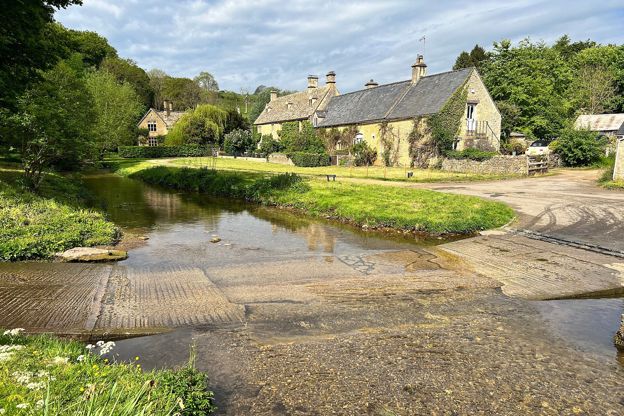
Bourton-on-the-Water, the Slaughters and Naunton
Walk · Starts in Bourton-on-the-Water · 5 hrs · Circular
A 10-mile (16.4km) circular walk from Bourton-on-the-Water, four to five hours of moderate walking with stiles and steep slopes. It follows the Wardens' Way through Lower and Upper Slaughter to Naunton, then comes home down the Windrush valley on the Windrush Way.
-
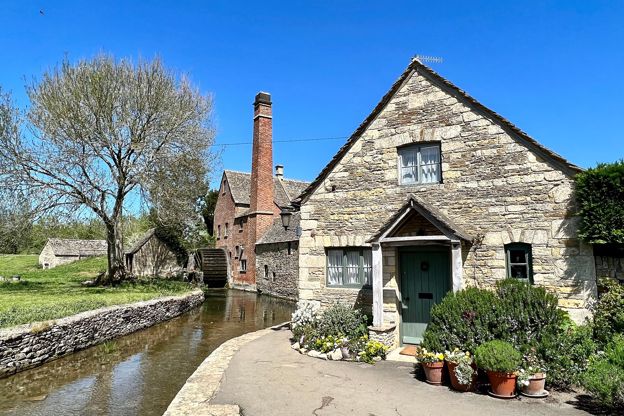
Bourton, Upper Slaughter and Lower Slaughter
Walk · Starts in Bourton-on-the-Water · 2 hrs, 15 mins · Circular
A 6-mile (9.7km) circular walk from Rissington Road in Bourton-on-the-Water, two to two and a half hours of moderate walking with a few stiles. It heads west on bridleways, up a quiet lane to Upper Slaughter, and down the River Eye to Lower Slaughter's mill.
-
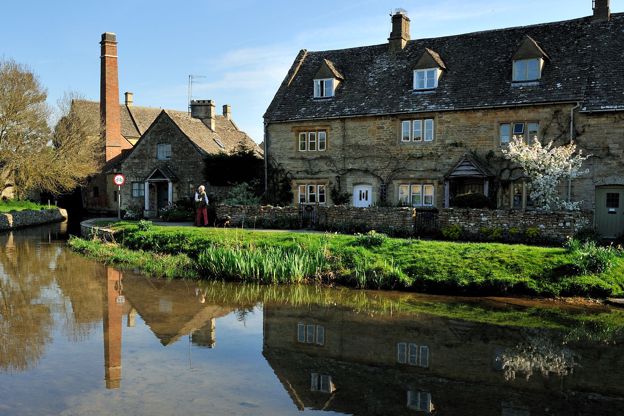
Lower Slaughter to Upper Slaughter
Walk · Starts in Lower Slaughter · 45 mins · Circular · Dog-friendly
A 2-mile (3.1km) there-and-back from Lower Slaughter, easy and almost level, in 45 minutes to an hour: on the Wardens' Way from Lower Slaughter's mill up the River Eye through riverside fields to Upper Slaughter's ford, church and manor, and back the same way.
Stay and eat near St Mary's Church, Lower Slaughter
-
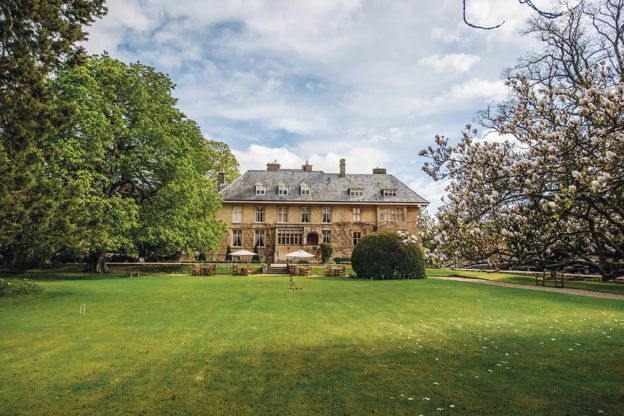
The Slaughters Manor House
Hotel · Lower Slaughter
A 17th-century manor house hotel with 19 bedrooms on Copsehill Road, Lower Slaughter, home of the Whitmore family until 1964, with dog rooms booked by phone.
Dog-friendly · Family-friendly · Wedding venues
Verified Oct 2026
-
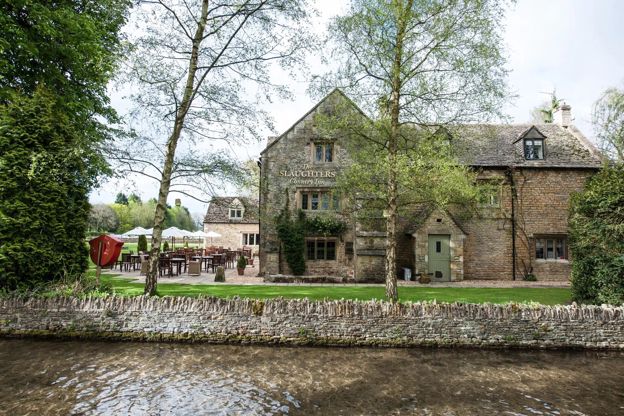
The Slaughters Country Inn
Inn · Lower Slaughter
An inn in Lower Slaughter, bought and renamed by the Brownsword family in 2011, with dog rooms and a Field Kitchen from April to September.
Dog-friendly · Family-friendly · Walker-friendly
Verified Oct 2026
-
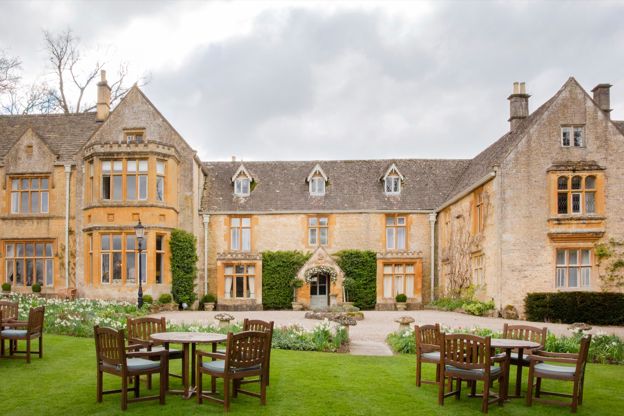
Lords of the Manor
Hotel · Upper Slaughter
A country house hotel with 25 bedrooms in eight acres of grounds in Upper Slaughter, in a house it dates to 1649, with dogs welcome.
Dog-friendly · EV charging · Wedding venues
Verified Oct 2026
More sights to see
-
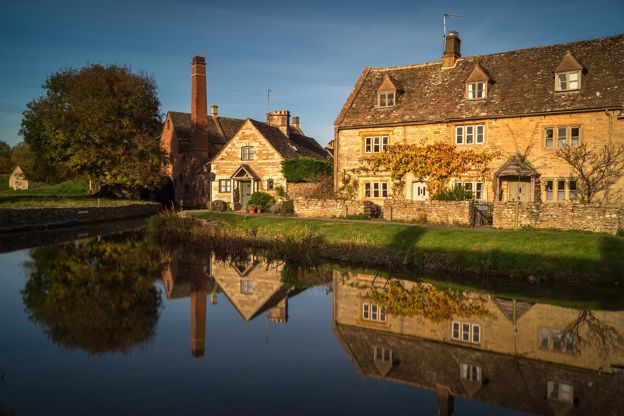
The Old Mill, Lower Slaughter
Sight · Historic building · Lower Slaughter
The red-brick mill with its tall chimney and iron water wheel at the top of Lower Slaughter, on the River Eye: early nineteenth century, on a site milled since at least 1502. Grade II. The museum and shop closed in 2023, when the mill was sold; check before visiting.
-
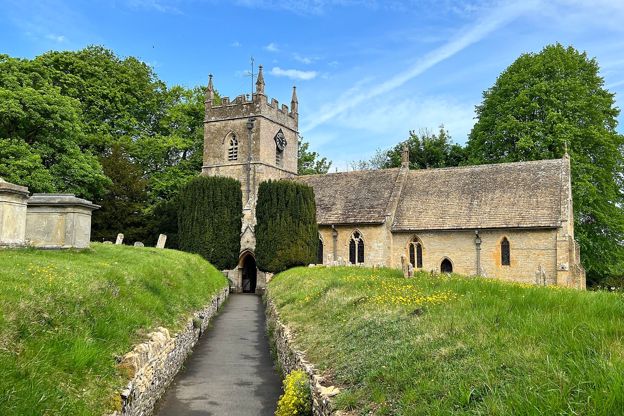
St Peter's Church, Upper Slaughter
Sight · Church · Upper Slaughter
Upper Slaughter's church, above the ford over the River Eye: a twelfth-century nave, a tower built from reused Norman stone, and the mortuary chapel of the diarist Francis Witts, rector here for 46 years. Grade II*; open every day.
-
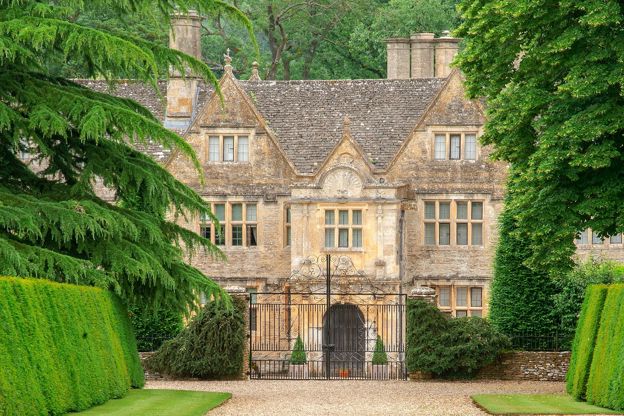
Manor House, Upper Slaughter
Sight · Historic building · Upper Slaughter
Upper Slaughter's Elizabethan manor house, Grade I, home of the Slaughter family until 1741: gabled Cotswold stone over a fifteenth-century vaulted basement, with a two-storey porch of the early seventeenth century covered in fretwork. A private house, seen from the lane.