The lovers of Stanton Harcourt
A storm, a harvest field, two lovers about to marry and a famous poet who happened to be there: the story behind a memorial in an Oxfordshire church.
· 3 minute read
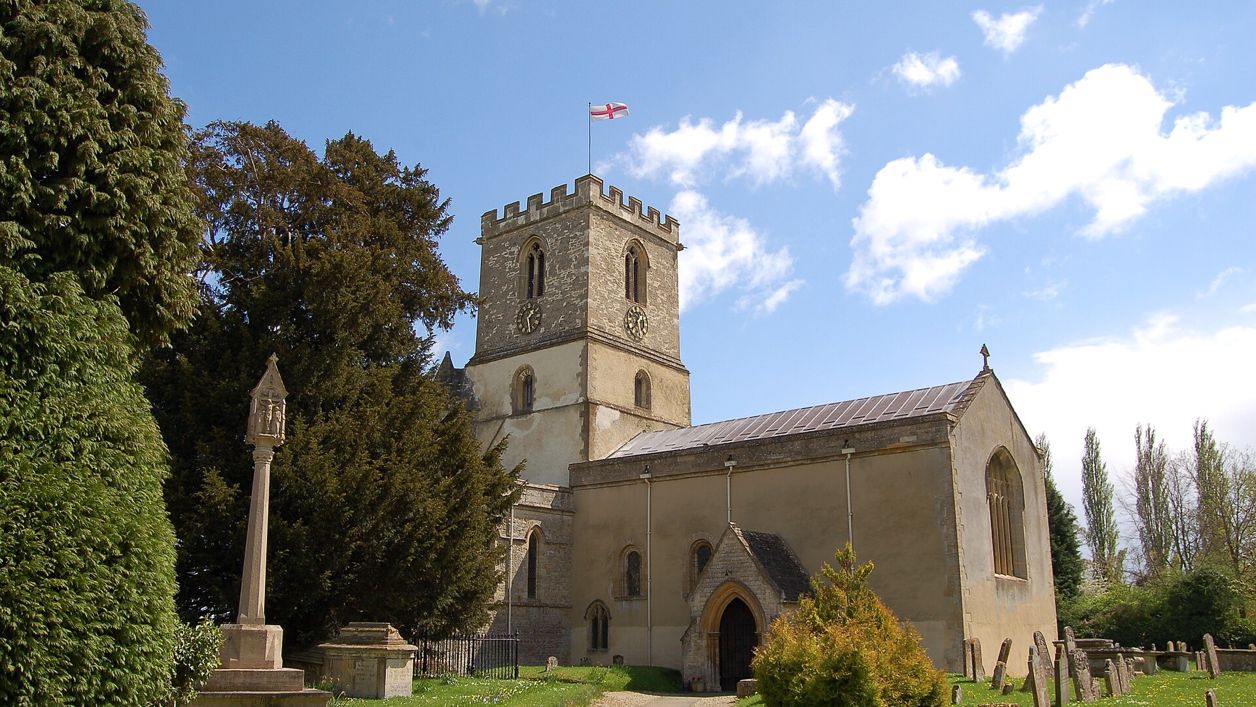
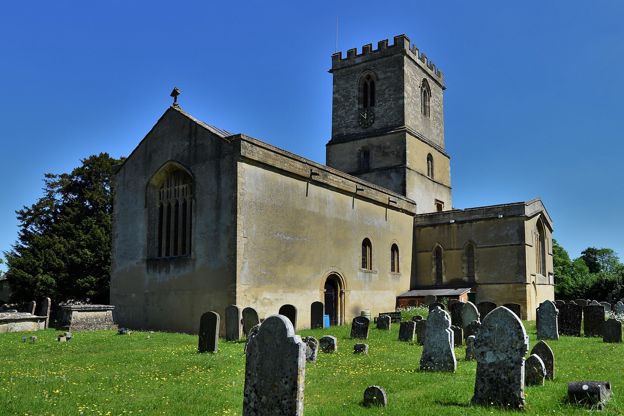
Stanton Harcourt is a village about 4.5 miles south-east of Witney, in the Thames valley on the edge of the Cotswolds. In 1717 and 1718 the poet Alexander Pope stayed there, translating the fifth volume of his Iliad in the upper room of the fifteenth-century tower, built about 1470, that is now called Pope's Tower.
The storm
A letter dated Stanton Harcourt, 9 August 1718 (opens in a new tab), describes a summer storm that killed John Hewet and Sarah Drew, who were engaged to be married and were at work in the harvest. A stone was put over them, on condition that someone supplied an epitaph, and Pope wrote it. A version was printed within a year in a collection of poems (opens in a new tab), calling them "contracted in marriage, but being at harvest-work".

The Cotswolds Info newsletter
Events, new places and the best of the season, about once a month. Unsubscribe at any time.
The memorial
The memorial to John Hewet and Sarah Drew, with Pope's epitaph, is on the wall of the south transept of St Michael's church, which is listed Grade I (opens in a new tab).
Places to stay near Witney
-
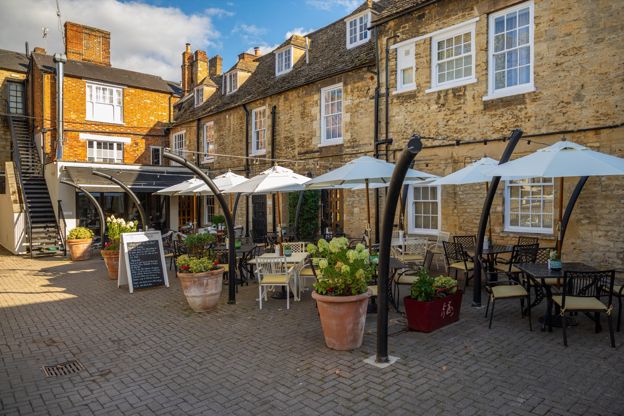
The Blue Boar
Inn · Witney
A 17th-century coaching inn on Witney's Market Square with twenty rooms, breakfast from 7am and a grill and wood-fired pizza menu.
Family-friendly · Car-free
Verified Oct 2026
-
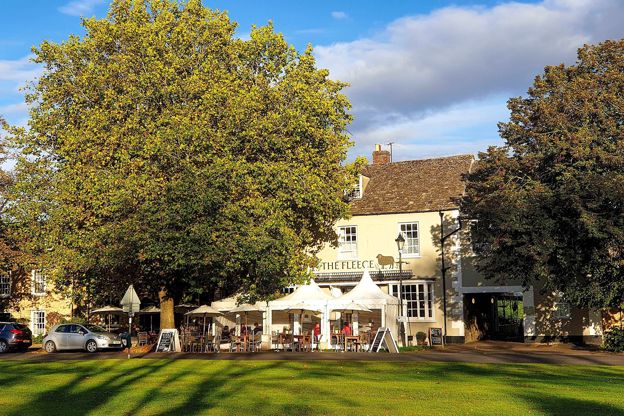
The Fleece, Witney
Inn · Witney
An inn with ten rooms on Church Green, Witney, run by Peach Pubs, with breakfast from 7.30am and food all day.
Verified Oct 2026
-

Premier Inn Witney
Hotel · Witney
A Premier Inn on Ducklington Lane, Witney, off the A40, with double, twin, family, accessible and Premier Plus rooms, a restaurant and free parking.
Verified Nov 2026
Read next
-
Burnt Norton: a fire and a poem
Story · Strange Things · 3 minute read
In 1741 Sir William Keyt set fire to his mansion near Chipping Campden and died in the flames. Nearly two centuries later the ruin gave T. S. Eliot a poem.
-
Wife selling in the Oxfordshire Cotswolds
Story · Strange Things · 5 minute read
For a century and more, some English couples ended their marriages with a public sale in the market. The newspapers record cases at Oxford, Banbury and Witney.
-
Three dooms at Minster Lovell Hall
Story · Strange Things · 5 minute read
The ruined hall on the Windrush at Minster Lovell, the lord who vanished after the battle of Stoke, a skeleton said to sit at a table, and a bride in a chest.