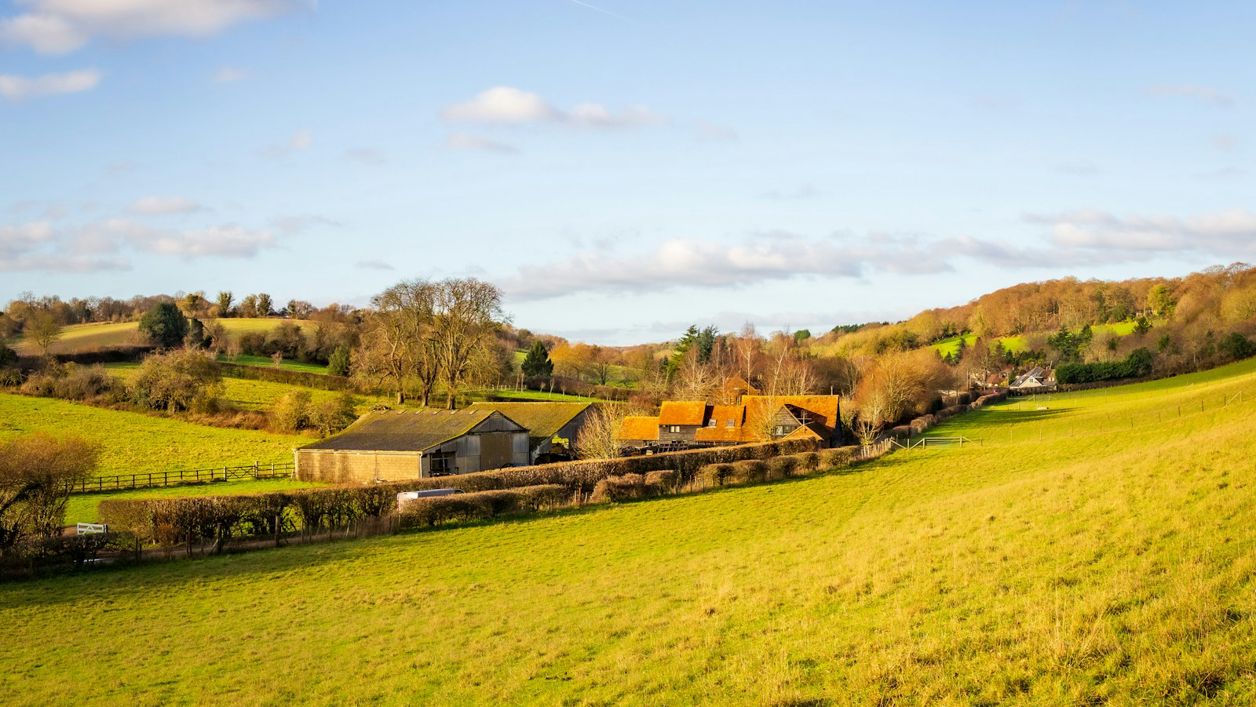
Love the Cotswolds: the care code
Five things to do that keep the famous villages liveable and your own day better: come early or late, park where you are meant to or come by bus, keep to the path and shut the gate, buy something local, and try the next village. With the numbers behind each.
The Cotswolds are not full. A handful of villages are, for a few hours on a few dozen days a year, and the people who live in them bear it. Bibury has 627 residents and up to 20,000 visitors on a peak weekend; Bourton-on-the-Water sees about 10,000 people a day at the height of summer; more than 350 cars were booked for illegal parking in Castle Combe across the summer of 2025. The Cotswolds National Landscape's management plan for 2025 to 2030 puts it plainly: tourism is spread unevenly across the Cotswolds, a few honeypot areas suffer its impacts, and other communities could benefit from more of it. The care code is our answer, five promises that cost you nothing and give you a better day. The reasons for each are below, with the sources.
Come early or late
Be in the famous village before 10am or after 5pm, and it is a different place. The crowds in Bourton, Bibury and Castle Combe arrive with the coaches in late morning and leave by late afternoon; Castle Combe's parish council says its busiest times are midday, bank holidays and the summer months, its quietest early mornings, late afternoons, weekdays and winter, and that the average visit lasts just over an hour. The councils have priced the day the same way: Bourton's Rissington Road car park has been free before 10am since 2026 and charges until 8pm, so an early start is free and a long afternoon is £7.30. The light is better early and the people who live on The Street in Bibury get their mornings. When to visit the Cotswolds has the months as well as the hours.
Park where you are meant to, or come by bus
Use the car park, even when it is a walk, because the verge you would use is someone's gateway, the fire engine's turning space or the footpath. The county council issued 651 parking penalty notices in Bibury in 2025 against 28 in 2019, up to about £45,000 of fines that still did not cover the £4,000 a month the enforcement costs, and the parish council's chair says it is needed to keep the roads open to the emergency services (Punchline Gloucester, 5 August 2026 (opens in a new tab)). Gloucestershire County Council closed Bibury's central coach bays in May 2025 for a two-coach, ten-minute clearway, and in March 2026 set aside £175,000 for a scheme to manage the crowds, with pay-and-display, raised kerbs and more enforcement among the measures proposed, which it expects to recover over three years from parking charges and fines; when we checked on 27 October 2026 the measures were still proposals. Lower Slaughter has barred coaches since 1995; Castle Combe keeps them in the car park at the top of the hill. Every ticket at Bourton's Rissington Road car park carries a 60p tourism levy that helps pay for the village warden. The National Landscape's management plan says the limited and poorly joined-up public transport leaves 'a heavy reliance on car usage' and that transport providers should be supported to 'encourage a car-free visitor experience'; the 801 bus from Moreton-in-Marsh station, hourly every day on Pulhams' timetable from May 2026, is the first real answer to that in the north. Parking has every car park and buses every route.
Keep to the path and shut the gate
A public footpath is a right to cross a field on the line of the path, not a right to the field, and the Cotswold landscape is a working one: the wold tops are sheep and barley, the valley meadows are cattle, and a gate left open loses a flock onto the road. The Countryside Code's rule is to leave gates and property as you find them, keep to the marked route, take litter home and keep dogs under control, and the Cotswolds National Landscape adds not to block gateways or driveways when you park (visiting, Cotswolds National Landscape (opens in a new tab)). The drystone walls are the other thing: one person climbing one for the photograph above Bibury or Snowshill is a repair a farmer pays for. Dogs have a page of their own, because the rule near livestock is law: dogs in the Cotswolds.
Buy something local
Spend something in the village you walk through, because a village that is photographed and not bought from loses its shop, and then its pub. The management plan's Caring for the Cotswolds scheme exists because visitor money does not otherwise reach the landscape it uses: it 'will raise awareness of the CNL and generate funds from visitors to directly help to look after it', paying for habitat work, access and heritage repair, through a visitor giving scheme in which the tourism businesses that join it collect voluntary donations from their guests, on the bill, at booking or on the trail. The surer way is the till: the village shop at Coln St Aldwyns, a loaf from the bakery in the town you are staying in, the Saturday farmers' market in Stroud, a bag of apples from Hayles Fruit Farm, a pint in the pub rather than a coffee from the car. The businesses on this site are the ones we have checked and would send a friend to.
Try the next village
The famous village is rarely the best one in its valley, and the plan's own policy UE3.7 is that 'the activity and impacts of tourism should be spread more evenly across the CNL'. See Bibury at nine, then walk up the Coln to Coln St Aldwyns, where the river is the same and the crowds are not; see Bourton, then follow the Windrush past the Slaughters to Naunton; see Broadway, then go up to Snowshill or along to Stanton. The full list, with the walk or the bus between each pair, is the Cotswolds without the crowds.
The quieter alternatives
For Bibury, Coln St Aldwyns, two miles up the river, with a village shop and the New Inn. For Bourton and the Slaughters, Naunton and Guiting Power, up the Windrush, each with a pub and a green and no coach bay. For Castle Combe, Biddestone, a few miles east, with a green, a pond and the White Horse. For Broadway, Stanton and Snowshill on the hill above; in Stanton the parish asks you to use the car park by the cricket ground rather than the street. For Chipping Campden, Blockley. For Stow, the Swells, just down the hill, or Northleach, a wool town with a church as good as any and the X52 and 855 buses through the Market Place.
How we check our facts
Every place guide and listing carries the date its facts were last checked, shown on the page, and the practical pages under Plan say 'checked' with a date in the text. The sources are the operators and councils themselves: the bus times come from Pulhams' and Stagecoach's timetables, the car park charges from the councils' tariff pages, the dog rules from GOV.UK and the landowners, the visitor numbers from Gloucestershire County Council's own reports; we do not take a fact from another guide, a review site or a forum, and a fact we cannot source comes out rather than staying because it is probably still right. When something changes, or we get it wrong, the page is corrected and the correction is noted at the foot of it, and every page has a link to tell us. How we research and check sets out the whole process. About the Cotswolds says who we are.
The numbers behind the code
- Bibury
- 627 residents; up to 20,000 visitors on a peak weekend, by the county's count; 651 parking fines in 2025 against 28 in 2019; coach bays closed since May 2025; £175,000 set aside by the county in 2026 for a scheme still proposed in October.
- Bourton-on-the-Water
- About 10,000 visitors a day at peak; a tourism levy on every Rissington Road ticket since 2021, 60p since 2025; free parking before 10am since 2026; coaches to a five-minute bay on Meadow Way.
- Castle Combe
- More than 350 cars booked for illegal parking in summer 2025; coaches barred from the village; the average visit just over an hour; quietest on weekdays, early, late and in winter.
- The Slaughters
- No car park, no toilets; coaches of nine seats or more barred from Lower Slaughter by a 1995 order except local buses and hotel drop-offs.
- The management plan
- Cotswolds National Landscape, 2025 to 2030: tourism spread unevenly, with 'honeypot' areas under pressure; policy UE3.7 to spread it; a car-free visitor experience to be encouraged.
- The footpath law
- A right of way is a right to pass along the line of the path. Open access land adds a 2m dog lead from 1 March to 31 July. Gates as you find them.
The Cotswolds, kept current
One email when a famous village changes its rules, and one quieter village each month that we think you should see instead.
Questions
Is the Cotswolds suffering from overtourism?
A few villages are, on a few days. Bibury, Bourton-on-the-Water and Castle Combe take tens of thousands of people on summer weekends and bank holidays, and their councils are now charging, ticketing and redesigning the streets to cope; the National Landscape's plan says tourism is spread unevenly. Most of the eight hundred square miles see almost nobody, which is the point of the care code: go there.
What time should I get to Bibury to avoid the crowds?
Before 10am, or after 5pm. The coaches and the day-trippers arrive from late morning and thin out from late afternoon, and the only bus, the 855, is hourly from Monday to Saturday with the first from Cirencester at 7am. A weekday in October or November is the best of all.
Can coaches go to Bibury or the Slaughters?
Not to park. In Bibury the central coach bays have been closed since May 2025 and replaced by a clearway where two coaches may stop for ten minutes to set down and pick up; the county council proposes to make that permanent. Lower Slaughter has barred coaches of nine seats or more since 1995, except local buses and hotel drop-offs. Bourton's coaches use a five-minute bay on Meadow Way; Castle Combe's park at the top of the hill. Operators will find the set-down points and coach parks in coaches and groups in the Cotswolds.
Is there a tourist tax in the Cotswolds?
Not on beds, but on parking in Bourton-on-the-Water: 60p of every ticket at the Rissington Road car park is a tourism levy, collected by Cotswold District Council since 2021 (50p until the rise to 60p approved in November 2024) and spent on a village warden and local projects, and the council plans the same at Stow-on-the-Wold's Maugersbury Road car park under its parking strategy to 2028. Caring for the Cotswolds is a visitor giving scheme for conservation work: the tourism businesses that join it collect voluntary donations from their guests.