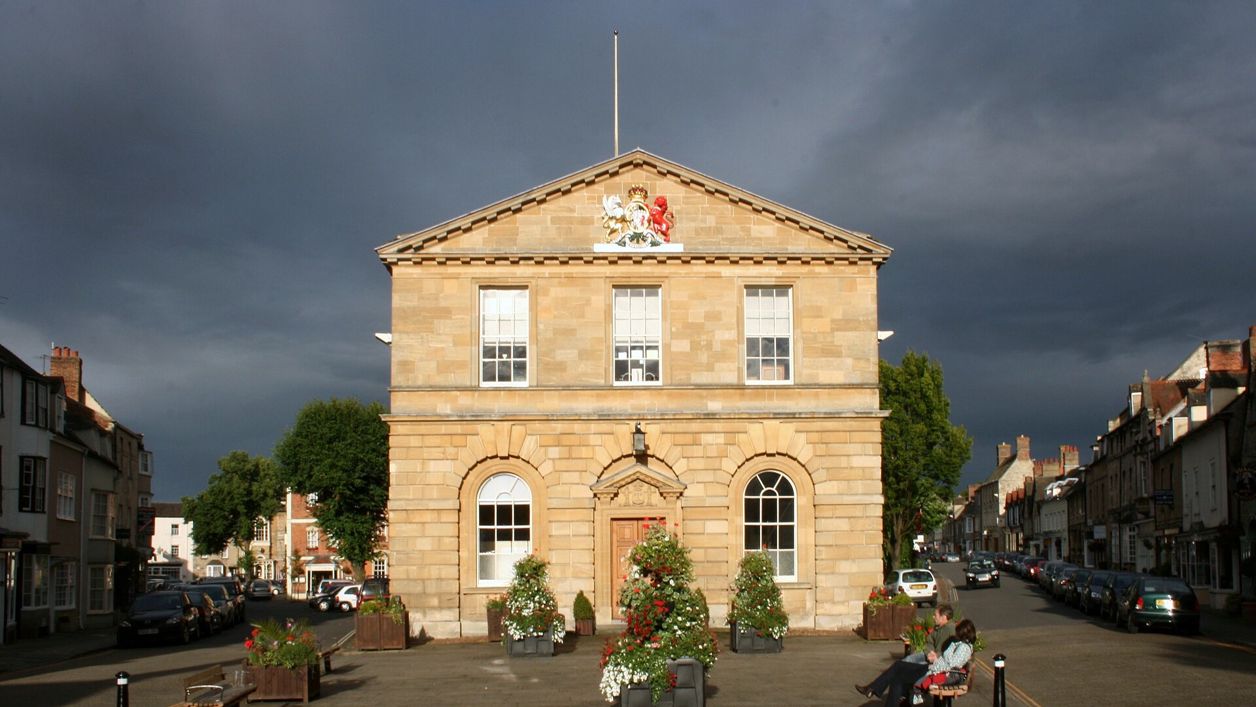
Des Blenkinsopp, CC BY-SA 2.0, via Wikimedia Commons
Woodstock Town Hall
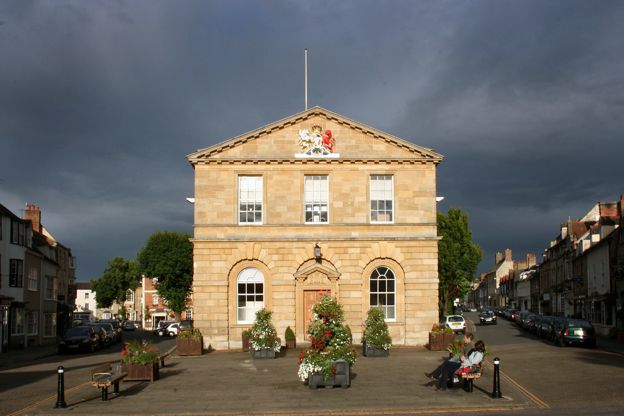
Woodstock Town Hall in the Market Place was designed by Sir William Chambers and built in 1766 to 1767 at the Duke of Marlborough's expense, over an open market hall enclosed in 1898, with a marble sundial on its south wall. Grade II.
Historic building
WoodstockWoodstock Town Hall stands in the Market Place in Woodstock, on the site of the town's old market cross. Sir William Chambers designed it, and it was built in 1766 to 1767 at the expense of the Dukes of Marlborough, as a council hall raised over an open market hall. The arches were filled in in 1898. It is listed Grade II.
History
The Town Hall replaced a medieval guildhall that stood on the site of what is now 2 to 4 Market Street. In the seventeenth century that hall had two storeys, a small prison and an entrance porch, and by 1686 it housed the town's fire engine as well as the town clerk's office.
Plans that came to nothing
Woodstock tried for decades to replace it. Sir John Vanbrugh and Henry Joynes, then at work on Blenheim, discussed a new hall in 1713, and the Duke of Wharton promised £600 in about 1722, but nothing was built. The old hall was pulled down in 1757, and the council rented a parlour across the road for its meetings.
Chambers' hall
At last the Marlboroughs paid. The fourth Duke approved Chambers' plan in 1765, the market cross was cleared away, work began in March 1766, and the hall was in use by 1767. It cost over £1,100, in stone from Cornbury Park, Stonesfield slates and timber brought from London. The council chamber and hall were on the first floor; the arcaded ground floor was the market, with a lock-up at the east end and a fire-engine house on the south side. The fourth Duke's arms went up on the west front in 1768. Chambers also built New Bridge in Blenheim's park.
Later changes
After the Blenheim fire of 1861 the seventh Duke gave a drinking fountain for the south front. In 1898, for Queen Victoria's Diamond Jubilee, George Castle enclosed the ground floor to make a council chamber or mayor's parlour and a library, and the borough arms over the west door date from then. The engine house became a caretaker's office in 1934. When local government was reorganised in 1974 the town kept the hall as ancient property, and it is now the home of Woodstock Town Council and a venue for events and civil weddings.
What to look for
- The pedimented front, with the lion and unicorn in the pediment and a rusticated ground floor of three round arches, now blocked and fitted with sash windows.
- The borough arms of 1898 over the west door, and the Marlborough arms on the west front.
- The drinking fountain of 1861 on the south side.
- The marble sundial in a niche on the south wall, inscribed Tempus Fugit, the near twin of the dial on St Mary Magdalene.
- Inside, which you see only at events, the Doric columns of the old market hall on the ground floor, a seventeenth-century studded door and a seventeenth-century parish chest.
Visiting
The Town Hall is a working council building and events venue, so most visitors see it from the Market Place, which is level and open at all times. Inside is open for council business and booked events. The hall is licensed for civil marriages and partnerships for up to 60 people, in the Mayor's Parlour downstairs or the Assembly Room upstairs; Woodstock Town Council's website has details. A ramp from the Market Place and a stair lift to the upper floors give wheelchair access, the county council's register office says. The address is Town Hall, Market Place, Woodstock OX20 1SL.
Getting there
The Town Hall is in the Market Place in the middle of the town. There is no parking at the hall; park in the town and walk. Stagecoach's S3 runs from Oxford to Woodstock about every hour through the day.
The Woodstock town walk passes the hall on its way round the town's old streets.
Nearby
Our story on the two sundials of Woodstock pairs the hall's dial with the church's, on Park Street a few steps away. The Oxfordshire Museum is a few steps away too, and Blenheim's park holds the Column of Victory and Queen Pool. The Market Place has the Feathers, the Woodstock Arms, the Bear, the King's Arms and the Crown within a minute's walk.
Walks past Woodstock Town Hall
-
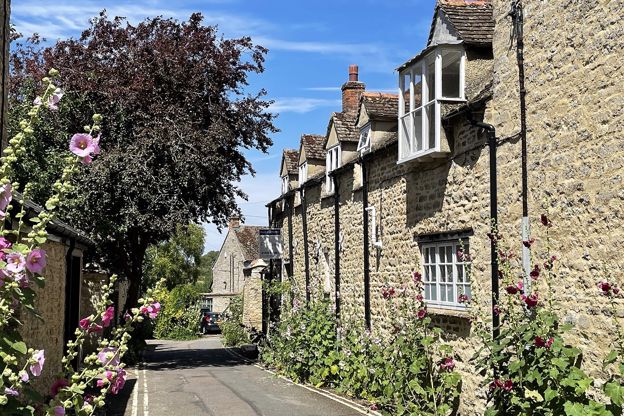
Woodstock town walk
Walk · Starts in Woodstock · Circular
A 1.1-mile (1.7km) easy heritage loop round Woodstock from the stocks in Park Street to Hawksmoor's Woodstock Gate into Blenheim, along the coaching inns of Oxford Street and Market Street to the Town Hall and the Hensington Gate, and back through the churchyard.
-
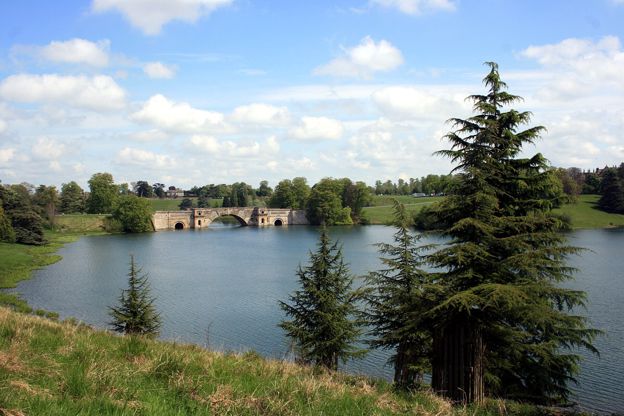
Blenheim Park from Bladon
Walk · Starts in Woodstock · 2 hrs · Circular
A 4.5-mile (7.2km) circular walk from Bladon round Blenheim's park, about two hours, easy and on estate roads. It crosses New Bridge, goes through High Park to Vanbrugh's Grand Bridge, past the palace and back by the walled garden. About half needs a Park and Gardens ticket.
Stay and eat near Woodstock Town Hall
-
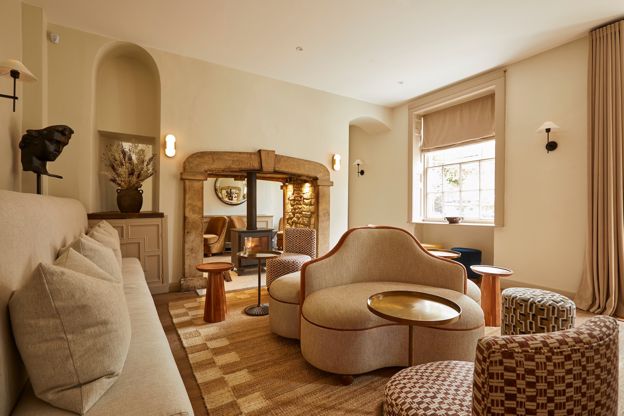
The Feathers
Hotel · Woodstock
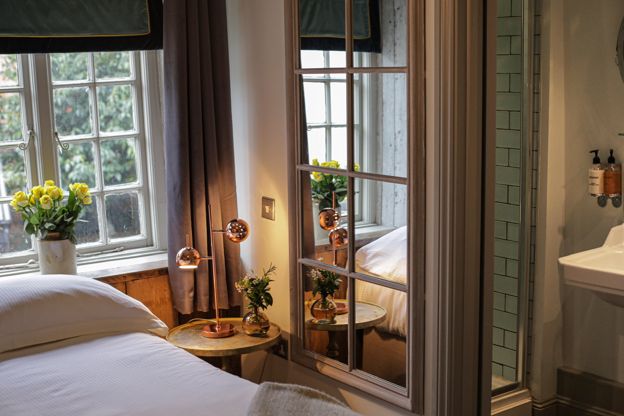
A hotel with 18 rooms and five suites on Market Street, Woodstock, with two AA Rosettes and a Michelin Key, a few minutes from Blenheim's gates.
Verified Nov 2026
-
The Woodstock Arms
Pubs · Woodstock
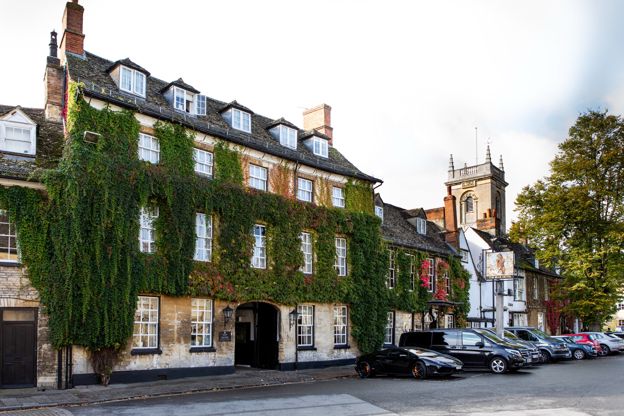
A bistro pub with rooms on Market Street, Woodstock, showing two AA Rosettes, open every day from 9am with food all day and dogs and children welcome.
Dog-friendly · Family-friendly
Verified Nov 2026
-
The Bear Hotel
Hotel · Woodstock
A Macdonald hotel in a Grade II* listed old inn on Park Street, Woodstock: 54 rooms with four-posters and suites, a restaurant, afternoon tea and dogs welcome, a short walk from Blenheim.
Dog-friendly · Wedding venues
Verified Nov 2026
Stories about Woodstock Town Hall
-
Two sundials in Woodstock
Story · Strange Things · 3 minute read
High on Woodstock's church and in a niche on its Town Hall are two near-twin sundials, one of which writes seven as IIV and eight as IIIV.
More sights to see
-
St Mary Magdalene, Woodstock
Sight · Church · Woodstock
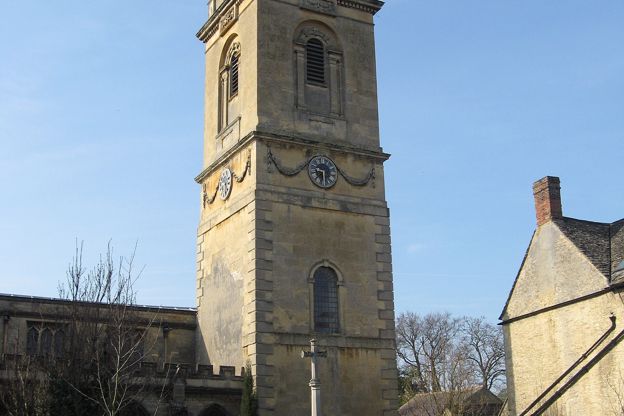
St Mary Magdalene is Woodstock's church on Park Street, founded with the twelfth-century town and long a chapel of Bladon, with a Norman zigzag doorway, a classical tower of 1784 to 1786 with chimes of 1792 made to play tunes, and a sundial with odd numerals. Grade II*.
-
Column of Victory, Blenheim
Sight · Monument · Woodstock
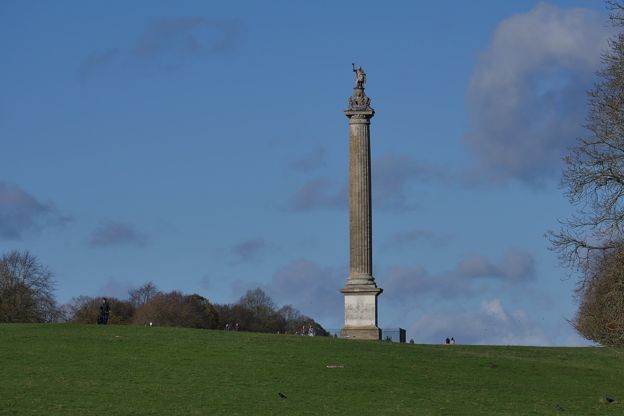
The Column of Victory is the fluted Doric column of 1727 to 1730 that carries a lead statue of the first Duke of Marlborough dressed as a Roman general on the high ground of Blenheim's park. Seen from Woodstock and the park's public paths.
-
Queen Pool, Blenheim
Sight · Lake · Woodstock
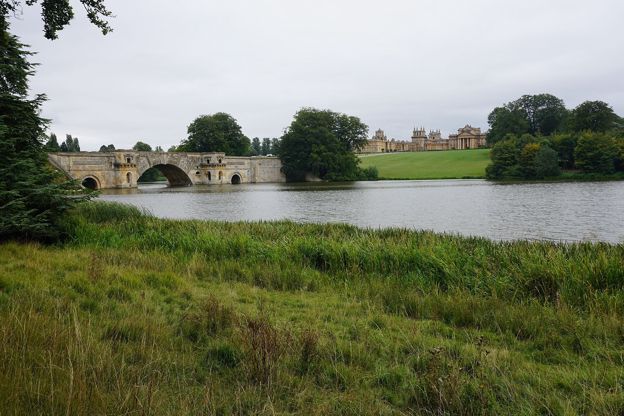
Queen Pool is the northern arm of the lake Capability Brown made at Blenheim from 1764, above Vanbrugh's Grand Bridge, with Rosamund's Well just west of the bridge and the Column of Victory above. Reached free on public footpaths from Combe; the lakeside road is permissive.