 |
||||||||||||||||||||||||||||||||||||
|
||||||||||||||||||||||||||||||||||||
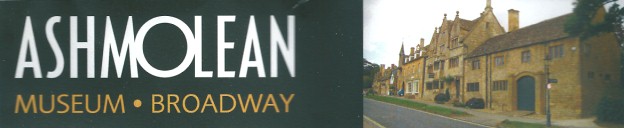
The Ashmolean Museum Oxford, working in partnership with Worcestershire County Council, the Keil family and other local organisations, has transformed Tudor House in Broadway, Worcestershire, into an independent museum: The Ashmolean Museum Broadway. Visitors to Ashmolean Museum Broadway, who are UK tax-payers, can now make a one-off donation of £5 on entry to then gain free entrance to the museum for 12 months. Under the gift aid scheme the donation of £5 means the Ashmolean Museum Broadway receives £6.25 (25p for every £1 donated). If you pay tax at a higher then basic rate you can reclaim the difference in your donation in your annual HMRC tax return. If you do not pay UK tax or do not pay sufficient tax to cover the donation value, then the standard entrance fee costs you exactly the same. Details of these charges are below. Opening Times: Tuesday-Sunday 10am-5pm Address Website www.ashmoleanbroadway.org/ Cotswolds.Info is proud of being the first Founding Corporate Sponsor The History of Tudor HouseWith its prominent position on Broadway High Street, Tudor House is situated in the centre of the village on the south side ofthe High Street. The date of building (1659/1660) is marked on the bay window at the front of the building. The house was built as a result of the successful wool growing and wool weaving in the area, and was originally owned by the Wool Staple. Described as a ‘splendidly monumental building of 1659/60’ (Pevsner), the Tudor House forms part of a group of historic urban properties set directly at the back of the pavement facing the village Broad Street with its narrow green, which gives the town its name. The house forms the prominent triple-gabled centrepiece of a group, with another 19th / 20th century building, later attached to the West.
Some of the best 16th and 17th century rural architecture and stonemasonry abound in the Cotswolds, and Tudor House is a highlight example. The floorplan is typical of the period, and the façade semi-symmetrical. The bay window forms a central feature, balanced by the mullioned windows on one side and the door on the other, dating the architecture to the late 16th or early 17th century. The building’s prominent position on the High Street, and its grand façade, contribute to the impression that it was built to represent the wealth and success of its original owners and the wool trade.
Changes to the building’s structure over the last 350 years are thought to be relatively minimal, although it is possible that the bay windows have been altered. The building was refurbished and brought closer to its original state in 1907-09 under the guidance of Arts and Crafts architect Mr C.E. Mallows of Bedford, under the ownership of a Mr B.M. Chandler. Before then, it is believed that the structure itself had never been seriously tampered with. Internally, however, many of the original features had been covered and the original staircase has been removed. At the time of the 1907 refurbishment, there was a stone staircase with cast iron hand-rail, this was taken out during the restoration and replaced with a more sympathetic oak staircase, based on the remnants of the top flight, which remained. The ornate fireplaces remain stunning features in the rooms today. The Keil Family became the owners of the property in the early twentieth century, and under their ownership, the neighbouring buildings were successfully used as Antiques showrooms for over 70 years. |
||||||||||||||||||||||||||||||||||||
Broadway Ashmolean Museum |
||||||||||||||||||||||||||||||||||||
Ashmolean Museum at Broadway | ||
| YOU ARE HERE: Main Home Page > Places to Visit > Broadway > Ashmolean Museum |
|
|
 |
|
 Since opening in September 2013, the museum has provided insight into local history and become a showcase for the unique collections curated by the Ashmolean Museum Oxford. The objects on display are on loan from the museum and include a painting of Elizabeth Woodville from its founding collection, given by Elias Ashmole to the University of Oxford in 1683.
 Broadway is one of the best loved and most popular villages in the Cotswolds and Tudor House is one of its most prominent buildings. Originally built in the seventeenth century as a coaching inn, it has been extended and adapted over the centuries. It has also served as a private residence for various owners, including Benjamin Chandler who refurbished the property with the Arts and Crafts architect, CE Mallows, in 1908. For nearly 80 years, it was the headquarters for H.W. Keil Ltd, one of the leading dealers in antique furniture in the world.

