The Local Time is Saturday, 20-Apr-2024 15:15:46 CEST |
Famous People with Cotswold Connections |
|
|||
| YOU ARE HERE: Home Page > Famous People |

|
|
|
|
|
|

Cotswold Connections - Here is a collection of famous people who are connected to the Cotswolds and includes Prince Charles, Winston Churchill, William Morris, King Alfred the Great, John Singer Sargent, William Shakespeare, Baptist Hicks, William Tyndale and the Mitford Sisters.
|
|||||||||
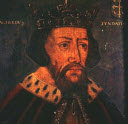
King Alfred the Great (849 to 899)Born: Wantage, Berkshire (now Oxfordshire) King of England. Died: 26th October AD 899 at Winchester, Hampshire. King Alfred's statue, commissioned by Lord Wantage, and designed and carved in 1877 by Count Gleichen, (a cousin of Queen Victoria) stands in Wantage town centre. Alfred also had a palace at Chippenham in Wiltshire. Famous for his Wars with the Vikings and also 'for burning the cakes'. Winston Churchill referred to Alfred as the 'greatest Englishman' not he. King Athelstan, grandson of Alfred the Great, made Malmesbury his capital in AD925. |
 |
||||||||
| back to top | |||||||||
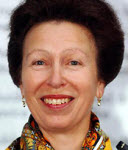
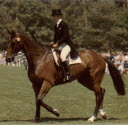
Princess Anne (HRH Princess Royal)The Princess Royal is the second child and only daughter of The Queen and The Duke of Edinburgh. Born Princess Anne in 1950, she received the title Princess Royal from The Queen in June 1987. Since 1969 The Princess Royal has pursued a busy schedule of public duties. In addition to carrying out engagements in support of The Queen, she works on behalf of a broad range of organisations. Princess Anne and her husband Timothy Laurence live at Gatcombe Park near Minchinhampton in the southern Cotswolds. For more information about - Princess Anne and her equestrian activities. |
 |
||||||||
 |
|||||||||
| back to top | |||||||||
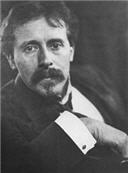
Charles Robert Ashbee (1863 to 1942)Charles Robert Ashbee was born in London, the son of a prosperous city merchant. Educated at Wellington College and King's College, Cambridge, he was articled to G. F. Bodley. He became a designer and follower of the Arts and Crafts Movement. He founded The Guild of Handicraft in London and was influenced by William Morris and John Ruskin. In 1902 Ashbee undertook his grand experiment and removed the entire Guild to Chipping Campden in the Cotswolds. For a while the Guild's affairs prospered, but from 1905 the receipts from the craft work fell off disastrously and by 1907 the company was forced into voluntary liquidation. Ashbee continued throughout this period with his architectural practice, which brought in a number of decorative commissions to the Guild. |
 |
||||||||
| back to top | |||||||||
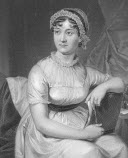
Jane Austen (1775 - 1817)Jane Austen is perhaps the best known and best loved of Bath's many famous residents and visitors. She paid two long visits here towards the end of the eighteenth century, and from 1801 to 1806 Bath was her home. Her intimate knowledge of the city is reflected in two of her novels, Northanger Abbey and Persuasion, which are largely set in Bath. |
 |
||||||||
| back to top | |||||||||
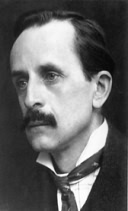
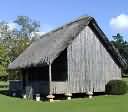
J M Barrie (1860 - 1937)J.M.Barrie author of the much loved story Peter Pan written in 1904. A wonderful fantasy of adventures about the little boy who never grew up and inspired during his stay at Stanway House at the village of Stanway in the north Cotswolds. Between 1923 and 1932 Barrie used to spend his summers at elegant Stanway House. He rented it from the Earl of Wemyss, whose daughter Lady Cynthia Asquith was a good friend of Barrie's. As a great cricket enthusiast Barrie decided to get together his own team, which he cleverly named the Allahakbarries, (a pun on the Islamic term 'allahakba' and his own name). To the delight of the locals the team comprised mainly friends of Barrie who were often well known literary figures, such as H.G.Wells and Sir Arthur Conan Doyle! Barrie had a thatched cricket pavilion constructed - still to be seen to this day. It was surely pure pleasure to watch these matches and the participants must have brought in a new spirit of 'intellectualism' to this rural part of Gloucestershire. One particularly interesting game was that played in Broadway against a team of local artists and singers who were recruited by a well known resident of that Cotswold town, the American actress Mary Anderson. |
  | ||||||||
| back to top | |||||||||
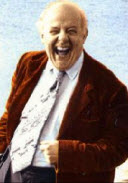
John Betjeman (1906 - 1984)John Betjeman became the most popular British poet of his age. He received countless awards and yet poetry critics have often struggled to characterize and criticize his poetry which evokes a variety of responses. Betjeman stayed at Sezincote House in the Cotswold village of Bourton-on-the-Hill in the 1920's while he was a student at Oxford University Magdelan College. Betjeman entered the University of Oxford with considerable difficulty, having failed the mathematics portion of the university's matriculation exam, Responsions. He was, however, admitted as a commoner (i.e., a non-scholarship student) at Magdalen College and entered the newly created School of English Language and Literature. At Oxford, Betjeman made little use of the academic opportunities. His tutor, a young C. S. Lewis, regarded him as an "idle prig" and Betjeman in turn considered Lewis unfriendly, demanding, and uninspired as a teacher. This unique Indian style house was owned by the Dugdale family who Betjeman was very fond of and he was later to confess that he had enjoyed some of the best days of his life at Sezincote. Betjeman dedicated his first book of poems to Ethel Dugdale and his autobiographical poem 'Summoned by Bells' depicted the house and its occupants. The Dugdales are buried in Longborough churchyard. Betjemen lived in the Oxfordshire town of Wantage for many years and wrote a number of poems about Wantage and the surrounding areas for example "Wantage Bells" and "On Leaving Wantage". A Betjeman Memorial Park with a statue of the poet and several displays of his better known works occupies a wooded area a short distance from Wantage Church. |
 |
||||||||
| back to top | |||||||||
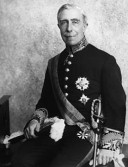
Lord BledisloeLord Bledisloe the Right Honourable Sir Charles Bathurst was Governor General of New Zealand from 1930 to 1935 and it was in 1935 that he was created Viscount Bledisloe of Lydney. The Earls Bathurst have lived at their family seat at Cirencester Park, Cirencester, Gloucestershire since 1690, the park is well known to the polo playing fraternity as Ruins Polo Ground, a place where Charles the Prince of Wales has played on many occasions. Viscount Bledisloe donated the Bledisloe Rugby Cup for the New Zealand – Australia rugby and also 'Bledisloe Best Kept Village Competition' in Gloucestershire award. |
 |
||||||||
| back to top | |||||||||
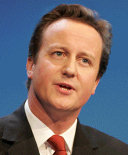
David Cameron (1966 - )David William Donald Cameron (born 9 October 1966) was Prime Minister and leader of the Conservative Party in the United Kingdom. Theresa May taking over the role in 2016. David Cameron is the younger son of stockbroker Ian Donald Cameron (12 October 1932 – 8 September 2010) and his wife Mary Fleur (née Mount, born 1934, a retired Justice of the Peace, daughter of Sir William Mount, 2nd Baronet). Married to Samantha Gwendoline Sheffield, the daughter of Sir Reginald Adrian Berkeley Sheffield, 8th Baronet and Annabel Lucy Veronica Jones (now Viscountess Astor). They married on 1 June 1996 at the Church of St. Augustine of Canterbury, East Hendred, Oxfordshire, five years before he became an MP. Elected in 2001 as Member of Parliament for the Oxfordshire constituency of Cameron studied for his Bachelor of Arts degree in Philosophy, Politics, and Economics at Brasenose College in Oxford. David Cameron lives in the small hamlet of Dean, 3 miles SE of Chipping Norton in Oxfordshire. Dean is located on the upper slopes of a small valley running south to Evenlode. |
 |
||||||||
| back to top | |||||||||
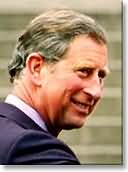
Charles Prince of WalesPrince Charles's country home is called Highgrove which is located a few miles from the old market town of Tetbury. For further information about Prince Charles |
 |
||||||||
| back to top | |||||||||
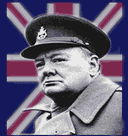
Winston Churchill (1874 to 1965)Grandson to the Duke of Marlborough and born and brought up at Blenheim Palace at Woodstock in the Oxfordshire Cotswolds. Buried in the church cemetery at the small village of Bladon a few miles away from Blenheim Palace. For further details about Winston Churchill |
 |
||||||||
| back to top | |||||||||
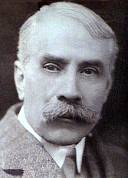
Edward Elgar 1857 to 1934Edward William Elgar was born on 2nd June 1857 in a small cottage in the village of Lower Broadheath, near Worcester, England. He was the fourth of seven children born to William Elgar, a piano tuner and music dealer, and his wife Ann. The outbreak of the First World War was to alter the world. And for Elgar it was also the beginning of a time of change. Elgar wrote: "...everything good and nice and clean and fresh and sweet is far away - never to return". Although he was too old to be a soldier he composed many patriotic works in support of the war effort. The central section of his Pomp and Circumstance March No.1 was taken and, with words added, became "Land of Hope and Glory". Other works composed by Elgar during the war period included Sospiri, The Starlight Express (based on a story by Algernon Blackwood), Polonia (symphonic prelude), Une Voix dans le Dèsert, The Spirit of England and The Sanguine Fan . |
 |
||||||||
| back to top | |||||||||
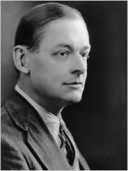
T. S. Eliot 1888 to 1965Thomas Stearns Eliot was a publisher, playwright, literary and social critic and the most important English-language poet of the 20th century. He was born an American, he moved to the United Kingdom in 1914 (at age 25) and was naturalised as a British subject in 1927 at age 39. He was awarded the Nobel Prize in Literature in 1948. He was awarded the American Medal of Freedom by President Johnson. Burnt Norton was the first poem in the set of four famous poems called Four Quartets with the inspiration coming from a visit to Norton House in the Cotswolds (see - A Burning Passion & a Poet). Eliot wrote a wonderful childrens poem - The Country Walk. This poem highlights his fear of cows whilst on one of his Cotswold rambles. Eliot visited Chipping Campden over a period of some years to stay with an old female American college friend - Emily Hale and they often went walking in the Cotswold Hills together. |
 |
||||||||
| back to top | |||||||||
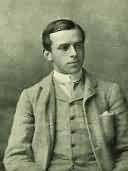
J. Arthur Gibbs 1867 to 1899Author born 25 November 1867 at Westminster, London and educated at Oxford. He died at the age of 31 on 13 May 1899 at Marylebone, London. He lived at the Manor House in the Hamlet of Ablington, near Bibury, and is famous for his book |
 |
||||||||
| back to top | |||||||||
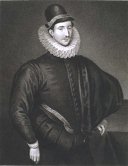
Fulke Greville 1554 to 1628Fulke Greville, 1st Baron Brooke known before 1621 as Sir Fulke Greville, was an Elizabethan poet, dramatist, and famous statesman to Queen Elizabeth I and King James I. He was granted ownership of Warwick Castle by James I in 1621. Greville is best known today as the biographer of Sir Philip Sidney, and for his remarkably sober poetry, which presents dark, thoughtful, and distinctly Calvinist views on art, literature, beauty, and other philosophical matters. Fulke Greville died due to a knife wound inflicted by a servant who felt he had been cheated in his master's will on 30 September 1628. After stabbing Greville, the murderer, Ralph Heywood, turned the knife on himself. Greville was buried in the Collegiate Church of St Mary at Warwick and on his tomb was inscribed the epitaph he had composed for himself: "Folk Grevill Servant to Queene Elizabeth Counsellor to King James Friend to Sir Philip Sidney. Trophaeum Peccati." It is claimed by some including the Anti-Stratfordian movement that Greville was the true author of many Shakespearian sonnets and plays rather than William Shakespeare. Fulke is also suspected of being a leading member in the Rosicrucian order and its first Grand Master. |
 |
||||||||
| back to top | |||||||||
F L Griggs 1876 to 1938
He arrived in the Cotswolds in 1903 to work on the local volume of the series, and elected to settle in the changeless wool market town of Chipping Campden, where a community Guild of Handicrafts had already been established by C.R. Ashbee. In the Cotswolds he became closely associated with Ernest Gimson, whose interest in the traditional methods and materials of building he shared, working in partnership with him from 1917 to 1919. He lived at Dover's House in Chipping Campden High Street from 1903; from 1927-37, he designed for himself 'New Dover's House', one of the last of the great Cotswold Arts and Crafts houses, which he described as "a sort of life's work for me". His fastidious concern for the minutiae of the project left him close to financial ruin. He set up the Dover's House Press, where he printed late proofs of the etchings of Samuel Palmer, as well as his own work.
He founded the Campden Trust in 1929 with Norman Jewson and others, and did much to preserve the town and area; in particular he saved from development in 1926 the local landmark Dover's Hill, where the Cotswold "Olympick" Games had taken place since about 1612. He died suddenly in 1938, as the England he celebrated was about to be torn apart by war. His widow Nina was a close friend of Norman Jewson, and kept in touch with the owners of Owlpen to the time of her death in Barnes in 1988. "Fred" Griggs was a friend, colleague and companion to Norman Jewson throughout his professional life. There is an extensive collection of his prints and drawings at Owlpen. His etching of Owlpen Manor (1930) is often regarded as one of his most representative achievements. |
|||||||||
| back to top | |||||||||
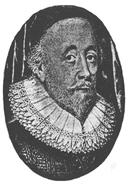
Sir Baptist Hicks (1551 to 1629)Baptist Hicks, 1st Viscount Campden (1551 – 18 October 1629) was an English merchant and politician who sat in the House of Commons between 1621 and 1628. King James I knighted Hicks in 1603 and in 1620 he was created a baronet. A friend of the Royalty, he lent money to King James I and as a result acquired some considerable wealth. He was also a friend of King Charles I. He was also a successful textile merchant and hence the start of his connections with the Cotswolds and Chipping Campden in particular. At the time of the English Civil War his own house (Campden Manor) was burnt down rather than allow it to fall into the hands of the Parliamentary forces. A philanthropist, he was responsible for many of the fine buildings in Campden including the famed Market Hall, which is known the world over he was also responsible for the erection of the Almshouses, his generosity to the town was almost without bounds. His Tomb is at the Church of St. James, Chipping Campden, The South Chapel contains effigies of him and his wife. Further reading - Sir Baptist Hicks, also The Campden Wonder (Strange Things) |
 |
||||||||
| back to top | |||||||||
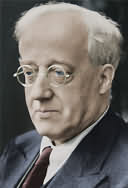
Gustav HolstA British composer who was born in Cheltenham, England in 1874 and died in London in 1934. Holst was a composer of many choral part-songs, song cycles, operas and orchestral pieces. He is perhaps best known for his orchestral suite composed during the years 1914–1916, entitled The Planets. He was a friend of Edward Elgar. Gustav Holst was the organist at the church of St. Laurence in the village of Wyck Rissington in 1892 at the age of seventeen. |
 |
||||||||
| back to top | |||||||||
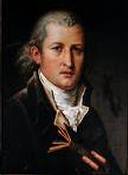
Edward Jenner (1749 - 1823)Edward Jenner was born in Berkeley, Gloucestershire on 18 May 1749, the son of the local vicar. At the age of 14, he was apprenticed to a local surgeon and then trained in London. In 1772, he returned to Berkeley and spent most the rest of his career as a doctor in his native town. In 1796 he carried out his now famous experiment on eight-year-old James Phipps. Jenner inserted pus taken from a cowpox pustule and inserted it into an incision on the boy's arm. He was testing his theory, drawn from the folklore of the countryside, that milkmaids who suffered the mild disease of cowpox never contracted smallpox, one of the greatest killers of the period, particularly amongst children. Jenner subsequently proved that having been inoculated with cowpox Phipps was immune to smallpox. The Edward Jenner Museum & Conference Centre is based in Dr Jenner’s former home, The Chantry, in Berkeley, Gloucestershire. Dr Jenner lived in the house from 1785-1823. It was from this (Grade II* Listed) house that he pioneered world-changing vaccination against Smallpox. |
 |
||||||||
| back to top | |||||||||
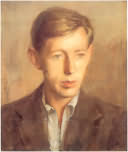
Laurie LeePoet and author Laurie Lee is one of only a handful of people of whom it can truly be said: he was a legend in his own lifetime. An immensely gentle and kind man, with a great sense of humour and a tremendous appreciation of beauty, his works are read, enjoyed and admired the world over. For more details about - Laurie Lee |
 |
||||||||
| back to top | |||||||||
Mitford SistersUnity, Pam, Diana, Nancy and Jessica lived at the Victorian Gothic Mansion, Batsford Park, between 1916 and 1919 (famous for its Arboretum) near Moreton-in-Marsh, Gloucestershire. The sixth sister, Deborah was born at Asthall Manor at Asthall village near Swinbrook in Oxfordshire. The Mitford sisters were remarkable, in every sense of the word: funny, glamorous, intelligent, beautiful, and quirky. But their individual fates were quite different. Debo became a duchess. Jessica became a Communist. Diana married a fascist and was thrown in jail for most of World War II. Nancy was a famous novelist (The Pursuit of Love, Love in a Cold Climate); Unity a great admirer of Hitler, and Diana – 'rated more perfect than Botticelli's Venus' - married Oswald Mosley, the leader of the British Union of Fascists. Jessica was an ardent socialist; Pamela was happiest in the country with her dogs; and Deborah, married the Duke of Devonshire, helping to re-establish Chatsworth as one of the 'Treasure Houses of England' |
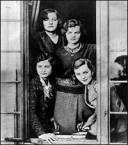 Four of the six Mitford sisters Jessica and Unity at the back, Nancy and Diana below |
||||||||
| back to top | |||||||||
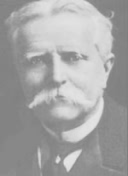
Algernon Freeman-Mitford, 1st Baron Redesdale(1837 - 1916) of Batsford Park, Gloucestershire, and Birdhope Craig, Northumberland, was an English diplomat, collector and writer. He was the grandfather of the Mitford Sisters (see above). Was responsible for the creation of Batsford Arboretum and the building of the Batsford Victorian Gothic Mansion between 1888 and 1892 to replace the former residence that had been on the site from the 17th century. The Arboretum is famous in particular for the collection of Japanese Cherries and Bamboos. Mitford was educated at Eton College and then at Christ Church, Oxford. He entered the foreign office in 1858, and was appointed third secretary of Embassy in St Petersburg. After service in the Diplomatic Corps in Peking, Mitford went to Japan as second secretary to the British Legation. There he met Ernest Satow and wrote Tales of Old Japan (1871). He resigned in 1873. |
 |
||||||||
| back to top | |||||||||
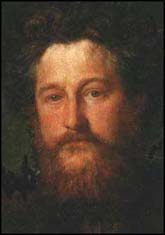
William Morris 1834 - 1896Well know designer, artist, socialist and founder of the Arts and Crafts movement. Studied in Oxford and lived at Kelmscott Manor in the Cotswolds from 1871 until his death. For a period he lived at Broadway Tower and had a printing press there. For further details of the life of William Morris |
 |
||||||||
| back to top | |||||||||
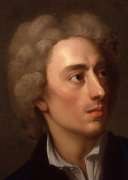
Alexander Pope 1688 - 1744Alexander Pope is considered one of the greatest English poets of the eighteenth century. Alexander Pope was born in London, England. He was ill as a child and was left only 4' 6" tall with curvature of the spine and was a lifelong sufferer from headaches. Pope was a poet, satirist and had a keen interest in landscape design. He is best known for his poem The Rape of the Lock and his translation of Homer's Iliad. He is famous for his interesting and memorable statements, some of the most frequently quoted passages in the English language. Pope was closely involved with Lord Bathurst on the landscaping of Cirencester Park - a 'folly' was erected in the park - known as Pope's Seat. Pope was also involved with Ralph Allen on the landscaping of Prior Park near the City of Bath. He also visited Blenheim Palace at Woodstock. Pope was also a good friend of Richard Beau Nash and wrote the inscription on his Queen Square Obelisk at Bath. Alexander Pope stayed in a tower at Stanton Harcourt Manor between 1717 - 1718. He was lent a room on the top floor by the first Viscount Harcourt, so that he could write his translation of the Iliad in peace, and here he finished the fifth volume in 1718. The Viscount named the tower - Pope's Tower. See Pope's strange story of - A lightning Romance at Stanton Harcourt. |
|
||||||||
| back to top | |||||||||
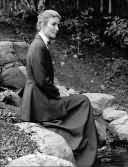
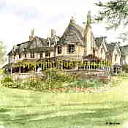
Beatrix Potter 1866 - 1943Beatrix Potter is the well know author for Peter Rabbit and other stories and her third book 'The Tailor of Gloucester' is set in the city of Gloucester with the illustrations being of many of the buildings you can see today in the city. Beatrix Potter often stayed with a cousin at Harescombe Grange, located between Gloucester and Stroud, and it was on one of these visits in the 1890s that she heard the story concerning the mysterious completion of a waistcoat that was to inspire her classic Children’s tale - Tailor of Gloucester. The original House of the Tailor of Gloucester can be found at No.9 College Court just off Westgate Street Gloucester GL1 2NJ. The house is now a charming shop and museum open to the public every day. In May 1903 Beatrix made many sketches of Gloucester whilst visiting friends in nearby Stroud. The street scenes in her story, particularly that of the tailor's shop in College Court, depict actual places in the city. |
 |
||||||||
 |
|||||||||
| back to top | |||||||||
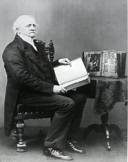
Sir Thomas Phillipps 1792 - 1872Sir Thomas Phillipps, bibliophile, is known to have established the world's largest private book collection and also started The Middle Hill Press publication house in 1822. It was used by him mainly to publish his discoveries in early English topography and genealogy. A large number of works emanating from the Press were edited by Phillipps himself and printed in very limited editions varying from twenty-five to one hundred copies. Many are leaflets consisting of extracts from registers, visitations, genealogies, etc. The collection also includes some proof sheets annotated by Phillipps. Thomas Phillipps lived in Cheltenham, Gloucestershire where he housed his collection. His father Sir William Phillipps lived at Middle Hill House in Broadway, Worcestershire, England. |
 |
||||||||
| back to top | |||||||||
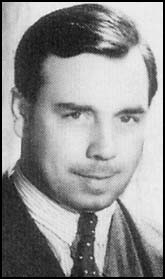
J B Priestley 1894 - 1984John Boynton Priestley, best known for "Time and the Conways" and "An Inspector Calls", was a writer of great versatility, producing essays, novels and plays, in addition to working as a journalist and broadcaster. He was born in 1894 in Bradford and served in the army during World War I before going to Trinity College, Cambridge, where his writing career began. He had a number of novels published in the 1920s and, in 1932, his first stage play, "Dangerous Corner", achieved instant acclaim. During World War II, his famous postscript broadcasts raised morale and were much envied by Winston Churchill. In the 1950's, he worked as a delegate for UNESCO and his article "Britain and the Nuclear Bomb" sparked off the formation of the CND. He married three times, his third wife being the famous archaeologist Jacquetta Hawkes, with whom he lived in Alveston, near Stratford-upon-Avon for most of their long and happy marriage. Priestley died in 1984, but his plays continue to enjoy critical and commercial success. In 1934 Priestley publishes his book - "English Journey" where he re-visits areas of the Cotswolds including Burford, Upper Slaughter and Lower Slaughter and Broadway. He makes a first visit to Snowshill Manor and meets the owner Charles Paget Wade. |
 |
||||||||
| back to top | |||||||||
John Roberts 1620 - 1683John Roberts was the ringleader of the 'new' Quakers religious sect in England. He was the son of a yeoman-freeholder, fought under Cromwell (1640) in the English Civil War, married in 1649, fathered 6 children, of whom three survived and died in 1683. He is first mentioned in the Quaker 'records of persecution' as one of nine men 'committed to prison at Gloucester..... for meeting together to worship God' at Cirencester and Tetbury. Later the same year he was one of five quaker leaders arrested at a Meeting at Cirencester and brought before the King's Commissioners. He was sent to prison for failure to take the Oath of Allegiance. John Roberts lived in the house now known as Roberts House in the village of Siddington, near Cirencester - now owned by Laurence Llewelyn-Bowen. |
|||||||||
| back to top | |||||||||
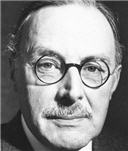
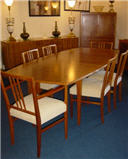
Sir (Sydney) Gordon Russell 1892 - 1980Sir (Sydney) Gordon Russell was an English furniture designer, craftsman and educationist. He came under the influence of the Arts and Crafts movement from 1904 after his father had moved to Broadway in the Cotswolds to be hotelier at the Lygon Arms, through the Guild of Handicraft, the community of metalworkers, enamellers, wood carvers, furniture makers, and printers brought in 1902 by C.R. Ashbee from east London to Chipping Campden. Following service in World War I he became a furniture maker and designer. During World War II he developed utility furniture as chairman of the government's Utility Furniture Design Panel. In 1947 Gordon Russell became director of the Council of Industrial Design (COID), later renamed the Design Council. He became the first chairman of the Crafts Council. He was awarded a knighthood in 1955 for services to design. Notable designs by him include chairs for the re-built Coventry Cathedral. His brother Richard Drew Russell was also a designer. |
 |
||||||||
 |
|||||||||
| back to top | |||||||||
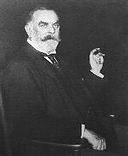
John Singer SargentLeading American portrait painter in the Edwardian period. Stayed in Broadway and painted his most famous painting there. For more details about the life of John Singer Sargent |
 |
||||||||
| back to top | |||||||||
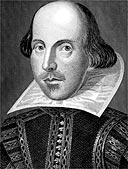
William Shakespeare 1564 - 1616The most famous of all Playwrights and Poets. Born and brought up in Stratford-upon-Avon. For further details of the life of William Shakespeare |
 |
||||||||
| back to top | |||||||||
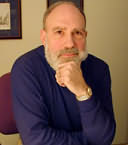
F. Lagard SmithF. LaGard Smith is the author of more than 20 books. He is the arranger and narrator of The Daily Bible™, 30 Days with Jesus, and 30 Days Through Psalms and Proverbs. For the past two decades, Smith has done most of his writing in the quiet Cotswold countryside of England while spending his time in the States teaching both law and religion at Christian universities. He lives in the Cotswolds in the village of Buckland from where he was inspired, by his walks, to write the excellent book 'Meeting God in Quiet Places'. See Book - Meeting God in Quiet Places |
 |
||||||||
| back to top | |||||||||
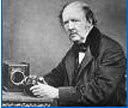
William Henry Fox Talbot (1800 - 1877)While Fox Talbot did not invent photography, he discovered the process that has underpinned most photography for the last 160 years. Fox Talbot developed the three primary elements of photography: developing, fixing, and printing. The earliest surviving paper negative is of the now famous Oriel window in the South Gallery at Lacock Abbey, Wiltshire, where he lived. It is dated August 1835. Talbot's comments read "When first made, the squares of glass about 200 in number could be counted, with help of a lens." More information about the - Village of Lacock. |
 |
||||||||
| back to top | |||||||||
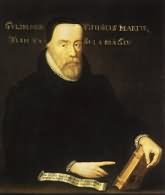
William Tyndale (1494 - 1536)William Tyndale gave us our English Bible and is thought to have been born at Melksham Court (now owned by Hugh Grant) in the village of Stinchcombe near North Nibley, Gloucestershire. Forbidden to work in England, Tyndale translated and printed in English the New Testament and half the Old Testament between 1525 and 1535 in Germany and the Low Countries. He worked from the Greek and Hebrew original texts when knowledge of those languages in England was rare. His pocket-sized Bible translations were smuggled into England, and then ruthlessly sought out by the Church, confiscated and destroyed. Condemned as a heretic, Tyndale was strangled and burned outside Brussels in 1536. For further information see William Tyndale |
 |
||||||||
| back to top | |||||||||
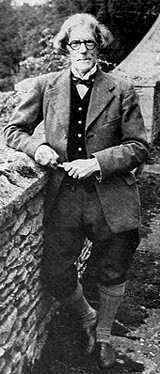
Charles Paget Wade 1883 - 1956Charles Paget Wade was an architect, artist-craftsman and poet; today he is perhaps best remembered for the eclectic collection he amassed during his life, a collection which can be seen at Snowshill Manor, his former home in the village of Snowshill, Gloucestershire, which he gave to the National Trust in 1951. In 1911 Wade inherited the family fortune, based on sugar estates on the island of St Kitts in the West Indies. In 1919 he purchased the estate at Snowshill Manor. He laid out Snowshill Manor Gardens from 1920 to 1923. Starting in 1900 Wade began amassing a collection of objects from around the world that reflected his interest in craftsmanship. He housed this collection in the Manor House at Snowshill, choosing to live himself in the small cottage in the garden. He continued to add to his collection over the years. Wade married in 1946, having met his wife when she was lost and knocked on his door at Snowshill Manor, and went to live with her in the West Indies. He gave the estate to the National Trust in 1951. |
 |
||||||||
| back to top | |||||||||
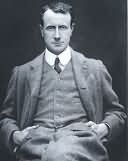
Edward Adrian Wilson (1872 - 1912)Edward Wilson was a Antarctic hero who accompanied Robert Falcon Scott on his celebrated Polar expeditions. He was born in Montpellier Terrace, Cheltenham on 23 July 1872. Edward Wilson accompanied Scott on both the Discovery Expedition of 1901–1904 and the Terra Nova Expedition of 1910–1913. Wilson served as junior surgeon and zoologist on Discovery and, on this expedition, with Scott and Ernest Shackleton he set a new Furthest South on December 30, 1902. He was chief of scientific staff on the Terra Nova Expedition and reached the South Pole with Scott, Lawrence Oates, Henry Robertson Bowers, and Edgar Evans on January 18, 1912, arriving there four weeks after the Norwegian explorer Roald Amundsen. Wilson and his four companions died on the return journey. Trained as a physician, Wilson was also a skilled artist. His drawings and paintings lavishly illustrated both expeditions. |
 |
||||||||
|
|||||||||
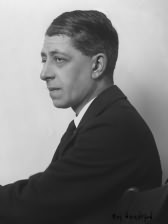 Frederick Landseer Maur Griggs, RA, RE, etcher and illustrator, was an influential artist in the English Romantic tradition, and one of the most respected etchers of his generation.